Storm Damage Cleanup: What to Do First and Why It Matters

If a storm just tore through your property, secure life safety first, photograph every bit of damage before you touch anything, and start a written mitigation log within hours. Call 911 for injuries or immediate hazards like downed lines or a gas odor. Once the site is safe, notify your insurer, begin the 24 to 72 hour cleanup checklist, and line up licensed contractors for anything involving structure or standing water.
TL;DR:
- Most storm debris must be sorted into six categories including vegetative waste, construction debris, hazardous waste, and household trash for municipal pickup to avoid skipped loads.
- Document damage with timestamped photos and detailed logs within 72 hours, as this greatly accelerates insurance claims and prevents payout delays.
- Professionals should handle structural damage, deep flooding, hazardous materials, and large limb removal near power lines, with proper licensing and documented scope of work.
- Rapid water extraction and thorough drying within 48 hours are crucial for preventing mold growth and secondary damage that can cost more than the initial storm repair.
- Using a single integrated contractor for cleanup, repairs, and debris removal streamlines the recovery process, ensuring consistent documentation and faster insurance approval.
Table of Contents
- Storm Damage Cleanup Safety: What to Check Before You Start
- Your First 24 to 72 Hours: A Storm Damage Cleanup Checklist
- How Do Municipal and FEMA Debris Programs Actually Work?
- When Should You Hire a Professional Restoration Contractor?
- Water Extraction, Drying, and Preventing Mold Growth
- What Storm Cleanup Costs and How Payment Typically Works
- From Stabilization to Final Repairs: The Recovery Sequence
- How Nationwide Maintenance Approaches Storm Recovery
- Nationwide Maintenance: One Call for Emergency Storm Cleanup
- Sources
Storm Damage Cleanup Safety: What to Check Before You Start
Before you pick up a single branch, walk the perimeter and look up, down, and around. Downed power lines, a gas smell, sagging rooflines, cracked foundation walls, and standing water near outlets or panels are all reasons to stop and back away, not push forward.
Do not enter a structure with visible structural movement, buckled walls, or water touching electrical systems. If you smell gas, leave immediately and call the gas utility from outside, not from inside near the source.
- Shut off electricity at the main panel only if you can reach it safely and it is dry
- Turn off gas at the meter if you smell gas or hear hissing, then evacuate and call the utility
- Shut off water at the main valve if pipes are visibly broken or flooding is active
- Call 911 for injuries, fire, or downed lines touching anything
- Wait for utility crews before touching anything near a fallen line, even if it looks dead
Pro Tip: Keep a battery-powered radio or a charged phone with a weather app running. Aftermath conditions like flash flooding or secondary wind events can arrive with almost no warning after the initial storm passes.
Your First 24 to 72 Hours: A Storm Damage Cleanup Checklist
Once the site is safe, the next three days set the tone for everything that follows, including how smoothly your insurance claim moves.
- Photograph everything first. Shoot wide shots and close-ups of every damaged area, with a timestamp, before you move or discard a single item.
- Remove standing water. Use pumps, wet vacs, or buckets, and open windows and run fans the moment it is safe to ventilate.
- Salvage what can dry fast. Hard flooring, metal fixtures, and non-porous furniture usually survive; soaked carpet padding and drywall rarely do.
- Secure the structure. Tarp roof openings, board broken windows, and move valuables to dry, elevated storage.
- Separate hazardous items. Set aside paint cans, batteries, cleaning chemicals, and damaged electronics away from general debris piles.
The American Red Cross’s disaster cleanup guidance recommends exactly this sequence: remove water-damaged items, clean hard surfaces, wear protective gear, and sort as you go rather than after the fact. Skipping the documentation step is the single most common reason insurance payouts stall.
How Do Municipal and FEMA Debris Programs Actually Work?
Most storm cleanup gets stuck at the curb, not the insurance desk. Cities and counties that run large-scale debris pickup almost always require residents to sort waste into six recognizable piles, because mixed loads jam their equipment and get skipped entirely.
- Vegetative debris: branches, tree limbs, leaves, and yard waste
- Construction and demolition debris: drywall, lumber, roofing material, and fencing
- White goods: refrigerators, washers, dryers, and other large appliances
- Electronics: TVs, computers, and other e-waste that requires separate handling
- Household hazardous waste: paint, oil, batteries, and cleaning chemicals
- Household garbage: everyday trash that doesn’t fit any other category
Monroe County, Florida’s hurricane debris program uses this exact six-category system, and it is close to the national standard. Mixing categories, or placing anything under low-hanging lines or near a hydrant, is a common reason crews skip a property entirely during storm season pickup runs.
FEMA’s Public Assistance program, specifically Category A, covers debris removal when it serves the public interest. That means clearing roads, right-of-ways, and public property, not reimbursing individual homeowners for private cleanup costs. Understanding FEMA’s debris removal eligibility rules early prevents a frustrating surprise when a private cleanup bill arrives with no matching reimbursement.
When Should You Hire a Professional Restoration Contractor?
Some jobs are DIY. Structural damage, deep floodwater intrusion, hazardous material handling, and large limb or tree removal near power lines are not among them.
- Roof damage exposing the interior to further weather
- Water that has soaked into subflooring, insulation, or wall cavities
- Any debris tangled in or resting against utility lines
- Mold odor or visible growth beyond a small, isolated spot
- Structural cracks, leaning walls, or a compromised foundation
Before work starts, ask every contractor for a current license number, proof of liability insurance, and a written scope of work. Request photo documentation and a daily mitigation log; these records materially speed insurer review and cut down disputes over what was damaged and when. Restoration teams that prioritize this kind of documentation, from first walkthrough to final build-back, consistently move insurance claims faster than crews that skip the paperwork.
Pro Tip: Ask specifically whether the mitigation log will include timestamped photos and moisture readings. Adjusters weigh dated readings far more heavily than a verbal description of “it was pretty wet.”
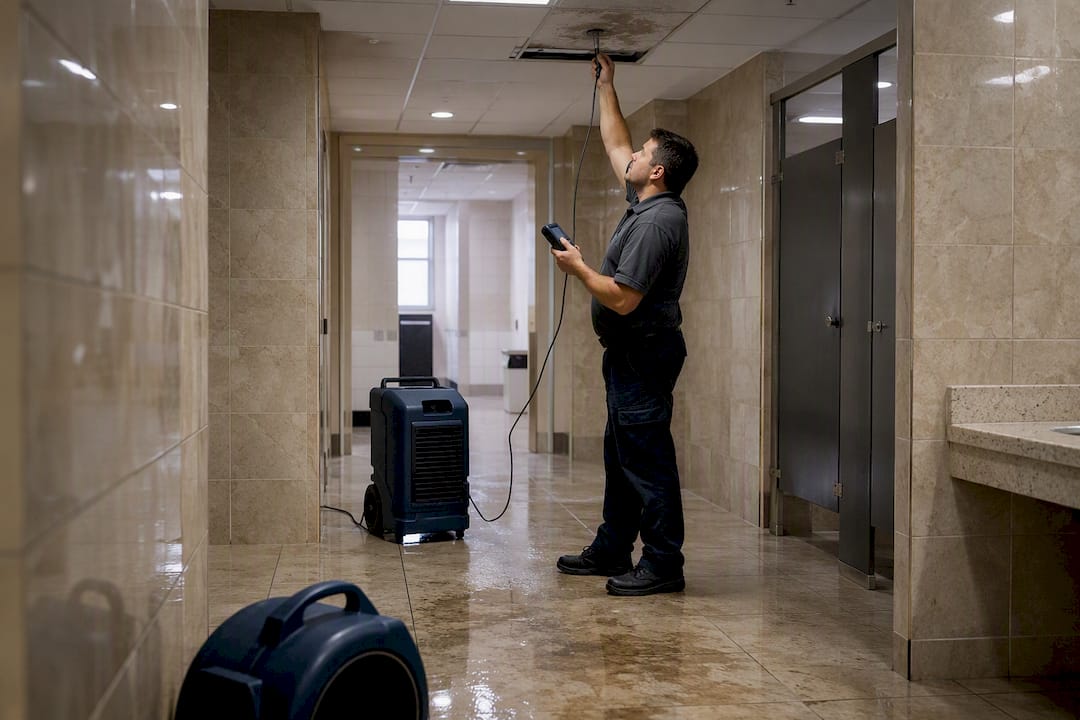
For water-heavy losses specifically, a structured emergency water damage response prevents secondary damage that often costs more than the storm itself.
Water Extraction, Drying, and Preventing Mold Growth
Mold doesn’t wait for your insurance adjuster. Extraction and drying within the first 24 to 48 hours give you the best odds of stopping growth before it starts, and the CDC’s disaster sanitation guidance backs removing standing water and sanitizing hard surfaces as a first priority, not an afterthought.
Standard equipment includes submersible pumps for deep water, air movers to push moisture off surfaces, and dehumidifiers to pull it out of the air entirely.
- Usually replaced: wet drywall, soaked insulation, and carpet padding
- Usually salvageable: hardwood, tile, metal fixtures, and some trim
- Bring in specialists when: water sat for more than 48 hours, or when musty odor persists after surface drying
Certified drying professionals and microbial remediation specialists become necessary once contamination or hidden moisture behind walls is suspected.
What Storm Cleanup Costs and How Payment Typically Works
Recovery moves in three overlapping phases, and each one has a different payment path.
- Days 0 to 3: Emergency mitigation, tarping, and water extraction, usually billed directly or through an insurance advance
- Days 4 to several weeks: Structural drying, debris hauling, and mold remediation, tracked against your insurance claim
- Weeks to months: Permanent repairs and rebuild, coordinated through contractor scopes and insurance settlements
FEMA Public Assistance funds public-interest debris removal, not private household cleanup reimbursement, so don’t expect a federal check to cover your personal contractor invoice. Keep every invoice, photo, and mitigation log; they are what insurers and any public assistance application will actually ask for.
From Stabilization to Final Repairs: The Recovery Sequence
Emergency stabilization comes first: board-up, tarping, and temporary shoring to stop further damage, often involving commercial facade restoration cleaning techniques for effective exterior protection. Licensed contractors or specialized board-up crews typically handle this within the first day or two.
- Secure temporary shoring and weatherproofing immediately after mitigation
- Coordinate permits and multi-trade scopes through one general contractor when possible
- Schedule construction or fire and water restoration coordination once the scope is finalized
- Conduct a final walkthrough and punch list before closing the insurance claim
- File closeout paperwork with photo proof of completed repairs
Property managers juggling multiple buildings benefit most from a single point of contact who can move from tarps to permits without three separate vendor calls.
How Nationwide Maintenance Approaches Storm Recovery
Coordinating five separate vendors after a storm wastes time you don’t have. An integrated provider handling cleanup, construction, and grounds work under one contract keeps documentation consistent and timelines tighter. Daily mitigation logs and photo records aren’t paperwork for its own sake; they are what gets insurance claims approved without a fight. Eco-conscious disposal practices round out a response built for commercial-scale recovery, not guesswork.
— Nationwide Maintenance.
Nationwide Maintenance: One Call for Emergency Storm Cleanup
Nationwide Maintenance is the alternative to juggling five separate vendors after a storm hits your property. One contract covers 24/7 emergency response, cleanup, construction, grounds work, and pest control, backed by more than 30 years focused on commercial, retail, and industrial clients.

For property managers, that means one point of contact instead of five, consistent photo documentation that speeds insurance review, and regional coverage that doesn’t disappear when a storm knocks out half the local contractor list. Nationwide Maintenance also handles debris hauling and grounds cleanup so property managers aren’t separately hunting down a hauler while trying to close an insurance claim. If your building or portfolio needs a recovery partner who can mobilize fast and document everything an adjuster will ask for, check Nationwide Maintenance’s property management services and request a response plan before the next storm, not after it.
Sources
- Fema
- Hurricane Debris Removal | Monroe County, FL - Official Website
- Disaster Cleanup & Repair For Your Home - American Red Cross
- Storm Debris Removal | Martin County, FL
Recommended
Need this handled at your facility?
Our crews cover commercial properties across New York, New Jersey, and Connecticut.