Soft Washing Buildings for Facility Managers: 30+ Year Spec Checklist
Soft washing uses low pressure plus targeted chemistry to remove and treat biological staining on building exteriors, and it’s typically the right first call for fragile or porous commercial surfaces. It kills algae, mold, and lichen at the root rather than blasting them off, so results hold longer and painted or rendered facades stay intact. Schedule it for roofs, stucco, cladding, and painted exteriors before those surfaces show visible damage.
TL;DR:
- Soft washing relies on chemical action and dwell time, making it effective for porous and fragile surfaces without risking damage from high-pressure water.
- Conducting a thorough test patch with documented photo evidence is essential to prevent pigment bleaching and surface etching, especially on painted or natural stone surfaces.
- Proper site preparation, including protecting plants, fixtures, and storm drains, ensures environmental compliance and avoids costly runoff liabilities.
- Matching the cleaning method to surface porosity and condition avoids damage; soft washing is ideal for stucco, painted brick, and shingles, while pressure washing suits concrete and grime-heavy areas.
- Consistent application techniques and full surface drying are critical for avoiding streaking, residue, or uneven coloration after the treatment.
Table of Contents
- What Soft Washing Buildings Actually Involves
- Soft Wash vs Pressure Wash: Matching Method to Surface
- Material Risks and Why the Test Patch Is Non-Negotiable
- Chemicals, Dwell Time, and Runoff Control
- Equipment, Access, and the Staged Wash Process
- Frequency, Cost Drivers, and ROI for Commercial Properties
- Specifying Soft Washing: A Procurement Checklist
- How Soft Washing Fits a Multi-Service Facility Contract
- Troubleshooting Streaking, Residue, and Uneven Results
- Preparing the Site Before the Crew Arrives
- Why Integrated Facility Teams Choose Soft Washing
- Get a Soft Washing Plan Built Into Your Maintenance Contract
- Sources
What Soft Washing Buildings Actually Involves
Soft washing swaps mechanical force for chemistry. A technician applies a diluted solution, typically sodium hypochlorite paired with surfactants, at pressures under 500 psi rather than the 3,000+ psi common in traditional power washing. The chemistry does the work that pressure used to do, breaking down algae, moss, and biofilm at a cellular level instead of just knocking it off the surface.
Three elements make the process work:
- Surfactants reduce surface tension so the solution spreads evenly across brick, stucco, or shingles instead of beading and running off.
- Dwell time lets the chemistry react with organic growth. Rushing this step is the most common reason a soft wash underperforms.
- Low-pressure delivery avoids forcing water behind siding, into stucco cracks, or under roof shingles, which is exactly how power washing causes hidden moisture damage.
Some jobs get rinsed immediately after dwell time. Others, especially treatments using DDAC-based biocides, get left to weather off over several days so the active ingredient keeps working after the crew leaves. That distinction confuses a lot of property managers who expect every wash to end in a visible rinse.
Soft Wash vs Pressure Wash: Matching Method to Surface
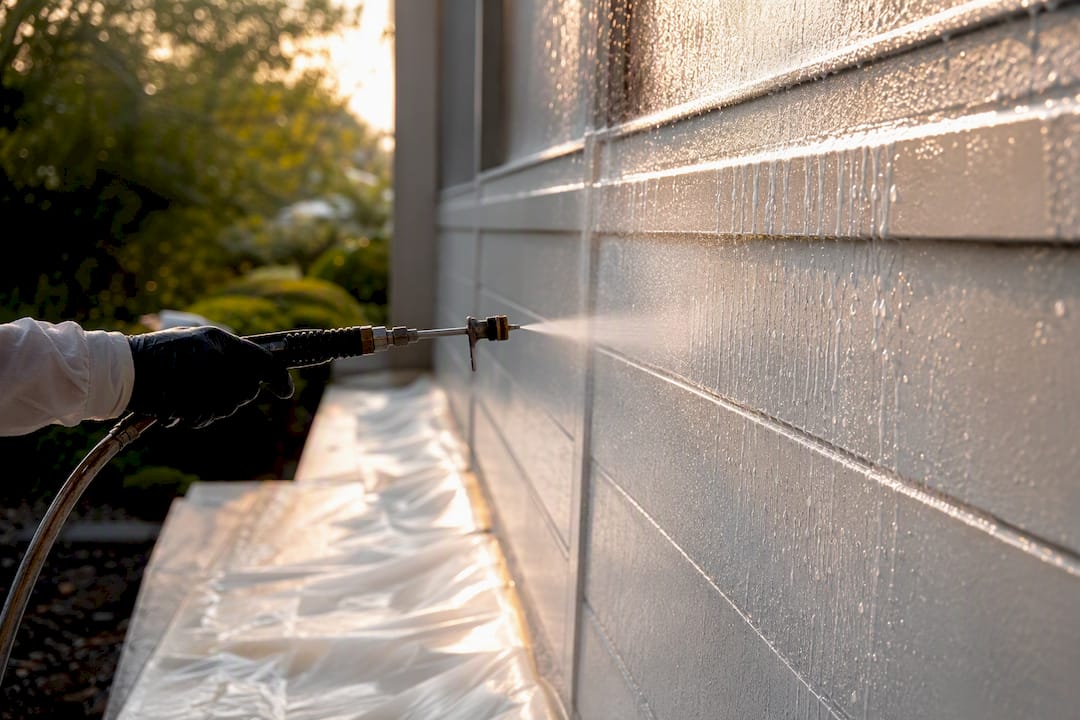
The two methods solve different problems, and confusing them is how buildings get damaged. Pressure washing relies on mechanical force. Soft washing relies on chemical action with just enough water to carry it. Pressure washing uses more water and carries higher risk of surface damage, while soft washing trades some upfront visual drama for a treatment that keeps working after the crew packs up.
Here’s how that plays out by surface:
- Roofs (asphalt shingle, tile): Soft wash only. High pressure lifts granules and voids warranties.
- Stucco, EIFS, rendered walls: Soft wash. Porous coatings absorb pressurized water and trap moisture behind the surface.
- Vinyl and fiber cement cladding: Soft wash for biological staining; light pressure acceptable for loose dirt only.
- Concrete, pavers, loading docks: Pressure washing wins here. Oil stains, gum, and heavy grime need mechanical force that concrete can tolerate.
- Painted brick or wood trim: Soft wash, with a mandatory test patch (more on that below).
If a surface can absorb water or flex under pressure, soft wash it. If it’s dense, non-porous, and dealing with ground-in soiling rather than biological growth, pressure washing is the more efficient tool.
Material Risks and Why the Test Patch Is Non-Negotiable
Sodium hypochlorite is effective and unforgiving. It can react with certain organic pigments used in older paint formulations, particularly reds, blues, greens, and oranges, causing bleaching or color shift that no rinse will fix. Natural stone can etch if the chemistry sits too long. Timber trim can gray or streak. Coated metal panels, common on retail storefronts and cladding systems, sometimes react with aluminum or specialty finishes in ways a generic dilution rate doesn’t anticipate.
This is why a documented test patch belongs in every contract, not just as a courtesy but as a liability protection for both sides.
- Select a hidden section of each distinct surface type and paint color on the building.
- Apply the exact dilution ratio planned for the full job, at the same dwell time.
- Wait the full dwell period, then rinse and let the patch dry completely, since some reactions only appear once the surface is fully dry.
- Photograph and document the result with a timestamp before proceeding to the full facade.
- Get written sign-off from the property manager or owner’s representative before mobilizing the full crew.
If staining or pigment shift shows up during the test, stop. Switch to a lower concentration, a different active ingredient, or in some cases a mechanical spot-clean instead.
Pro Tip: Keep every test patch photo and dilution log on file for at least a full year. If a color dispute comes up months later, that documentation is the difference between a quick resolution and a costly repaint claim.
Chemicals, Dwell Time, and Runoff Control
Sodium hypochlorite remains the workhorse for biological staining because it’s fast-acting and relatively inexpensive, but it needs careful neutralization near landscaping. DDAC-based (didecyldimethylammonium chloride) alternatives cost more and act slower, but they’re often the better choice around sensitive plantings or where a longer-acting residual is preferred over an immediate visual result.
Dwell time isn’t a fixed number. It shifts based on the density of biological growth, ambient temperature, and whether the surface is in shade or direct sun. A moderate algae bloom on a shaded north wall might need ten to fifteen minutes; heavy black streaking on a roof can call for longer, sometimes with a reapplication.
Runoff management is where a lot of otherwise solid jobs run into regulatory trouble:
- Cover or divert drains and catch basins before starting.
- Pre-wet and protect adjacent plantings, since concentrated runoff kills landscaping fast.
- Check local discharge permits before large-scale hypochlorite use near storm drains.
- Require full PPE for crews: chemical-resistant gloves, eye protection, and respiratory protection when working near concentrated solution.
Bird droppings and organic debris on facades and ledges add another contamination layer worth flagging to crews, since some biological residues carry health risks beyond simple staining.
Equipment, Access, and the Staged Wash Process
A soft wash rig centers on a low-pressure pump, a chemical proportioning system (usually a downstream injector), and enough hose to reach upper floors without staging a pressure washer at height. That last point matters for commercial buildings: soft washing lets crews treat a five-story facade from ground level in many cases, cutting scaffold and lift costs compared to pressure equipment that needs a closer working distance.
The staged process that produces consistent, durable results runs in a specific order, and skipping a step is where most complaints originate:
- Site survey identifying surface types, existing damage, and drainage points.
- Protection and pre-wetting of landscaping, signage, and adjacent surfaces to prevent chemical contact and patchy absorption.
- Application of the diluted solution across the full elevation.
- Dwell time, monitored and adjusted for shade, temperature, and staining severity.
- Controlled rinse or intentional leave-as-treatment, depending on the chemistry used.
- Post-dry inspection, since streaking and residue often aren’t visible until the surface fully dries.
For anything above two stories, fall-protection planning and documented access plans should be part of the bid, not an afterthought added after a near-miss.
Frequency, Cost Drivers, and ROI for Commercial Properties
Price swings on a few predictable factors: building height and access difficulty, the number of distinct surface types requiring separate test patches, containment requirements near storm drains or landscaping, and whether prior neglect means remediation rather than routine maintenance.
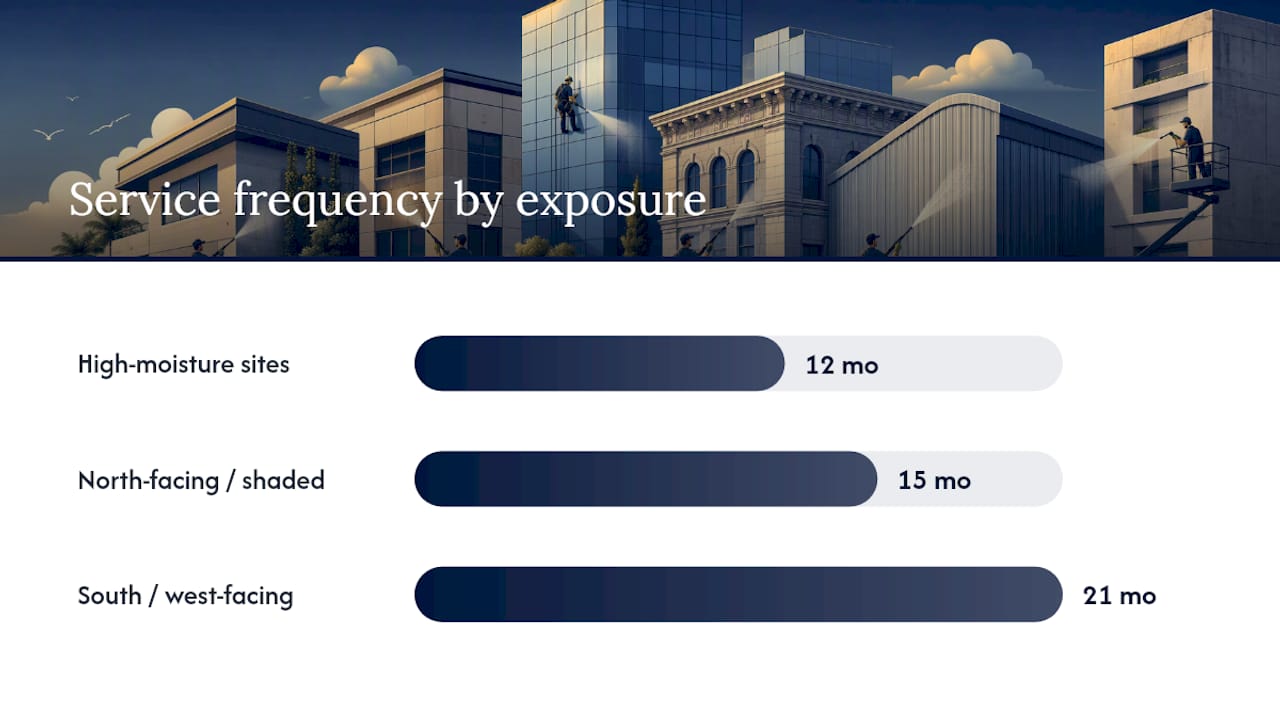
Frequency depends on exposure, not a calendar default:
- North-facing and shaded elevations hold moisture longer and typically need treatment every 12 to 18 months.
- High-moisture sites near water features, dense tree cover, or coastal humidity often need annual service.
- South and west-facing walls with strong sun exposure can often stretch to 18 to 24 months.
The ROI case is straightforward for anyone who’s paid for a premature repaint or a slip-and-fall claim. Regular soft washing prevents the kind of long-term substrate degradation that ends in a full recoat, keeps a retail storefront’s brand image consistent across locations, and reduces the algae-driven slip hazard on entry walkways and loading docks.
Specifying Soft Washing: A Procurement Checklist
Bid evaluation gets a lot easier when every contractor is quoting against the same requirements. Before signing anything, confirm the proposal includes:
- A documented test patch process with photo evidence and written sign-off before full mobilization.
- Safety Data Sheets (SDS) for every chemical used, plus the actual dilution ratios planned for your building’s surfaces.
- A runoff and vegetation protection plan naming specific containment methods, not a vague assurance of “environmental care.”
- Proof of insurance and safety training, including fall-protection certification for any work above ground level.
- Waste-disposal documentation confirming chemical runoff isn’t simply directed into a storm drain.
- Defined acceptance criteria, meaning what the finished, fully dried surface should look like, and a rework policy if it doesn’t meet that standard.
Pro Tip: Ask for the dwell-time range the contractor plans to use on your specific surfaces, not just a generic number. A vendor who can’t explain how dwell time changes between your shaded north wall and sunny south wall probably hasn’t done many commercial jobs.
Loop in your exterior painting vendor early if a test patch reveals pigment sensitivity. It’s far cheaper to adjust a wash plan up front than to fund a remediation repaint after the fact.
How Soft Washing Fits a Multi-Service Facility Contract
Nationwidemaintenance has spent more than 30 years managing exteriors for Fortune 500 retail and commercial accounts, and soft washing rarely stands alone in that work. It pairs naturally with landscaping protection during application, pest control follow-up where bird or insect activity contributes to staining, and routine janitorial service that keeps interiors matching a clean exterior. For multi-site retail brands, running all of it under one contract means consistent standards across every location and a single point of accountability, which matters a lot more than most facility teams realize until a mismatched vendor shows up at one store.
Troubleshooting Streaking, Residue, and Uneven Results
Streaking almost always traces back to uneven dwell time or inconsistent pre-wetting. If one section of a wall stayed wetter longer than another before application, the chemistry reacts unevenly and dries into visible streaks once the surface fully cures. The fix isn’t more chemical. It’s better technique: pre-wet the entire elevation uniformly before applying the wash solution, and apply from top to bottom in consistent, overlapping passes.
White or chalky residue after drying usually means one of two things: the solution wasn’t rinsed thoroughly enough, or hard water minerals in the rinse water left mineral deposits behind. A second light rinse with clean water, applied within a few hours of the initial treatment, typically resolves it. Waiting too long lets the residue bond to the surface.
Splotchy or inconsistent color on stucco and rendered walls often points to a dwell-time mismatch between porous and non-porous sections of the same wall, since older patched areas absorb chemistry at a different rate than the surrounding original material. Spot-treating the slower-reacting sections with a shorter second application, rather than redoing the entire wall, usually evens things out.
The single biggest troubleshooting mistake is judging results while the surface is still wet. Oxidation marks, faint staining, and some pigment reactions genuinely don’t show up until the wall or roof is bone dry, sometimes a full day later. Any inspection or acceptance walkthrough should happen after full drying, never immediately after the rinse.
Preparing the Site Before the Crew Arrives
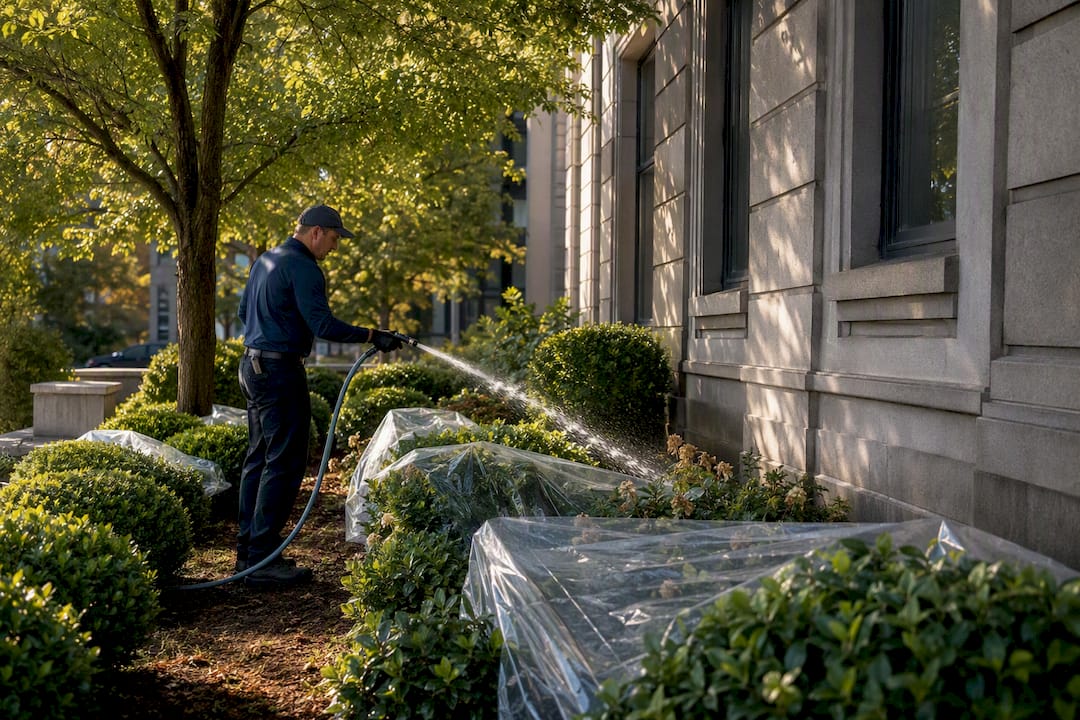
A soft wash job succeeds or fails based on what happens before the chemistry ever touches the building. Landscaping protection comes first: shrubs, flower beds, and lawn areas adjacent to the building need a thorough pre-wet with plain water, which dilutes any incidental chemical contact and reduces plant stress. Covering delicate plantings with plastic sheeting for the duration of the application adds another layer of protection, particularly for boxwoods and other chemical-sensitive species.
Non-target surfaces need the same attention. HVAC intakes, electrical panels, exterior lighting fixtures, and signage should be covered or have their power shut off and isolated before application starts. Storm drains and catch basins near the work area need temporary covers or diversion to prevent chemical runoff from entering the municipal water system, a step that also keeps the job compliant with most local discharge rules.
Vehicles, outdoor furniture, and any equipment stored near the building should be moved or covered. Windows and doors need to be checked for gaps or seals that could let solution intrude indoors, especially on older buildings where weatherstripping has degraded.
Finally, notify building occupants and any adjacent tenants about the schedule. Chemical odor during application, even from low-toxicity formulations, catches people off guard if they’re not expecting it. A short heads-up email prevents unnecessary complaint calls during the work window.
Why Integrated Facility Teams Choose Soft Washing
Predictable scheduling is what sold us on soft washing as a standing line item rather than a reactive fix. It costs less over time than repeated substrate repair, and it protects the curb appeal that high-profile retail clients depend on. Paired with eco-conscious dilution practices, it fits the sustainability commitments most of our commercial accounts are already working toward.
— Nationwide Maintenance.
Get a Soft Washing Plan Built Into Your Maintenance Contract
Most property managers juggle separate vendors for washing, landscaping, and pest control, which means separate schedules, separate invoices, and separate people to chase down when something gets missed. Nationwidemaintenance folds soft washing into one facility maintenance contract alongside cleaning, landscaping, and pest control, so your building exterior stays on a documented, predictable schedule instead of getting handled only when it looks bad.

Our teams serve commercial, retail, healthcare, and government properties across the Tri-State area, with the same test-patch discipline and dwell-time management covered above built into every scope of work. If you manage a multi-location retail account or a single commercial property that’s overdue for exterior attention, request a site survey and get soft washing added to your commercial cleaning services contract before your next budget cycle locks in.
Sources
- How Softwashing Works: The Science Explained – SoftWash UK Ltd
- Soft washing — Wikipedia
- Building washing | National Softwash
Recommended
Need this handled at your facility?
Our crews cover commercial properties across New York, New Jersey, and Connecticut.