Cut Tracked Dirt 95%: Slip Resistance Floor Care for Facility Managers
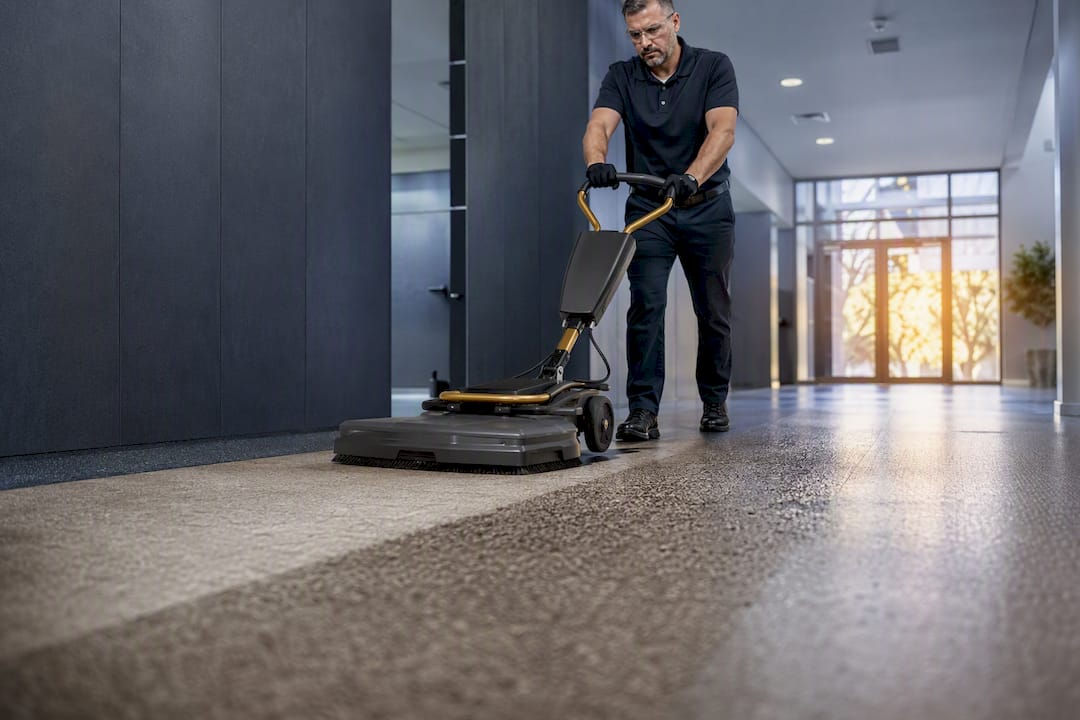
The single biggest lever for slip resistance floor care is a tailored, zone-based cleaning program, not a coating or a warning sign. That means auditing where contamination happens, removing spills and residue the moment they occur, following manufacturer-specific cleaning guidance, and keeping foot traffic off wet floors until they’re fully dry. Get those four things right and you address most of the risk the UK Slip Resistance Group says facility owners are legally responsible for managing.
TL;DR:
- Zone-based cleaning focused on contamination sources and floor types is more effective than coatings or warning signs for slip resistance improvement.
- Regular audits, moisture management, and proper documentation help identify slip hazards before incidents occur.
- Using neutral pH cleaners, thorough rinsing, and avoiding inappropriate coatings or polishes are key to maintaining traction.
- Penetrating treatments like SafeGrip can enhance slip resistance on mineral surfaces, but require proper surface prep and manufacturer consultation.
- Continuous monitoring, timely spill response, and comprehensive vendor contracts are essential for long-term slip hazard management.
Table of Contents
- How Do You Run a Slip-Risk Audit for Your Facility?
- What Does a Zone-Based Floor Care Program Look Like?
- Which Cleaning Methods and Chemicals Actually Improve Grip?
- What’s a Realistic Maintenance Schedule and Monitoring Routine?
- How Should You Handle a Spill in the Moment?
- What Does a Pendulum Test Actually Tell You?
- What Nationwide Maintenance Has Learned From 30-Plus Years of Floor Care
- How Nationwide Maintenance Puts This Plan Into Action
- Where This Guide’s Recommendations Come From
- Sources
- FAQ
How Do You Run a Slip-Risk Audit for Your Facility?
Start by walking the building the way a customer or employee actually moves through it, not the way it looks on a floor plan. Every surface behaves differently under contamination: vinyl LVT gets slick fastest under thin water films, sealed concrete hides grease until someone falls on it, and polished stone can look immaculate while testing poorly for wet traction.
A useful audit separates floor type from contamination source, because the fix for each is different.
- Floor material: vinyl LVT, ceramic or porcelain tile, natural stone, sealed concrete, polished or burnished finishes.
- Contamination source: entrances (rain and snow), kitchens (grease and steam), loading docks (oil, cardboard dust), restrooms (standing water).
- On-site checks: run a hand or shoe test on a clean, dry section, then repeat after mopping to check for residue film.
- Documentation: log the zone, the observed hazard, and the priority level (immediate, this week, this quarter).
If a zone shows repeated near-misses or an incident report, or if you’re changing floor finish or traffic patterns, that’s the trigger for a professional pendulum test rather than a visual check alone. A thin film of detergent residue can create real slip risk even when a floor looks spotless, which is exactly why UKSRG’s cleaning guidance treats visual cleanliness as an unreliable proxy for safety.
What Does a Zone-Based Floor Care Program Look Like?
Once you know which zones carry the most risk, build frequency around traffic and contamination instead of applying one schedule to the whole building. An entrance lobby in a rainy climate needs daily attention; a back-office corridor might only need weekly dust-mopping. Matching effort to actual risk, rather than defaulting to a uniform routine, tends to lower both incident rates and cleaning costs at the same time.
A workable template looks like this:
- Daily: dust-mop or auto-scrub entrances, kitchens, and restrooms; wipe up spills immediately; check entrance mats for saturation.
- Weekly: deep scrub high-traffic corridors and sales floors using a scrubber-dryer with the manufacturer-recommended pad and speed.
- Monthly: inspect grout lines, transitions, and ramps for wear or residue buildup; rotate or launder entrance matting.
- Semiannual: full deep clean and rinse of all resilient flooring, plus a residue check by wiping a rinsed section with a clean, dry cloth.
Train cleaning staff on why technique matters, not just what to do. A crew that understands residue causes slips will rinse thoroughly without being told twice, and they’ll flag a floor that “feels off” before it becomes an incident report. Keep a simple audit log tying each task to a name and date, since that record is what protects you if a claim ever comes in.
Pro Tip: Before switching cleaning chemicals or trying any new pad or machine on a slip-resistant floor, call the flooring manufacturer first. Many warranty terms are voided by dressings or high-pH cleaners the manufacturer never approved.
Which Cleaning Methods and Chemicals Actually Improve Grip?
Daily technique matters more than the label on the bottle. Two-bucket mopping, one for cleaning solution and one for rinse water, prevents you from spreading dirty water back across a floor you just cleaned. For machine cleaning, Forbo’s Safestep maintenance guidance recommends scrubber-dryers running at 150 to 180 rpm with a pad matched to the floor’s texture, since an overly aggressive pad can polish a textured surface smooth over time.
Chemical selection is where most facilities quietly sabotage their own slip resistance:
- Use neutral pH cleaners designed for the specific floor type, never generic all-purpose degreasers.
- Never apply floor dressings, waxes, or polishes to a slip-resistant floor. Amtico’s maintenance guidelines warn these leave films that actively reduce traction.
- Avoid over-diluting or under-diluting concentrate. Both create residue problems in different ways.
- Rinse thoroughly. Skipping the rinse step is the single most common cause of a “clean” floor that’s actually slippery.
For mineral surfaces where cleaning alone isn’t enough, penetrating anti-slip treatments like SafeGrip work by micro-etching the surface to improve wet traction without leaving a visible coating. The manufacturer reports PTV (pendulum test value) improvements moving surfaces from high slip potential to low slip potential after treatment, though the process requires a test patch, proper surface prep, correct dwell time, and a full rinse to avoid residue buildup. These treatments aren’t a fit for every material, and coated or sealed surfaces often need the coating removed first, which is why a manufacturer consultation before application saves money and disappointment.
What’s a Realistic Maintenance Schedule and Monitoring Routine?
A schedule only works if someone actually checks whether it’s being followed. Build monitoring into the same rhythm as the cleaning itself, rather than treating it as a separate audit exercise months later.
- Weekly: service and empty entrance mats; Forbo’s guidance notes a properly specified entrance system can remove up to 95% of tracked-in dirt and moisture before it ever reaches the main floor.
- Monthly: review the cleaning audit log for skipped tasks, complaint patterns, or repeat problem zones.
- Quarterly: walk every priority zone identified in your initial audit and re-score it against the baseline.
- As triggered: escalate to a professional pendulum test after any incident, a rise in near-miss reports, or a change in floor finish, traffic pattern, or tenant use.
Humidity swings can also shift how a floor performs, since excess moisture or an overly dry environment both change friction characteristics on some finishes. If a zone gets unexpectedly slippery without an obvious cause, check HVAC and dehumidification settings before assuming the cleaning routine failed.
How Should You Handle a Spill in the Moment?
Speed and sequence both matter here. The goal is to contain the hazard before anyone crosses it, not to clean perfectly on the first pass.
- Cordon the area immediately and post a warning sign visible from both directions of approach.
- Absorb and remove the bulk of the spill before applying any cleaning product.
- Use the correct cleaner for that floor type, then rinse and dry the section completely.
- Keep the barrier up until the floor is fully dry, not just visually clean.
- Log the spill, its cause, and the response time in your incident record.
Cleaning in poorly planned sections can create new hazards, since a half-mopped aisle with no barrier is often worse than the original spill. Notify operations or security immediately so foot traffic gets rerouted rather than funneled straight through the wet zone.
Pro Tip: Keep a stocked spill kit within 60 seconds of every high-risk zone. A kit someone has to walk across the building for gets used late, and late response is when incidents happen.
What Does a Pendulum Test Actually Tell You?
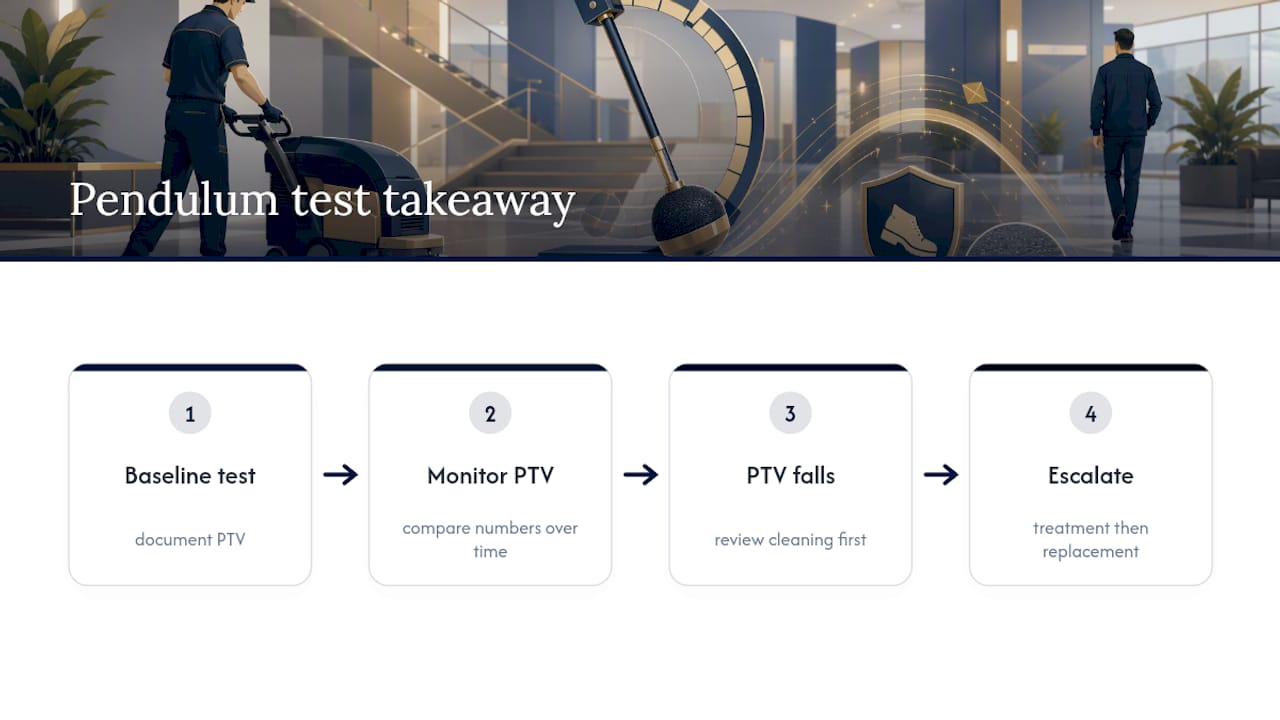
A pendulum test measures the pendulum test value (PTV), a standardized number reflecting how much friction a surface offers under wet or dry conditions. Lower PTV numbers mean higher slip potential; higher numbers mean better traction. Facilities typically don’t need professional testing for routine maintenance, in-house visual and residue checks cover that, but a baseline test when a floor is installed, plus a re-test after any treatment or major incident, gives you a documented number to compare against.
If a re-test shows PTV dropping over time, that’s your signal to review cleaning technique first, since residue buildup is the most common cause, before considering a treatment or, in worst cases, floor replacement.
What Nationwide Maintenance Has Learned From 30-Plus Years of Floor Care
The same three mistakes show up in almost every facility we’ve assessed: wrong chemicals for the floor type, rinsing skipped to save time, and entrance matting that’s too small or serviced too rarely. Each one is cheap to fix and expensive to ignore. What actually changes outcomes is having one contract covering interior floor care, entrance systems, and emergency response, because a fragmented vendor list means slower reaction when a spill or a failed test shows up on a Friday afternoon.
— Nationwide Maintenance.
How Nationwide Maintenance Puts This Plan Into Action
If auditing zones, matching chemicals to floor type, and scheduling deep cleans sounds like a lot to run in-house on top of everything else on your plate, that’s the gap Nationwide Maintenance exists to close. We combine interior floor care with power washing, parking lot services, and 24/7 emergency response under a single contract, so a spill at 2 a.m. or a failed audit finding doesn’t mean coordinating three separate vendors.

Our process starts with a site survey to classify your zones the way this guide describes, then a proposal built around your actual traffic and contamination patterns rather than a generic template. That approach aims to keep floors compliant and spotless across long-term service. If your last incident report, or your gut, tells you your current cleaning program isn’t cutting it, request a facility survey and get a zone-based proposal built for your building.
Where This Guide’s Recommendations Come From
This article draws on the UK Slip Resistance Group’s cleaning and maintenance guidance, manufacturer maintenance manuals from Amtico and Forbo, and product documentation for penetrating treatments like SafeGrip.
Sources
- Reducing slips – The importance of effective cleaning and maintenance of floors (UK Slip Resistance Group)
- Amtico safety flooring maintenance guidelines
- SafeGrip anti-slip floor treatment product information (Slips Away)
FAQ
What Is the Fastest Way to Improve Floor Slip Resistance?
Start with cleaning technique before considering any coating or treatment: neutral cleaners, thorough rinsing, and no dressings or polishes on slip-resistant floors. Most slip risk comes from residue and contamination, not from the floor material itself, according to UKSRG guidance.
How Often Should Commercial Floors Be Deep Cleaned?
High-traffic zones like entrances and kitchens typically need weekly deep scrubbing, while lower-traffic corridors can go monthly. A semiannual full deep clean with a residue check catches buildup that routine cleaning misses.
Can a Cleaning Product Make a Floor More Slippery?
Yes. High-pH cleaners, over-diluted or under-rinsed solutions, and any floor dressing or polish can leave a film that reduces traction, a warning explicitly called out in Amtico’s maintenance guidelines.
What Does a Pendulum Test Value (PTV) Actually Measure?
PTV measures the friction a floor surface provides under wet or dry conditions, with lower numbers indicating higher slip potential. Facilities generally use it for baseline testing at installation and re-testing after treatments, incidents, or finish changes.
Does Nationwide Maintenance Offer Slip-Resistant Floor Care Programs?
Nationwide Maintenance provides interior floor care as part of its facility maintenance contracts, alongside power washing, parking lot services, and 24/7 emergency response. Current pricing isn’t published online, so reach out directly through the company’s site for a site survey and proposal.
Recommended
Need this handled at your facility?
Our crews cover commercial properties across New York, New Jersey, and Connecticut.