Cut Sidewalk Gum Removal Complaints in a Quarter, Property Managers
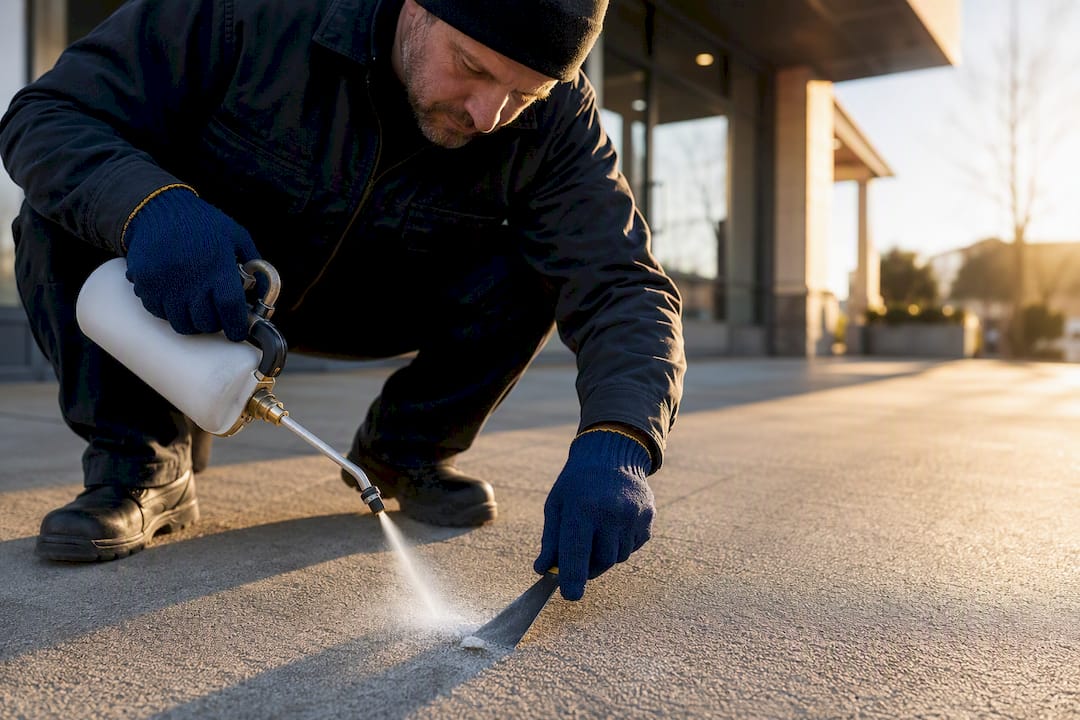
Freeze fresh, isolated gum spots with ice packs and lift them with a plastic scraper. For hardened or clustered deposits, hot-water pressure washing is your fastest, most reliable route. If you’re seeing recurring buildup across high-traffic zones, stop treating it as a DIY chore and bring in a commercial contractor. Test any method on a small area first. Concrete and asphalt don’t forgive guesswork.
TL;DR:
- Freezing and scraping are most effective for isolated gum spots, requiring only household tools and minimal training for quick removal.
- Hot-water pressure washing is essential for persistent, baked-in gum, with water temperatures around 180 to 200 degrees Fahrenheit significantly improving polymer softening.
- Commercial contractors become necessary when more than a dozen gum spots appear regularly or when DIY methods cause surface damage or discoloration.
- Routine maintenance including frequent inspections, sealing surfaces, and strategic placement of trash receptacles dramatically reduces gum buildup over time.
- Using the correct combination of gentle solvents, patience, and proper equipment prevents surface damage and ensures long-term effectiveness in gum removal.
Table of Contents
- Sidewalk Gum Removal Checklist: Tools, PPE, and First Steps
- How to Remove Gum From Concrete by Freezing and Scraping
- Hot-Water Pressure Washing: Specs and Technique for Hardened Gum
- Chemical Solvents for Gum Stain Removal: What Works and What to Avoid
- When to Hire a Commercial Gum Removal Contractor
- Preventive Maintenance: How to Keep Sidewalks Gum-Free Longer
- What Property Teams Get Wrong About Gum Removal
- Get a Gum Removal Quote for Your Commercial Property
- Sources
Sidewalk Gum Removal Checklist: Tools, PPE, and First Steps
Before your maintenance crew touches a single spot, get the right gear staged. A rushed job with the wrong tool almost always costs more in repeat labor or surface repair than doing it right the first time.
What you need on hand:
- Ice packs or aerosol/compressed-air freeze spray
- Plastic putty knives or dedicated gum scrapers (never metal on decorative concrete)
- A stiff nylon brush
- A hot-water pressure washer rated for commercial use
- A citrus-based solvent or commercial gum remover
- Gloves and eye protection
Triage the job before you start. A fresh, single spot of gum gets frozen and scraped. Anything hardened, embedded in pores, or clustered across a walkway calls for a pressure washer with pre-treatment. Either way, run a test spot in an inconspicuous corner first, check for discoloration or texture change, then treat the full area and rinse thoroughly so residue doesn’t spread into storm drains or landscaping beds.
Pro Tip: Keep a small logbook of which spots needed which method. After a few weeks, you’ll see which entrances or benches are repeat offenders, and that tells you where to add a trash can or a “please dispose of gum here” sign.
How to Remove Gum From Concrete by Freezing and Scraping
Gum is a polymer, and polymers get brittle below a certain temperature threshold called the glass transition point. Below that point, gum snaps instead of stretching or smearing, which is exactly what you want when you’re trying to lift it off concrete without grinding it deeper into the pores.
Here’s the sequence that works for small, isolated spots, whether it’s a single wad outside a store entrance or a scattering near a bus stop bench.
- Apply the freeze. Press an ice pack directly on the gum for 60 to 90 seconds, or hit it with an aerosol freeze spray formulated for gum removal. Compressed-air freeze works faster in most cases and doesn’t leave standing water.
- Test for brittleness. Tap the edge with your scraper. If it cracks cleanly instead of squishing, you’re ready.
- Scrape at a low angle. Hold a plastic putty knife nearly flat against the surface and work from the outer edge of the gum toward the center. This keeps you from gouging the concrete and reduces the chance the gum smears back into a pore.
- Sweep up the fragments immediately. Warm sidewalks re-soften gum fast, so don’t let broken pieces sit.
- Wash the residual film. A surfactant wash, dish soap and warm water with a stiff nylon brush, breaks up whatever oily residue is left behind. Rinse well.
- Repeat if needed. Old, deeply set gum sometimes needs two freeze-and-scrape cycles rather than one aggressive pass.
Freezing and scraping is the recommended approach for reaching gum’s brittle point without smearing it into the surface, and it’s the method most household guides lead with for a reason. It’s cheap, it’s fast on a single spot, and it doesn’t require specialized equipment.
There’s also a heat-based alternative for very fresh gum, applying boiling water to soften it enough to peel away in one piece. This works, but only within the first hour or two after the gum lands. Wait too long and boiling water just makes it gooier and more likely to smear, which is the opposite of what you want. If in doubt, freeze first.
Pro Tip: Skip metal scrapers entirely on stamped or colored concrete. They cut through sealants and leave permanent scratch marks that show up worse than the gum stain ever did.
Hot-Water Pressure Washing: Specs and Technique for Hardened Gum
When you’re dealing with gum that’s been baked into the sidewalk by months of foot traffic and summer heat, freezing one spot at a time isn’t practical. This is where hot-water pressure washing earns its place as the backbone method for commercial properties.
Heat matters more than most people assume. Water in the range of roughly 180 to 200 degrees Fahrenheit softens the gum’s polymer structure far more effectively than a cold-water blast at the same pressure. Cold water can move dirt and loose debris just fine, but against a gum stain that’s fused with the concrete, it mostly just wets the surface.
On pressure, start conservative. A lower PSI setting combined with a wide fan-pattern nozzle is the right opening move for most sidewalk concrete. If that doesn’t budge a stubborn spot, step up in small increments and switch to a narrower 15-degree tip, or a rotary nozzle for the toughest deposits, rather than jumping straight to maximum pressure.
Run a test-spot check before working the full walkway:
- Pick an out-of-the-way section with the same surface finish
- Note the PSI, nozzle angle, and distance you use
- Check for etching, color change, or aggregate exposure after it dries
- Adjust downward if you see any surface disturbance
Distance and motion matter as much as pressure. Keep the nozzle moving in a sweeping arc rather than holding it stationary on one point, and maintain enough standoff distance that you’re cleaning, not carving. Decorative or stamped concrete, along with anything sealed or colored, needs a gentler pass regardless of how stubborn the stain looks. If a section keeps chipping or pitting under normal settings, that’s a sign the concrete itself needs repair work before it needs more cleaning.
For crews handling scattered gum across a large plaza or multiple entrances, portable backpack gum-removal units are worth knowing about. These electric or gas-powered systems let one technician move quickly between dozens of small spots without dragging a full pressure washer rig around, which can cut recovery time significantly on spot-treatment days. A standard mounted or trailer pressure washer still wins for full-surface washing of an entire walkway or loading dock.
The most consistent results come from combining both approaches. Pre-treating hardened deposits with a degreaser or gum remover, then following with the hot-water wash, handles gum that’s been ground into the pores over weeks or months, not just the surface layer.
Chemical Solvents for Gum Stain Removal: What Works and What to Avoid
Before reaching for anything industrial, start mild. Dish soap and hot water handle a surprising number of fresher spots, and hot vinegar or a citrus-based solvent works on gum that’s had a chance to partially set. Apply, let it sit for five to ten minutes to break down the sticky compounds, then scrape and rinse.
For deposits that laugh off dish soap, commercial gum removers and enzyme-based cleaners are the next step up. Enzyme cleaners break down the organic components of the gum rather than just dissolving the surface, which makes them a solid eco-conscious choice, but they need more patience. Enzyme formulas typically require longer dwell time and sometimes a second application compared to solvent-based removers that work faster but carry a heavier chemical footprint.
One caution worth flagging clearly: WD-40 shows up constantly in DIY gum-removal advice, and it’s not a good fit for professional-grade work on concrete or asphalt. It can leave a residue that doesn’t rinse away cleanly with water, which then attracts dirt and grime over the following weeks. On asphalt specifically, petroleum-based products like WD-40 risk softening the binder that holds the surface together, turning a cosmetic gum problem into a structural one.
Whatever solvent you use, follow through on disposal correctly:
- Scrape solid gum fragments into a sealed bag or container, not into storm drains
- Rinse solvent residue into designated wastewater areas, never directly into landscaping or waterways
- Wear gloves and eye protection any time you’re working with degreasers or enzyme concentrates
- Neutralize strong solvents per the product label before final rinse
When to Hire a Commercial Gum Removal Contractor
DIY methods work fine for a handful of spots outside a single storefront. They stop making sense once you’re managing a shopping plaza, a school campus, or any property where gum shows up faster than your maintenance staff can keep pace.
A few thresholds tell you it’s time to call in a contractor:
- More than a dozen active spots across the property at any given time
- High-traffic zones (entrances, bus stops, food courts) where gum reappears within days of cleaning
- Recurring buildup that keeps returning despite regular in-house effort
- Any sign that DIY pressure washing is etching or discoloring the concrete
Pricing in this space typically follows one of three models: per-spot rates for isolated jobs, hourly billing for larger one-time cleanups, or a scheduled recurring contract that bundles gum removal with other exterior maintenance. Ask any vendor what guarantee they offer against surface damage before signing anything.
Nationwide Maintenance has spent more than 30 years handling exterior maintenance for multi-site retail chains and commercial properties across the Tri-State area, including brands with the kind of foot traffic that makes gum a daily issue rather than an occasional annoyance. Every job starts with a documented test-spot protocol, recording PSI, nozzle angle, and dwell time, so results stay consistent across every location in a contract, not just the one crew happened to visit first.
Preventive Maintenance: How to Keep Sidewalks Gum-Free Longer
Removal only solves half the problem. The properties that stay clean longest treat gum as a scheduling issue, not a one-time cleanup.
- Set an inspection cadence by zone. Entrances, transit stops, and seating areas get checked daily or weekly. Broader walkways and parking lot perimeters can go on a monthly visual check.
- Build a two-tier removal schedule. Handle fresh spot removal after hours, weekly, so gum never has time to harden. Run a full hot-water wash monthly for high-traffic properties, or quarterly for lower-traffic ones.
- Add deterrents where gum keeps appearing. Sealing concrete makes future removal easier since gum bonds less aggressively to a sealed surface. Signage near problem spots and better-placed waste receptacles cut down on the behavior itself.
- Track your results. Before-and-after photos, a simple ticketing log, and a rough cost-per-spot number over a few months tell you whether your schedule is actually working or just keeping pace.
Routine washing paired with sealing reduces how aggressively gum bonds to concrete in the first place, which is the difference between a five-minute scrape next month and another deep-clean job.
What Property Teams Get Wrong About Gum Removal
The most common field mistake isn’t a lack of effort. It’s overcorrecting, cranking pressure washer PSI up because a spot won’t budge, when the real fix is more dwell time with the right solvent or a second freeze cycle. Overpressure etches concrete permanently; patience doesn’t.
The second mistake is chemical mismatch: reaching for a strong solvent on a fresh spot that ice and a scraper would have handled for free, or using a mild dish soap on gum that’s been baked in for months. Enzyme cleaners deserve more credit than they get for eco-conscious programs, but only if the schedule allows for their slower dwell time rather than forcing a rushed single pass.
On one multi-site retail program, shifting from reactive spot cleaning to a scheduled weekly-plus-monthly cycle cut visible gum complaints at store entrances dramatically within the first quarter, without adding headcount.
— Nationwide Maintenance.
Get a Gum Removal Quote for Your Commercial Property
Property managers juggling multiple locations don’t need another vendor for gum stains, another one for parking lot oil removal, and a third for landscaping. Nationwidemaintenance folds all of it, cleaning, pest control, construction, and grounds work, into one contract, so your team makes one call instead of three when a sidewalk needs attention.

Our gum-removal service starts with a site assessment to map problem zones, followed by hot-water pressure washing and eco-friendly solvent options matched to your surface type. From there, most clients move into a scheduled contract, weekly spot treatment, monthly or quarterly full washes, with 24/7 emergency response available if a high-visibility area needs attention outside the normal cycle. Combining gum removal with other exterior services on the same visit keeps costs predictable and crews off your property less often.
If you manage a retail plaza, office campus, or multi-location property portfolio, start with a property management maintenance consultation or request a quote directly through our commercial gum removal page to get a site visit scheduled.
Sources
For more DIY detail on technique, the pressure-washing safety guidance from BCS Services and cleaning-cost breakdowns for service businesses both go deeper into planning and budgeting. For ongoing upkeep ideas, browse the Nationwide Maintenance facility blog.
- How to Pressure Wash Gum Off of a Sidewalk - BCS Services
- How to Remove Gum from Concrete | Stain Removal Guides
- How to Remove Gum From Concrete - Today’s Homeowner
- How to Remove Gum From Concrete | eHow
- How to Remove Gum From Concrete | BackyardIK
Recommended
Need this handled at your facility?
Our crews cover commercial properties across New York, New Jersey, and Connecticut.