Pest Prevention & Sanitation
Rodent Droppings in Commercial Buildings Are More Dangerous Than Most People Realize
Nationwide Maintenance · August 2026 · 9 min read
When mice and rats get inside a commercial building, the problem is not just the rodent — it is the contamination they leave behind. Droppings, urine, and nesting debris spread through storage rooms, shelving, inventory, and hidden wall lines long before anyone reports seeing an animal. By the time droppings are visible on the floor, the building already has an active sanitation issue.
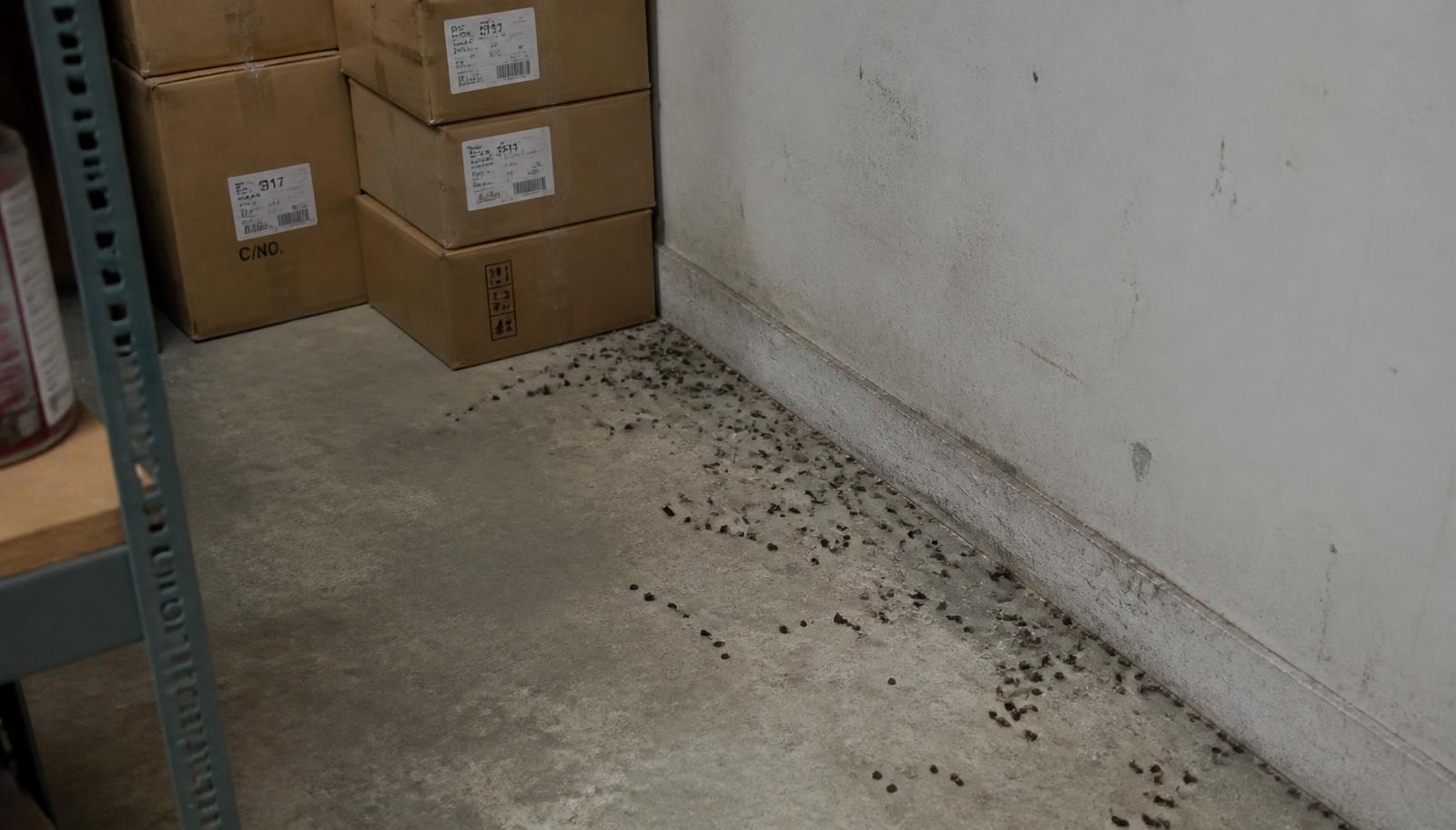
What rodent droppings actually contaminate
Rodents travel predictable routes: along walls, behind shelving, above ceiling tiles, through utility chases, and around food or product storage. Everywhere they travel, they deposit droppings and urine — often continuously, because rodents do not stop to eliminate. That means contamination follows the entire travel path, not just the spot where droppings are visible.
- Floors and storage areas — especially low-traffic corners, back rooms, and under pallet racking.
- Shelving and inventory — cardboard, packaging, and stored goods absorb urine and odor.
- Food-related spaces — prep areas, dry storage, vending, break rooms, and anywhere crumbs collect.
- Hidden corners and wall lines — behind equipment, inside chases, and above suspended ceilings.
- Indoor air quality — dried droppings and nesting material break into particles that go airborne when disturbed.
The rule of thumb: what you can see on the floor is a fraction of what is actually there. Visible droppings mean you should be inspecting the areas you cannot see.
Why the air-quality risk is the one people miss
Most facility teams react to droppings the same way they react to any mess — a broom, a shop vac, and a quick wipe-down. That is the single worst response. Dry sweeping and standard vacuuming aerosolize the exact particles you are trying to remove and push them into occupied space, into HVAC returns, and onto surfaces that were previously clean. Cleaning improperly can turn a contained problem into a building-wide one.
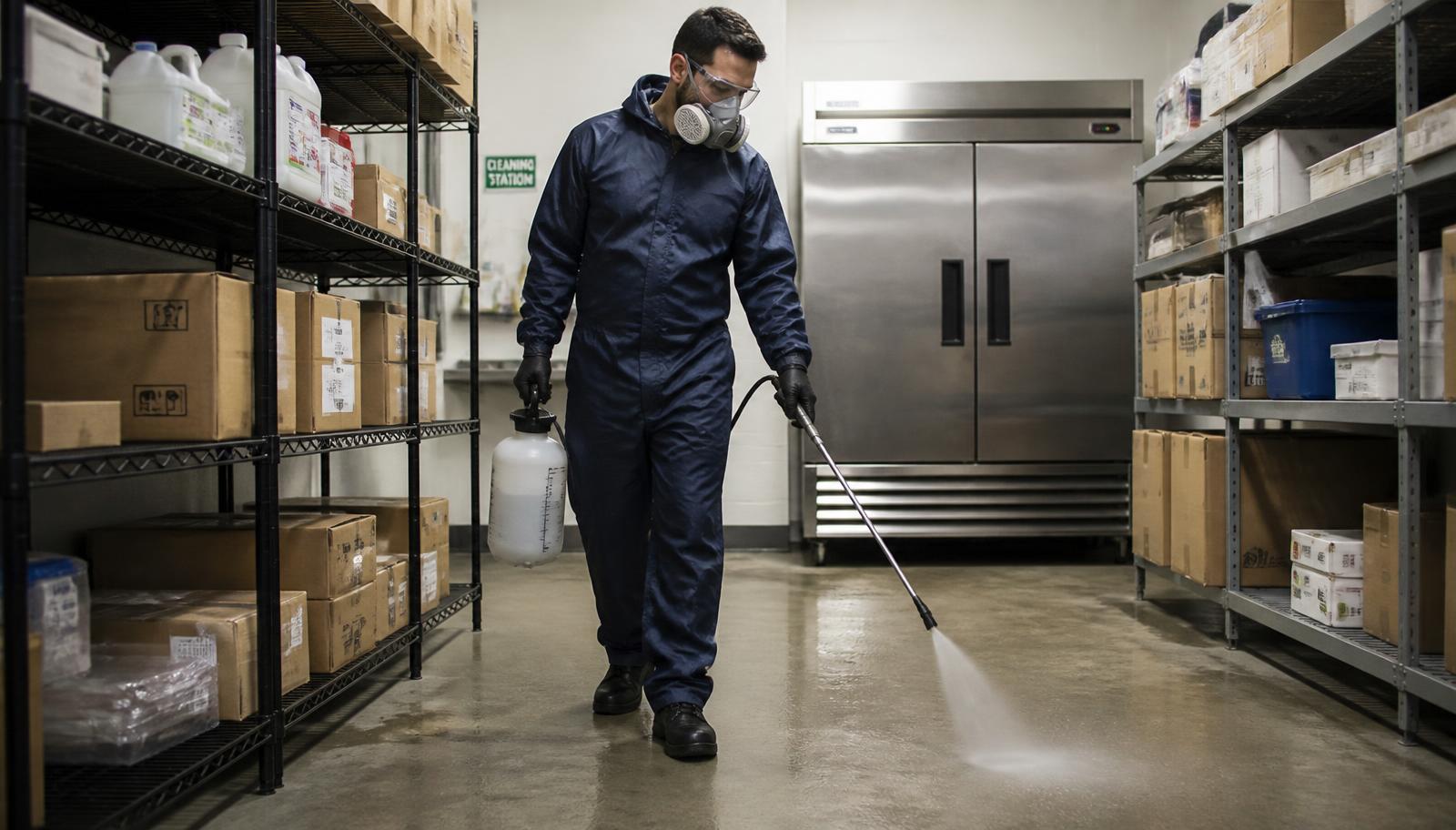
The correct sequence is to ventilate the area, keep people out during the work, mist droppings and nesting debris with disinfectant so nothing becomes airborne, remove them while damp, and then clean and disinfect the full surface — floors, shelving, and any hard goods the contamination touched. Porous items that absorbed urine usually need to be discarded, not cleaned.
Cleanup versus exclusion: why one without the other fails
Cleaning solves today's contamination. It does nothing about tomorrow's. If a building still has open access points, rodents return to the same runways within days and re-contaminate the same shelving and the same corners. Facility managers who only budget for cleanup end up paying for the same cleanup repeatedly.
| Approach | What it solves | What it leaves open |
|---|---|---|
| Trapping / baiting only | Reduces the active population inside | Contamination stays; new rodents enter through the same gaps |
| Cleaning only | Removes droppings, odor, and surface contamination | Access points remain; re-contamination in days or weeks |
| Exclusion + remediation | Seals entry points, removes contamination, restores sanitation | Requires periodic re-inspection after construction or storm damage |
Where rodents are getting into your building
A mouse fits through an opening roughly the width of a pencil; a rat needs about the size of a quarter. On a commercial property, that describes dozens of ordinary conditions nobody thinks of as damage.
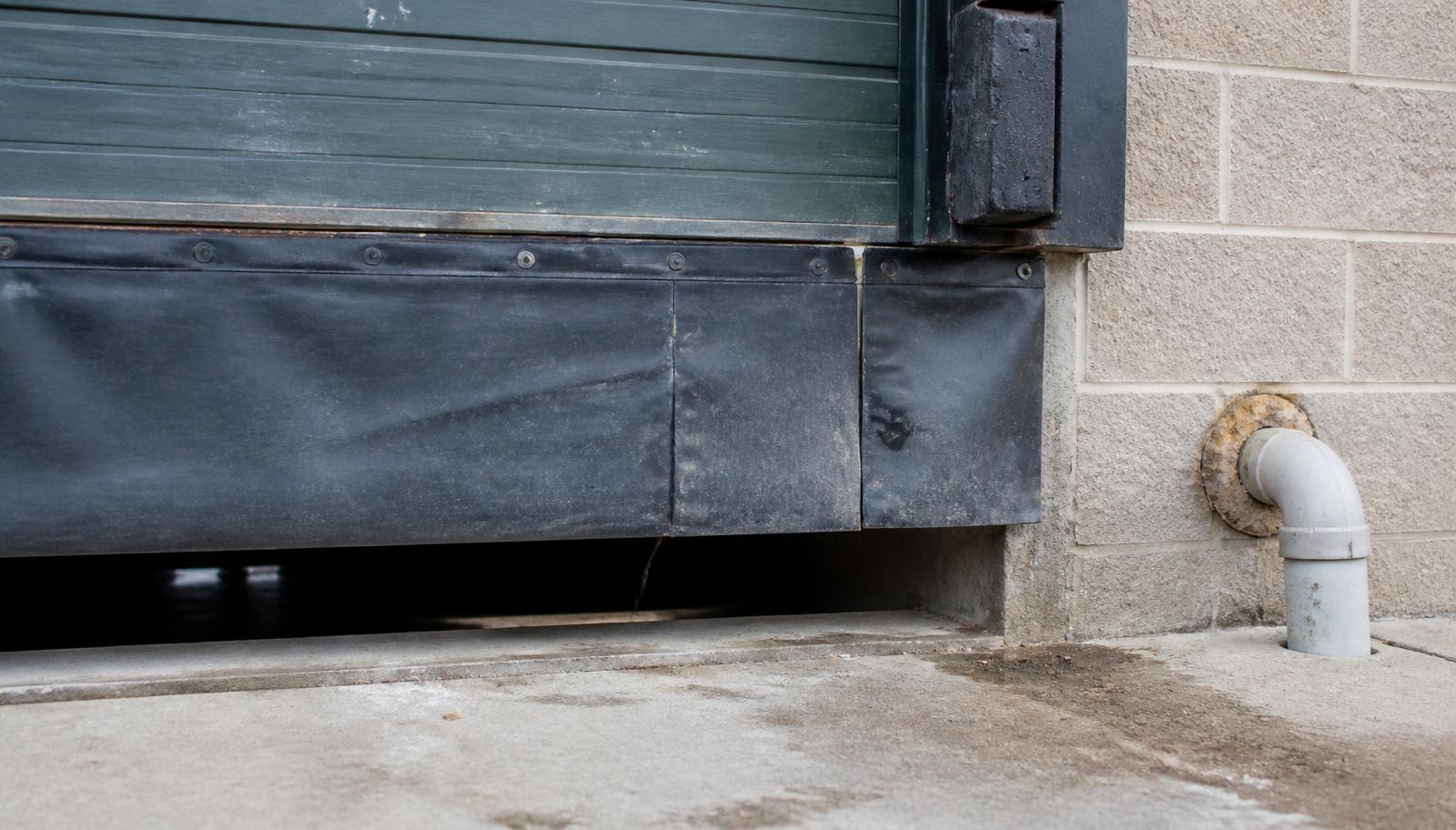
- Worn or missing door sweeps on exterior and loading dock doors
- Gaps at loading dock levelers, seals, and bumper plates
- Utility and pipe penetrations that were never properly sealed after installation
- Cracks and spalling at foundations, slab edges, and block walls
- Unscreened vents, weep holes, roof penetrations, and rooftop equipment curbs
- Gaps around conduit, gas lines, and sprinkler mains
- Damaged sidewalk and curb voids that give rodents a burrow path to the building envelope
A practical response plan for facility managers
1. Document before you clean
Photograph droppings, gnaw marks, greasy rub marks along walls, and nesting material, with dates and locations. This creates the map of rodent travel routes that drives both the cleanup scope and the exclusion work — and it is the record you will want if a health inspector, tenant, or insurer asks.
2. Isolate and remediate properly
Close the area to staff and customers, ventilate, and use disinfect-then-remove procedures rather than dry sweeping. Discard contaminated porous materials. Clean and disinfect shelving, not just the floor.
3. Get a full exterior evaluation
Walk the entire building envelope at ground level and on the roof. Every gap gets logged with a location and a repair method — mortar and concrete patching, galvanized mesh over penetrations, sealant, door sweep replacement, or hardware repair.
4. Seal it with materials rodents cannot defeat
Foam and caulk alone do not hold; rodents chew through both. Durable exclusion uses masonry patching, galvanized hardware cloth, steel wool packing behind sealant, and properly fitted door hardware.
5. Re-inspect on a schedule
Buildings change. Roof work, utility trenching, tenant build-outs, and storm damage all reopen the envelope. Twice-yearly inspections are a minimum; quarterly is right for restaurants, grocery, warehouses, and multi-tenant retail.
Warning signs to act on before droppings appear
- Greasy dark rub marks along baseboards and wall lines
- Gnaw damage on packaging, cardboard, insulation, or wiring
- Shredded paper, fabric, or insulation collected behind equipment
- A persistent musty ammonia odor in back-of-house areas
- Scratching or scurrying sounds in ceilings and walls after hours
- Burrow holes in landscaping, along foundation lines, or under dumpster pads
Frequently asked questions
Are rodent droppings in a commercial building dangerous?
Yes. Droppings and urine contaminate floors, shelving, inventory, and food-related areas, and particles can become airborne when droppings or nesting material are disturbed during sweeping or moving stock. Treat any visible droppings as a sanitation and safety issue, not a cosmetic one.
Can staff just sweep or vacuum rodent droppings?
Dry sweeping and standard vacuuming are the two worst methods, because both send dust and contaminated particles into the air. Droppings should be misted with a disinfectant, removed while damp, and the surface then cleaned and disinfected — by trained staff using gloves and appropriate respiratory protection.
How do rodents get into a commercial building?
Most often through gaps under exterior doors and worn door sweeps, loading dock seals, utility and pipe penetrations, cracks in foundations and block walls, roof and vent openings, and gaps around conduit. A mouse only needs an opening about the width of a pencil.
Will cleaning alone solve a rodent problem?
No. Cleaning removes the contamination but not the cause. If the building still has open entry points, rodents return and re-contaminate the same areas. Exclusion — sealing and hardening every access point — is what makes the cleanup last.
How often should a commercial property be inspected for rodent entry points?
At minimum twice a year, plus after any construction, roof work, utility work, or storm damage. High-risk properties such as restaurants, grocery, warehouses, and multi-tenant retail benefit from quarterly exterior evaluations.
Don't ignore the warning signs
Rodent droppings are never a minor issue. They are evidence of a larger problem that affects sanitation, safety, air quality, and daily operations — and the longer the conditions go unaddressed, the more of the building gets involved. Evaluate, clean properly, and seal the building. That order is what keeps the problem from coming back.
Get your building evaluated for rodent entry points
Nationwide Maintenance helps commercial properties across New York, New Jersey, and Connecticut find where rodents are getting in, seal those access points, and address the sanitation conditions they leave behind. 30+ years serving retail, restaurant, warehouse, healthcare, and multi-tenant properties.
Or call 888-829-1313 to speak with our team.