Power Washing Safety: A Facility Manager’s Field Guide
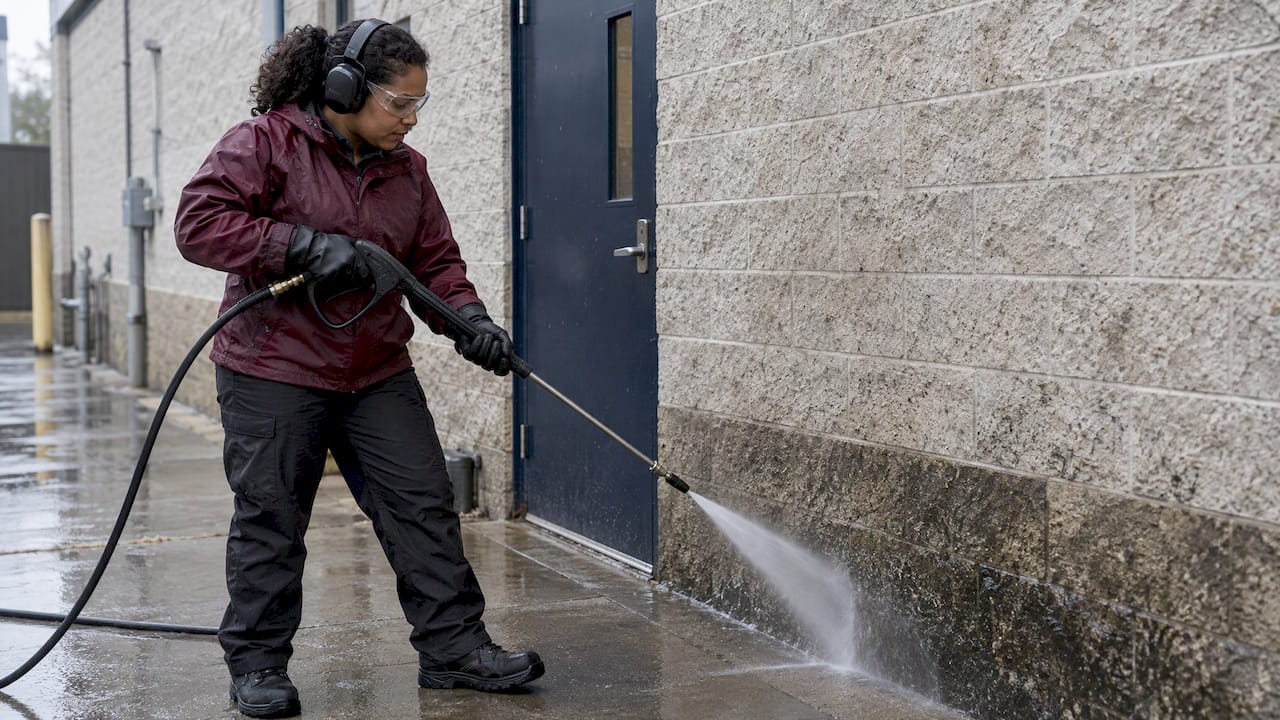
Power washing safety comes down to four things: controlling the jet, controlling the work area, controlling electricity, fuel and chemicals, and putting trained people behind the wand. On a commercial property, that last point decides most outcomes. When exterior washing is part of a single facility contract, as it is with our commercial power washing services in New York, New Jersey and Connecticut, one accountable vendor handles the work instead of a rotating cast of crews. This guide covers what every site should have in place, whoever holds the wand.
TL;DR
- A high-pressure jet can leave a deep wound that looks like a small cut. Any spray injury needs prompt medical attention, according to the CDC.
- Keep the public out: barriers, signs and a defined work zone matter as much as the operator’s gear.
- Water and electricity, gasoline engines and carbon monoxide, and cleaning chemicals are the three hazards besides the jet itself.
- Only trained operators in the right PPE should run the machine, and the equipment should be inspected before every job.
- Delicate surfaces such as glass, wood, trim and plantings need the right nozzle and a test spot first.
Table of Contents
- Why a pressure washer injures people
- If someone is hit by the spray
- Before the machine starts: inspection and setup
- Protecting pedestrians, tenants and property
- PPE and training
- Electricity, engines and chemicals
- Delicate surfaces: where the damage is to property
- One contract, one accountable crew
- Our perspective
- FAQ
- Sources
Why a pressure washer injures people
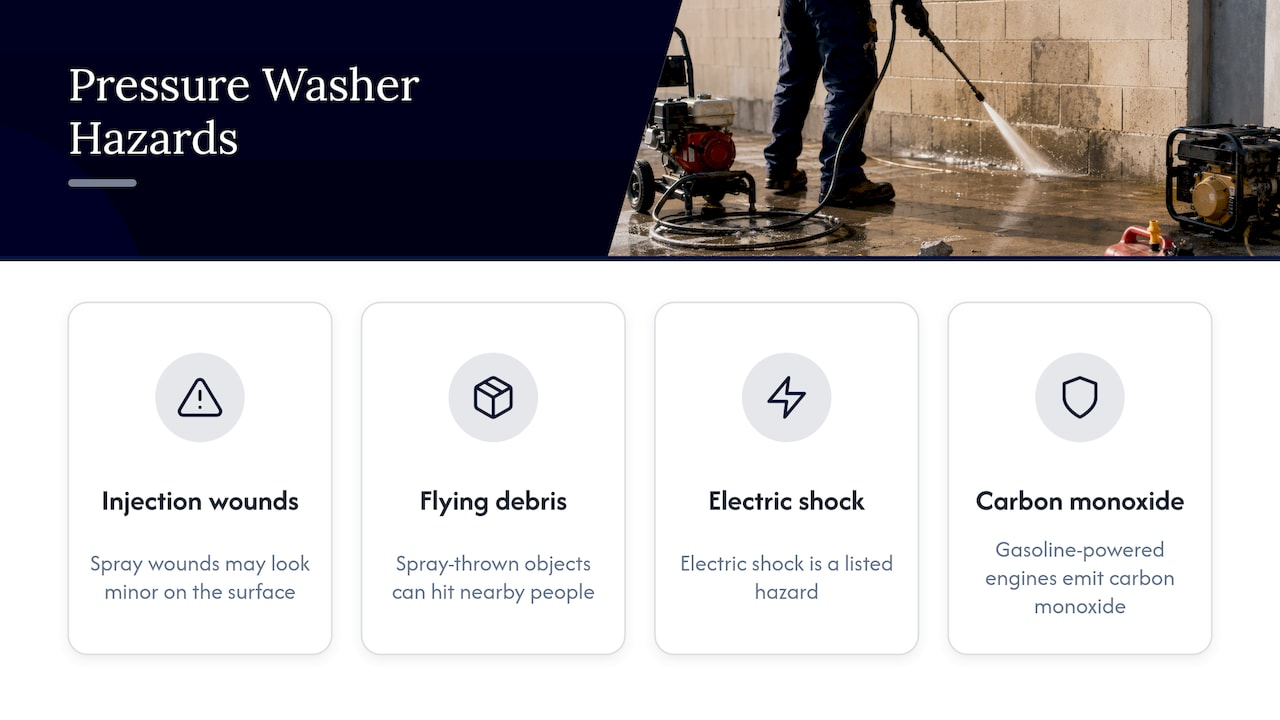
A pressure washer turns a garden-hose flow into a narrow, fast jet. The CDC warns that the spray can cause a serious wound that may look minor on the surface. The same guidance lists three more hazards: objects thrown by the spray that hit people nearby, electric shock, and carbon monoxide from gasoline-powered engines.
The University of Kentucky’s occupational safety office adds that the jet can abrade skin, damage eyes and contribute to hearing injury. Gas models are loud, and operators who work a full shift without hearing protection feel it.
For a property manager, the practical lesson is that the danger is not limited to the person holding the wand. A bystander in a doorway, a tenant’s employee walking through a plaza, or a contractor on a ladder nearby can be hurt by the spray or by debris it kicks up.
If someone is hit by the spray
Treat every high-pressure spray injury as serious, even when the skin looks barely broken. The CDC says anyone with such a wound should get medical attention as soon as possible. Clinicians may X-ray the area, give a tetanus vaccination and antibiotics, or refer the patient to a specialist. The agency also notes that delaying care raises the risk of infection, disability and amputation.
For your site procedures, that means:
- Shut off the machine and release pressure before anyone approaches the injured person.
- Send the person for medical evaluation rather than letting them decide if it is “just a scratch.”
- Record what happened, which machine was in use and where, so your incident report is complete.
If an injury is severe or there is heavy bleeding, call 911.
Before the machine starts: inspection and setup
Most failures happen at hoses, fittings and connections. The manual for a major U.S. pressure-washer brand tells operators to inspect the washer before each use for loose or damaged parts, leaks, missing guards and blocked cooling vents, and to repair or replace defects before operating. It also calls for an uninterrupted supply of clean, cold water, purging air from the system before starting, and replacing a damaged high-pressure hose rather than repairing it at the leak or touching it.
On a commercial job, add a layer of record keeping. UK contractor-safety guidance for high-pressure water jetting recommends daily user checks and weekly supervisor checks of hoses, couplings, guns and electrical components, with the results written in a log. That guidance comes from the UK, but the routine translates to any multi-site operation, and a log is exactly what a facility manager wants to see during an audit.
A short pre-job checklist:
- Hoses, couplings, trigger gun and wand free of leaks, cracks and wear
- Water supply connected and air purged
- Engine area clear, cooling vents unblocked
- Work zone defined and signed
- Operators trained and wearing the right gear
- Nozzle chosen for the surface, not the dirt
Protecting pedestrians, tenants and property
Retail centers, medical campuses, schools and office plazas share one challenge: the public keeps walking through. The UK Health and Safety Executive’s guidance on low-pressure washing, which covers typical pressures of 100 to 120 bar (roughly 1,450 to 1,740 psi), advises working outdoors or in a segregated area, erecting barriers and notices, and allowing only authorized, trained people inside. It also says to avoid trip hazards from the water line to the spray lance.
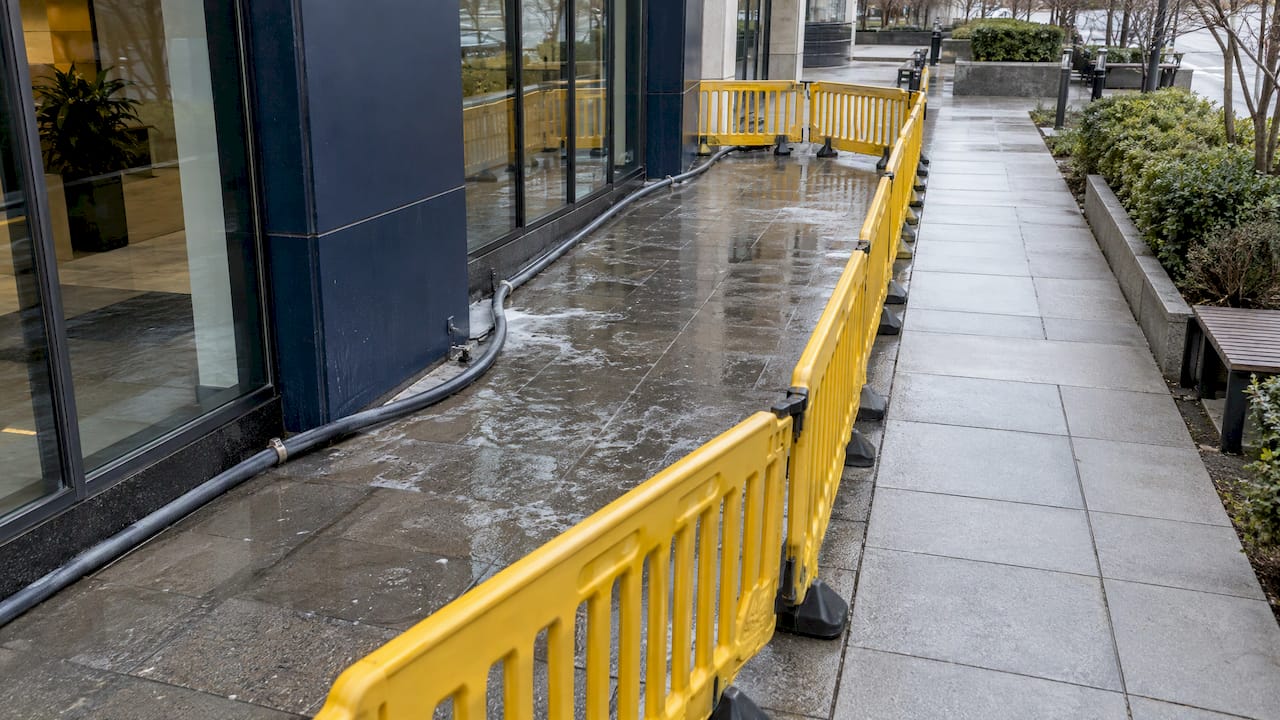
The SafeContractor guidance goes further on exclusion zones. It suggests cones, tape, signs or screens around the work, safely shutting off the pressure immediately if an unauthorized person enters, and protecting hoses that run outside the zone.
In practice, on a commercial property:
- Schedule around foot traffic. Overnight or early-morning work keeps customers and patients out of the zone. Sidewalks and entrances are the usual flashpoints; see how we approach commercial sidewalk pressure washing.
- Manage wet surfaces. The OSHA and NIOSH small business handbook treats safe upkeep of wet walking surfaces as part of workplace safety. Runoff on a lobby threshold or ramp is a slip claim waiting to happen.
- Protect what is around the work. Doors, vents, signage, vehicles and plantings all sit in the spray’s path.
- Keep children away. The CDC says children must not operate the machine and should be kept at a safe distance.
For facades, awnings and storefronts, our building exterior washing service is one place where these zone controls matter daily, because the work happens beside entrances and customers.
PPE and training
The right gear depends on the machine and the task. The University of Tennessee’s occupational health program lists safety glasses or goggles for gas, electric and heated washers, a face shield above 2,000 psi, and hearing protection for gas-powered models. The UK HSE’s low-pressure guidance describes a waterproof suit and visor, protective gloves, waterproof slip-resistant boots and goggles, all of which must be compatible with one another.
Respiratory protection depends on the setting. The same HSE sheet says a respirator is not normally needed outdoors or indoors with good general ventilation, but may be needed otherwise, and that tight-fitting respirators require fit testing and user training. In the U.S., the OSHA and NIOSH handbook points to hazard-based PPE and a written respiratory protection program wherever respirators are required. The handbook treats PPE as one part of an employer’s hazard assessment, not a universal equipment list.
Training matters as much as gear. The Tennessee procedure requires staff to be trained by a facility manager or a health and safety professional before they operate a pressure washer. At minimum, an operator should know:
- The hazards of the jet, the engine and the chemicals in use
- How to start, stop and depressurize the machine
- How to hold the wand: both hands, firm footing, never pointed at anyone
- When to stop work and who to call
The Kentucky guidance echoes the basics: read the operator manual, use eye and hearing protection, hold the wand with both hands and keep your footing.
Electricity, engines and chemicals
Water and electrical equipment
The CDC advises testing the ground-fault circuit interrupter (GFCI, the outlet or plug that cuts power when it detects leakage) before use, plugging into a properly grounded outlet, and keeping electrical connections out of standing water. If a breaker trips, have a qualified electrician check the washer. The HSE adds that nearby electrical fittings should be waterproof and that a residual current device (the UK term for the same protection) should be used.
Gas-powered machines
Carbon monoxide is odorless. The CDC says never to run a gasoline-powered washer indoors or within 20 feet of a window, door or vent. The Tennessee procedure also says fuel-powered washers belong in an open, well-ventilated area. Operators should not refuel while the engine runs or near an open flame, should stop the engine before adjusting a hose or nozzle, and should avoid the hot exhaust.
This matters at loading docks, parking structures and building entrances, where vents and doors are close to where the machine wants to sit.
Cleaning agents
Detergents change the risk profile. The HSE says to check the Safety Data Sheet (the manufacturer’s hazard document) for asthma and flammability hazards, use the correct dilution, keep products off skin, store them safely and wash equipment after use. The same agency warns that the mist from pressure washing can carry cleaning agents, oil, mud residues and disease organisms, with potential dermatitis, asthma and zoonotic disease effects, in its offshore guidance.
The Simpson manual permits only approved soaps and chemicals, prohibits volatile, flammable or corrosive liquids and bleach, and directs users to flush clean water through the system after chemical use. Follow your machine manufacturer’s list over any habit picked up on the job.
Delicate surfaces: where the damage is to property
Safety also means not wrecking the building. The same manual warns that high-pressure spray can damage plants, wood, glass, vehicle paint and trim, and recommends picking the right nozzle and testing a surface before spraying. A wide fan tip at a distance and a small test patch protect decks, cladding and storefront finishes.
For many building exteriors, lower-pressure approaches are the better spec. Our soft washing checklist for facility managers covers how to write that into a scope of work.
One contract, one accountable crew
For property managers, retail chains, healthcare sites and public agencies, the safety question is rarely “how do I use a pressure washer?” It is “who is accountable when the washing happens on my property?” Our exterior washing is delivered under the same agreement as cleaning, pest control, landscaping, construction and parking lot services, so one vendor can coordinate the work zone with the other trades on your site. We are a WBE-certified vendor, which helps organizations that must meet supplier diversity requirements, and we offer 24/7 emergency response when a spill, leak or storm creates an urgent need.
If you manage several locations in New York, New Jersey or Connecticut, start with our commercial power washing page or our property management solutions, and tell us what surfaces, hours and foot traffic your sites involve.

Our perspective
Safe power washing is a management question before it is an equipment question. Pressure, nozzle and PPE all matter, but the incidents that hurt people come from gaps: a walkway left open, an untrained hand on the wand, a hose nobody checked.
That is why we think a facility’s exterior washing belongs inside one contract with the rest of its maintenance. When cleaning, pest control, landscaping, construction and power washing are managed together, the work zone, the schedule and the surfaces are planned together, and there is one party to answer for the result.
Our clients include Fortune 500 brands and public entities that expect consistent presentation and compliance, and we bring more than 30 years of experience to commercial, retail and industrial sites. Eco-friendly practices are part of how we work, and our emergency line runs around the clock.
Nationwide Maintenance.
FAQ
Do I need a certification to pressure wash commercially?
The U.S. does not have a single national license for pressure washing. What matters is documented training: the Tennessee procedure, for example, requires operator training before use, and the OSHA handbook calls for training under a written program wherever respirators are required. Property managers should ask for training records and insurance from whoever works on their site.
Can I use a pressure washer with just a bucket of water?
Machines are designed for a continuous clean water supply. The Simpson manual calls for an uninterrupted clean, cold water source and for purging air before starting. Running a pump dry or starved of water risks damaging it, so connect a proper supply.
What are the main hazards of using a pressure washer?
The CDC names four: wounds from the spray that can look minor, objects thrown at bystanders, electric shock and carbon monoxide from gasoline engines. Add slips on wet ground, noise, and chemical exposure from detergents.
How often should a commercial property be power washed?
It depends on the surface, traffic and local conditions. Entrances, sidewalks and dumpster areas usually need more frequent attention than building facades. A recurring schedule set in your maintenance contract keeps the work planned around tenants and customers rather than done in a rush.
Sources
- Pressure Washer Safety, CDC
- Cleaning and disinfection using a low-pressure washer, UK HSE
- Pressure cleaning, external structures, UK HSE
- Small Business Safety and Health Handbook, OSHA and NIOSH
- Pressure Washer Use Safety Standard Operating Procedures, University of Tennessee
- Pressure Washer Safety, University of Kentucky Occupational Health and Safety
- Pressure washer operator’s manual, Simpson
- High Pressure Water Jetting, Guidance Note 36, SafeContractor
Recommended
Need this handled at your facility?
Our crews cover commercial properties across New York, New Jersey, and Connecticut.