Pigeon Control for Storefronts: Stop Roosting for Good
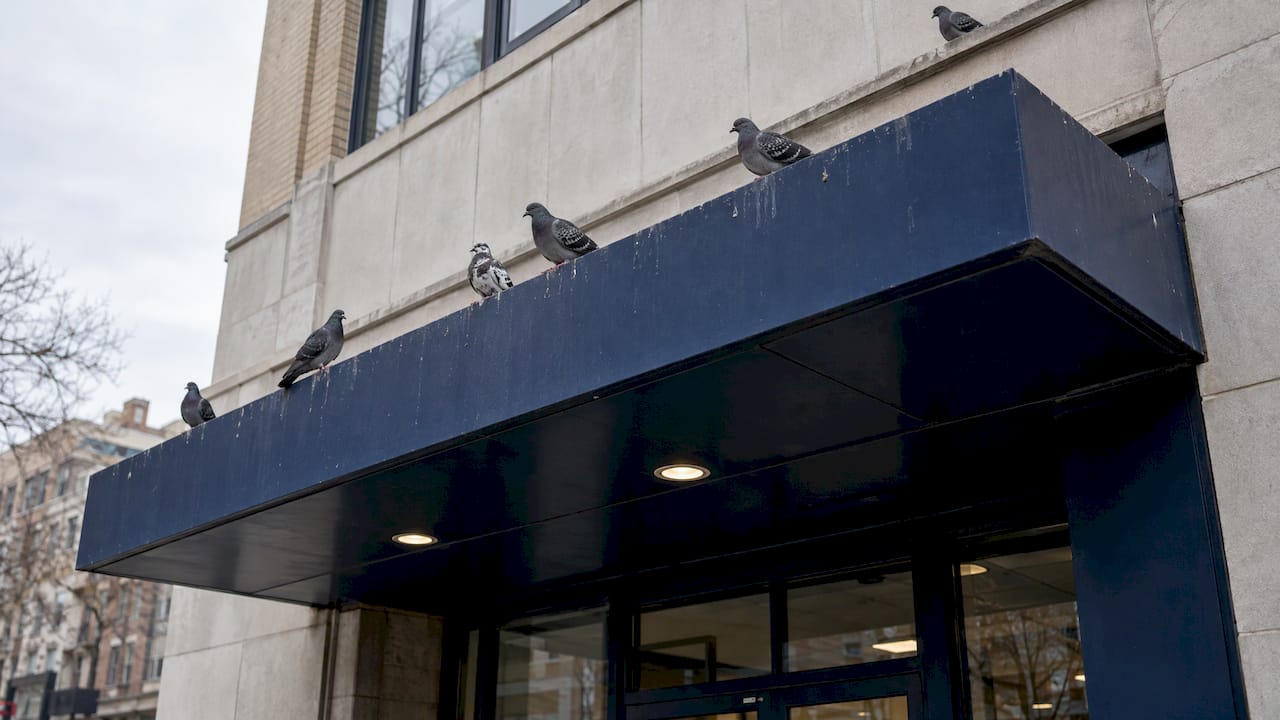
Pigeons settle on a storefront because it gives them a ledge to perch on, a sheltered spot to nest and food nearby. Remove those three things and they move on. Chasing or trapping birds does not work on its own. Prevention is a facility job: inspect the facade, close off the surfaces birds use, remove what feeds them, and keep the area clean so new birds are not drawn to old droppings. For a property manager or retail operator, the simplest way to run all of this is as one coordinated program under one contract. Our pest control and cleaning teams work under a single agreement for that reason.
TL;DR
- Pigeons return to ledges, signs and canopies where they have found shelter and predictable food. Fix those conditions first.
- Match the deterrent to the surface: sloped ledges, spikes or wire for narrow perches, netting for open recesses and canopies.
- Trapping or removing birds alone gives short-lived results because new birds fill the vacancy.
- Wet droppings before removal and wear protective gear. Large accumulations are a job for trained crews.
- Deterrents need regular inspection, and the cleanup and prevention work is easiest when one vendor handles both.
Table of Contents
- Why pigeons pick your storefront
- Walk the facade and find the roosting spots
- Cut off food and water first
- Choose the exclusion method for each surface
- Why removing birds alone does not last
- If birds are already nesting
- Clean droppings safely
- Keep deterrents working and the storefront customer-ready
- One program instead of several vendors
- Our perspective
- FAQ
- Sources
Why pigeons pick your storefront
Pigeons are not random visitors. According to the University of Arizona Cooperative Extension, they use the flat surfaces and ledges of buildings as nesting sites and learn the places where food is reliably available. A storefront often offers both: a deep sign band, a canopy edge, a recessed entrance, and a dumpster or outdoor seating area a few steps away.
Once a flock has a spot, it keeps coming back. Droppings accumulate, the area looks neglected and customers notice. That is why the first goal is to make the location unattractive before the habit sets in. A fresh problem of two or three birds is far easier to stop than a colony with a season of nests behind it.
Walk the facade and find the roosting spots
Start with a slow walk around the building, at opening time and again late in the day, looking up. Birds favor spots that are sheltered from wind and rain and that offer a level surface. The Facility Executive bird-management article suggests inspecting signage, guardrails, parapets, dock doors and false ceilings, and matching controls to the bird species and the conditions of the facility.
For a typical storefront, check these points:
- The top of the sign box and the gap behind channel letters
- Awning and canopy frames, and the space between the canopy and the wall
- Window ledges, cornices and decorative trim
- Light fixtures, security cameras and conduit runs
- Roof edges, parapets and the tops of rooftop units
- Loading areas and dock doors, where open doors let birds inside
Look for droppings streaks below a ledge, feathers, nesting material and birds standing in the same spot at the same time every day. Mark each location. That list becomes the scope of work, and it tells you which type of deterrent each spot needs.
Cut off food and water first
Hardware alone will not hold if the birds still have a reason to be nearby. The Western Australian Department of Health recommends securing rubbish, limiting food spillage and removing attractants such as feeders and outdoor pet food. The BC SPCA adds that intentional and accidental feeding should be discouraged, garbage and compost secured, and water sources such as leaks removed.
For a retail frontage, that translates into a short checklist:
- Use dumpsters and bins with closing lids, and keep the area around them swept.
- Clear food waste from outdoor seating and patios at close of business.
- Fix dripping gutters, leaking hose bibs and pooling water on flat roofs.
- Tell staff and tenants not to feed birds, and post a polite sign if customers do.
- Keep the sidewalk and parking lot clear of spilled food and packaging.
The parking lot and sidewalk matter more than most managers expect. Spilled snacks and trash blowing around the lot feed a flock all day. Regular sweeping is part of our parking lot cleaning work, and the sidewalk maintenance guide covers the ground-level upkeep that keeps a frontage from attracting birds.
Choose the exclusion method for each surface
Exclusion means physically stopping birds from landing or entering. The University of Arizona guide recommends an integrated approach that reduces food, water, perching and nesting opportunities alongside exclusion. No single product fits every surface, so match the method to the spot.
| Surface | Typical method | What to watch |
|---|---|---|
| Flat ledges, cornices | Slope them to 45 degrees or more, or block access | Angled systems should have ends closed and sealed so wildlife cannot nest inside |
| Sign tops, parapets, rooflines, AC units | Bird spikes or wire barriers | Spikes must be installed along the full perch so birds cannot land between them |
| Canopies, recesses, open structures | Netting | Tight at base and sides; keep access to lighting and equipment |
| Dock doors, entrances | Keep doors closed when idle; barriers where needed | Birds enter through gaps and open doors |
The sources behind the table: the Internet Center for Wildlife Damage Management recommends changing flat ledges to a slope of 45 degrees or more, or blocking access. The Extension Foundation says spikes can deter landing on ledges and rooflines, and that angled ledge systems should be sealed at the ends. The Humane Society of the United States describes wire barriers, coils and netting as exclusion options, with netting tightly secured at the base and sides.
Netting on canopies and open frontage
Netting suits storefronts and open structures, but the Extension Foundation guide cautions that the installation should leave access to equipment such as lighting, and that weather exposure can eventually damage the net. In practice, that means planning access panels or removable sections around lights, cameras and signage wiring, and putting inspection of the net on the maintenance calendar. Our facility manager’s guide to bird control netting walks through the considerations for commercial buildings in more detail.
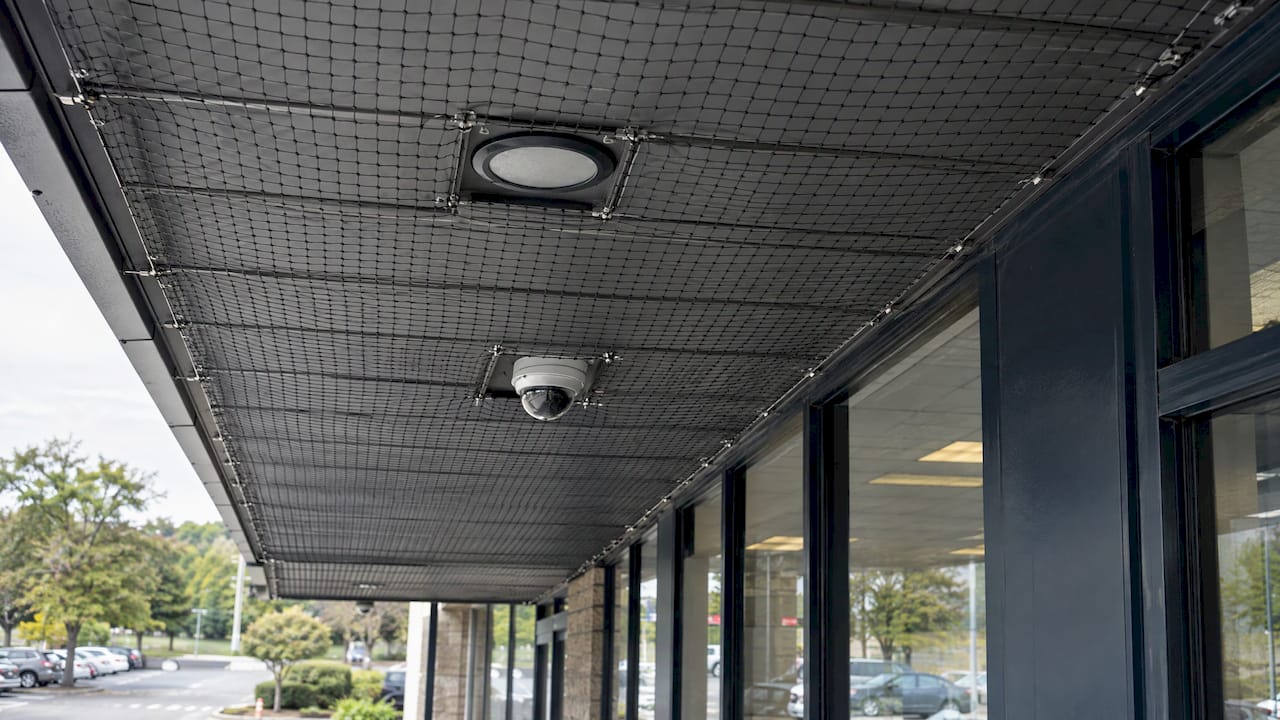
If netting or barriers will enclose a service yard, loading bay or gated rear entrance, think about how staff and vehicles get through. Planning around automated gate and access systems at the design stage avoids cutting or loosening netting later to let people through.
Skip sticky products
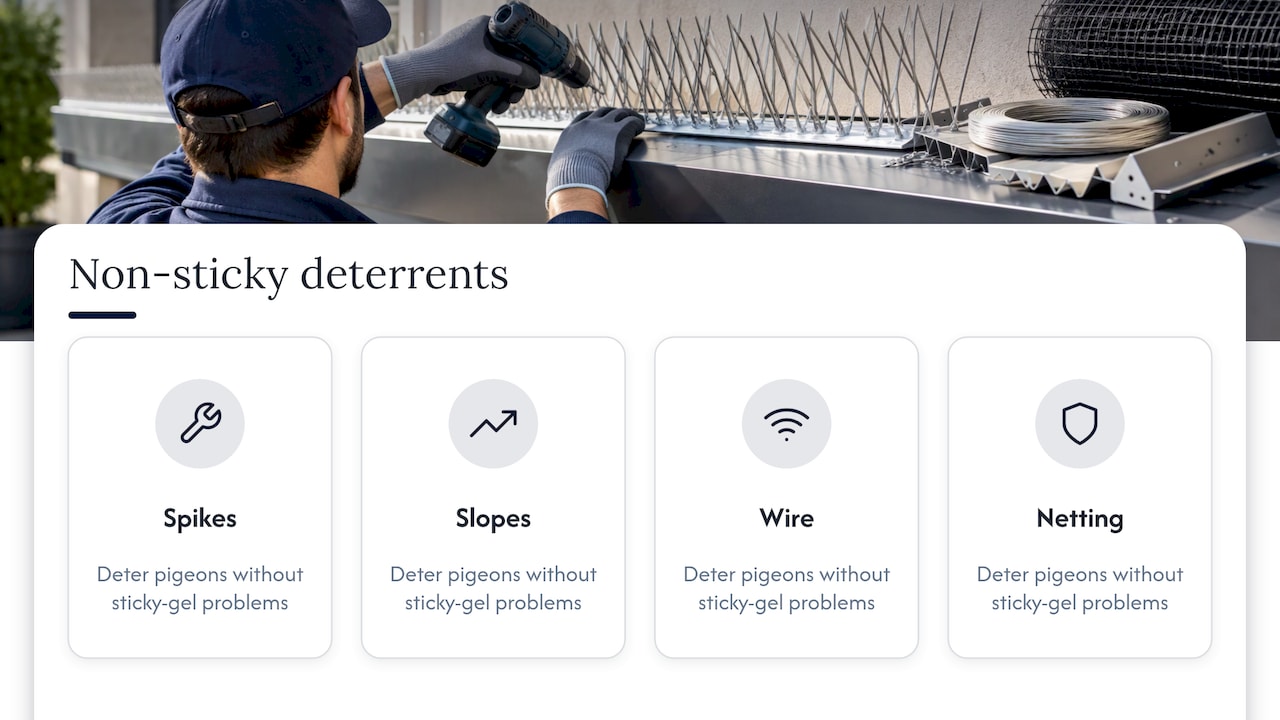
The Humane Society guide does not recommend sticky polybutene gels and pastes, because they can foul pigeons’ feathers and harm smaller or non-target birds. They also leave a mess on stone, brick and painted trim that someone has to clean off. Spikes, slopes, wire and netting do the job without those problems.
Why removing birds alone does not last
A common first reaction is to hire someone to trap the flock. The University of Arizona guide notes that there are few effective long-term options for an individual building and that trapping and relocating or lethal reduction can be followed by a rapid rebound in the population. The Humane Society guide makes the same point: removing pigeons alone is short-lived because other birds fill the vacancy, so the conditions that attract them must be addressed.
The lesson for a storefront is to treat the building, not just the birds. Every ledge you leave open invites the next flock. A plan that combines food and water control, exclusion and routine cleaning gives you a result that holds from season to season.
If birds are already nesting
Timing matters when nests are active. The BC SPCA guidance recommends waiting until nestlings have hatched and can fly before evicting nesting pigeons, then sealing openings only after the structure has been undisturbed for several days. That prevents trapping young birds inside a wall cavity or sign box, which creates odor, insects and a worse problem than the one you started with.
Rules also vary by place. The Ohio Department of Natural Resources certification manual for nuisance wildlife operators states that state, local and federal rules may apply and that operators must determine which laws govern their situation. For a multi-location retailer, that means requirements can differ between towns. A pest control provider that works across your region helps you stay consistent. Our pest control and prevention services serve commercial properties in New York, New Jersey and Connecticut.
Clean droppings safely
Droppings on a sidewalk or under a sign are a slip hazard and a brand problem. They also call for care. NYC Health says disease risk from pigeon droppings is rare, but people with compromised immune systems are at greater risk and should not clean droppings. It distinguishes small routine cleanup, for which disposable gloves and washable clothing are advised, from large jobs, which call for protective clothing, dust control and wetting before removal.
The Southern Nevada Health District gives a practical routine:
- Keep customers, children and pets away from the area.
- Wear protective clothing, waterproof gloves, eye protection, a filter mask and waterproof closed-toe footwear.
- Wet the droppings before removal so dust does not rise.
- Bag the debris securely.
- Let the cleaned area dry before people return.
It also notes that bleach may discolor or damage some surfaces and vegetation, so check the surface before you choose a cleaner.
For larger accumulations, such as a roof edge, a sign box or an old roost, the Arizona state risk-management checklist says cleanup is normally done by professional contractors or properly qualified, trained and equipped facilities staff, with hazard analysis, public barriers and dust suppression. That is work to hand to a crew. Our guide to bird droppings cleanup for commercial properties explains safe methods in more detail, and our commercial power washing and awning power washing services restore the frontage once the birds are excluded.
Keep deterrents working and the storefront customer-ready
A deterrent that is installed once and forgotten loses value. Build a simple routine into your maintenance schedule:
- Monthly: walk the facade and check spikes, wire and netting for gaps, sagging or debris that gives birds a foothold.
- After storms and high winds: look for loosened netting, bent spikes and displaced fasteners.
- Seasonally: reinspect sign boxes, canopy frames and roof edges before nesting season, and clear any nesting material right away, as the BC SPCA advises.
- Weekly: sweep the entrance and sidewalk, and check bins and outdoor seating areas.
Keep the customer experience in mind. Install barriers low-profile and in a color that matches the trim so they do not look like a security fence. Keep entrances, lighting and signage accessible for repair, and make sure nothing sharp sits where staff or customers can brush against it. Schedule droppings cleanup and exterior washing outside opening hours when possible.
If you manage several storefronts, a standard inspection checklist across all locations keeps presentation consistent. The same walk-through applies to a shopping center, a single-tenant retail pad or a hospital entrance.
One program instead of several vendors
Pigeon control touches several trades: pest prevention, exterior cleaning, sometimes minor construction or repair on ledges and signs. When each is a separate vendor, gaps appear. The netting gets installed, but nobody washes the stained wall below. The droppings get cleaned, but nobody checks the ledge that caused them.
We offer pest control, commercial cleaning, power washing, parking lot services, construction and 24/7 emergency response under a single contract, and our company is WBE-certified. For property managers who need one accountable partner across a portfolio, Nationwide Maintenance covers the prevention and the cleanup together.

If birds are already roosting at your storefront, tell us the address and which areas are affected, and we will build the scope around the walk-through list above. You can start from our commercial pest control and prevention page.
Our perspective
Pigeon problems are rarely about pigeons. They are about a building that offers shelter and food without anyone owning the fix. In more than 30 years of maintaining commercial properties, we have built our approach around that idea: one contract, one point of accountability, and prevention that covers the whole property instead of one ledge at a time.
For retail chains and property managers, consistency is the point. A storefront in one town should look the same as a storefront in the next, and birds should not be the reason it does not. That is why we combine pest control, cleaning, power washing and parking lot care under a single agreement, with eco-friendly practices and 24/7 emergency support when something urgent comes up.
Our advice is to treat bird prevention as part of regular facility maintenance, not as an emergency. Inspect, close the roosting spots, keep the frontage clean and keep a record. That routine is what protects your brand image and your customers.
Nationwide Maintenance.
FAQ
Can you hire someone to clean bird droppings?
Yes. Small, routine cleanup can be handled by trained staff with gloves and washable clothing, but larger accumulations call for protective clothing, dust control and wetting before removal. State guidance says larger jobs are normally done by professional contractors or properly trained and equipped staff. We handle commercial droppings cleanup as part of our cleaning and power washing services.
How do I get rid of pigeons in a warehouse?
First, close the ways in: keep dock doors shut when not in use and seal gaps in walls and rooflines. Then remove food sources inside and around the building, and use netting or barriers on rafters and ledges where birds perch. Inspect dock doors, false ceilings and rooflines, which are the areas facility guidance highlights.
Do bird spikes really keep pigeons off a ledge?
Spikes can deter landing on ledges and rooflines when they cover the full width of the perch and are kept clear of nesting debris. They work best on narrow, flat surfaces such as sign tops and parapets. For wide recesses or canopies, netting is usually the better fit.
Can I remove pigeon nests from my storefront?
Wait until any nestlings have hatched and can fly before evicting the birds, then seal openings only after the area has been undisturbed for several days. State, local and federal rules may apply to wildlife work, so confirm what governs your location before you act.
Sources
- Managing Pigeons, University of Arizona Cooperative Extension
- Feral pigeon control, Western Australian Department of Health
- PIGEONS, BC SPCA best practices
- Keep Birds From Nesting At Facilities, Facility Executive
- Pigeon Damage Control and Prevention Methods, Internet Center for Wildlife Damage Management
- How to Get Rid of Nuisance Birds, Extension Foundation
- Solving Problems with Pigeons, Humane Society of the United States
- Certification Manual, Ohio Department of Natural Resources
- Pigeon-Related Diseases, NYC Health
- Pigeon Prevention & Clean-Up Guidelines, Southern Nevada Health District
- Bird and Bat Excrement Removal checklist, Arizona State Risk Management
Recommended
Need this handled at your facility?
Our crews cover commercial properties across New York, New Jersey, and Connecticut.