Pest Control for Warehouses: The Facility Manager’s Guide
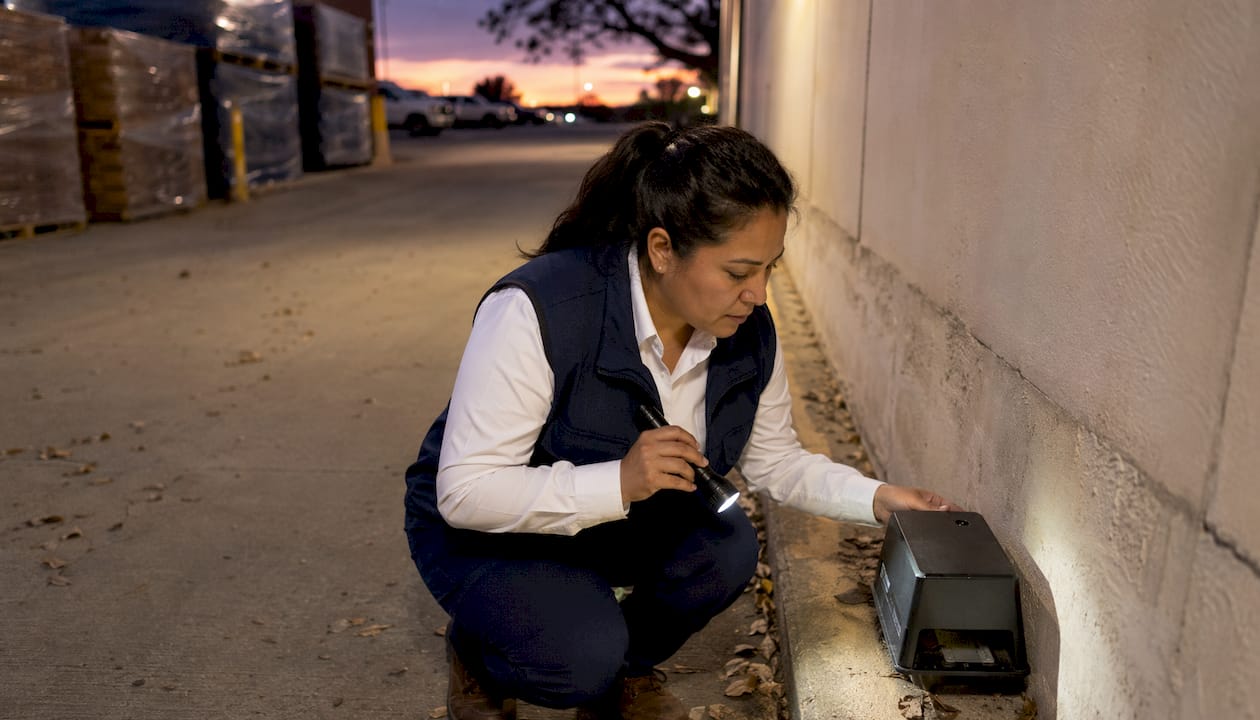
Hire an IPM-based commercial pest-management program integrated with your facility maintenance — that single decision does more for inventory protection, audit readiness, and operational continuity than any reactive spray schedule. Nationwidemaintenance combines warehouse pest control with cleaning, exclusion repairs, and 24/7 emergency response under a single contract, which is exactly the model this guide recommends.
TL;DR — act within 72 hours:
- Schedule a professional risk assessment covering dock seals, racking, ceiling voids, and plumbing penetrations.
- Walk your receiving area and implement inbound cargo inspection checks before the next shipment arrives.
- Fix any obvious sanitation gaps: clear debris from dock areas, pull pallets 18 inches from walls, and seal visible gaps with copper mesh and elastomeric sealant rather than expanding foam.
- Ask every provider you interview three questions: What does your written monitoring report include? How fast is your emergency response? Do you support AIB, BRC, SQF, or FSMA audits?
Table of Contents
- Why warehouses are high-risk for pests
- What pest control services does a warehouse actually need?
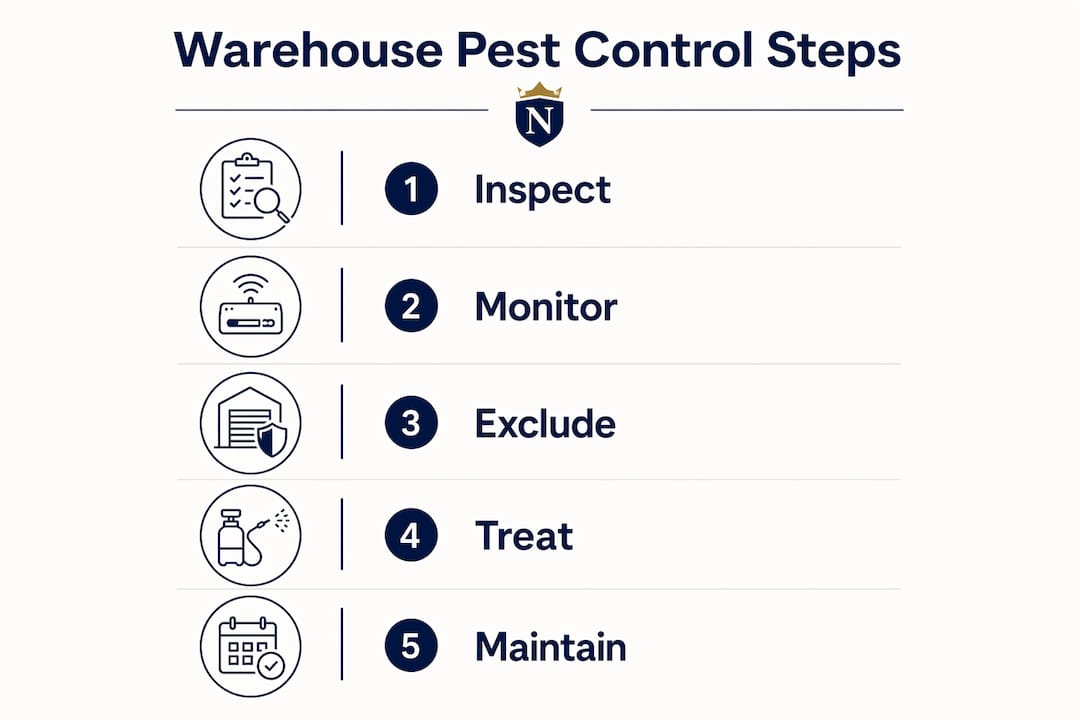
- How a commercial warehouse pest program works step by step
- What does warehouse pest control cost, and how often do you need service?
- How do you choose the right warehouse pest control provider?
- Why integrated maintenance and pest control reduces re-infestation
- Key Takeaways
- The case for treating pest control as an operational system
- Nationwidemaintenance warehouse pest control services
- Authoritative sources and further reading
Why warehouses are high-risk for pests
Warehouses are practically designed to attract pests. Dock doors open dozens of times a day, inbound freight carries hitchhiking insects and rodents from supplier facilities, and stacked pallets create the warm, dark harborage that rodents and stored-product insects need to establish colonies fast.
The pest categories that hit warehouses hardest:
- Rodents (mice and rats): Gnaw electrical wiring, contaminate product, and leave droppings that trigger recalls. Rough, jagged edges on packaging are a tell-tale sign of rodent gnawing; clean, straight cuts usually indicate mechanical damage.
- Stored-product insects: Grain beetles, Indian meal moths, and weevils arrive inside inbound shipments and spread through racking before anyone notices.
- Flies and ants: Attracted to spills, organic debris, and standing water near dock areas.
- Birds: Pigeons and starlings nest in high-bay rafters and above loading docks, creating contamination and slip hazards from droppings.
The business risks go well beyond a nuisance. A single rodent infestation can trigger a product recall, fail a third-party audit, and damage electrical systems to the point of fire risk. Over 60% of warehouse rodent entries occur at loading docks due to worn weather stripping and gaps in dock levelers — a structural problem, not just a pest problem.
Seasonality matters too. Peak pest pressure typically occurs during the warm months of the year, when warmer temperatures accelerate insect reproduction and rodent activity near building perimeters. That window aligns with peak shipping season for many distribution centers, compounding the risk.
What pest control services does a warehouse actually need?
Integrated Pest Management (IPM) is the industry standard for warehouse pest prevention. It is not a single treatment — it is a program that combines hazard analysis, inspection, sanitation, structural exclusion, targeted treatments, and documented reporting. Each element addresses a different failure point.
Rodent control
Tamper-resistant bait stations go along perimeter walls and near entry points at regular intervals. During an active infestation, stations are checked fortnightly; once activity drops, monthly checks are standard for food-grade facilities and quarterly for lower-risk warehouses. Traps supplement bait stations in sensitive areas where rodenticide use is restricted.
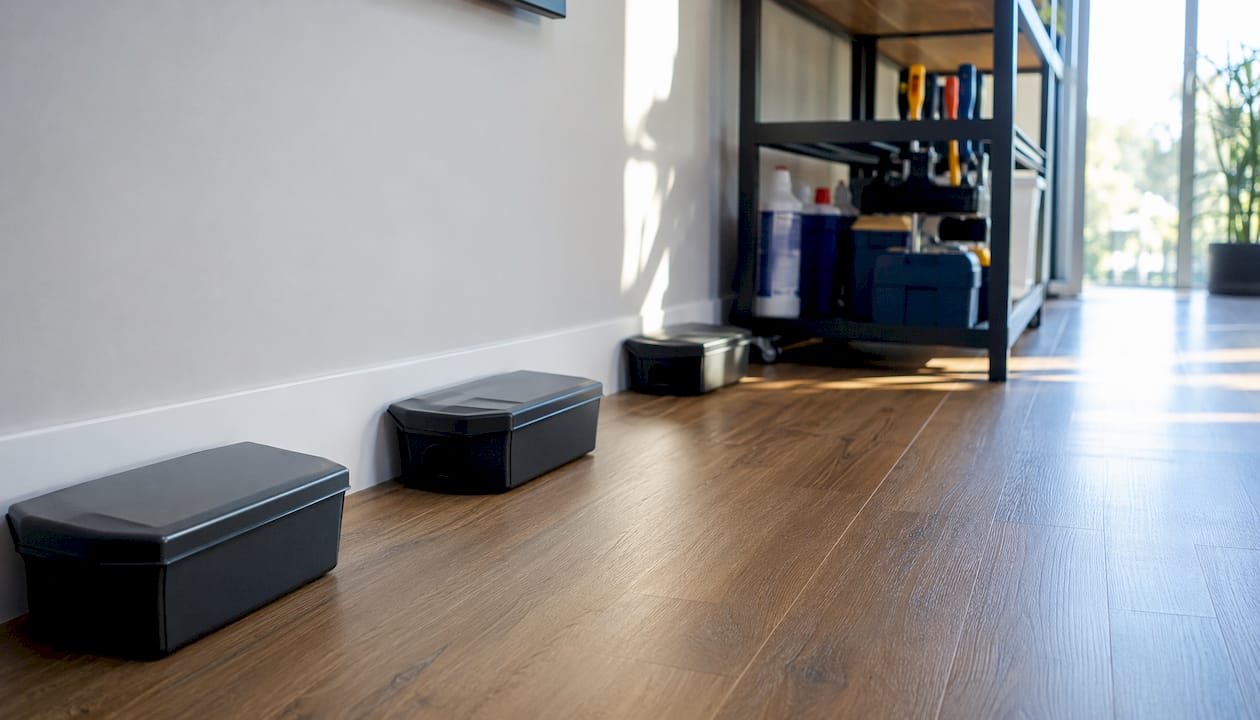
For exclusion, material choice matters. Copper mesh plus elastomeric sealant or cement outperforms expanding foam — rodents chew through foam in hours. Metal-reinforced brush sweeps on dock doors beat rubber-only sweeps for the same reason.
Stored-product pest control
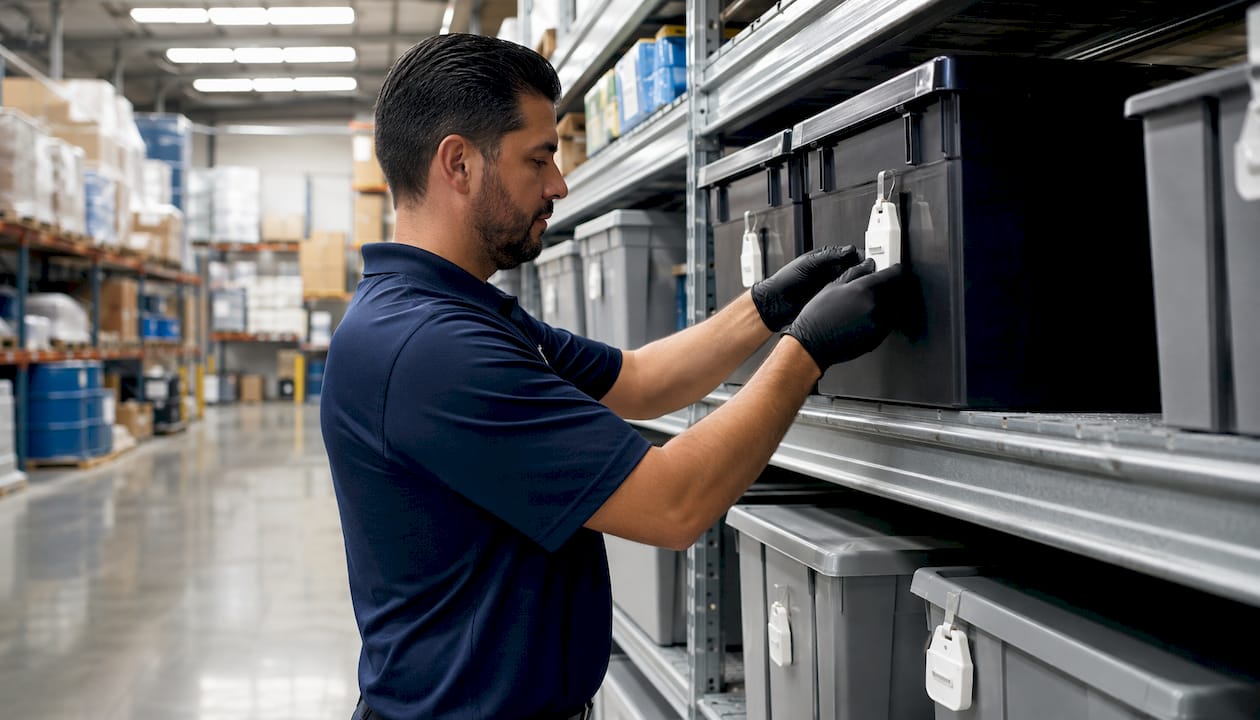
Pheromone monitoring traps identify species and hotspot locations before populations explode. Incoming shipments get inspected before unloading; supplier verification programs reduce the risk of supply-chain pest introductions at the source. For severe infestations in food-grade facilities, heat treatment or fumigation may be the only option that reaches pests inside sealed packaging.
Bird control
High-bay areas and loading docks need physical deterrents: netting, spike systems, and wire barriers at roost points. Exclusion is more durable than deterrents alone — birds adapt to sound and visual devices quickly.
Chemical treatments
Targeted, documented pesticide application is appropriate when monitoring data shows activity above threshold levels. IPM limits chemical use to specific zones and products, reducing worker exposure and audit risk. Every application must be logged with product name, concentration, application zone, and technician credentials.
Pro Tip: When evaluating a provider, ask for a sample monitoring report. It should include trap counts by location, trend lines across visits, hotspot maps, and technician sign-off. A provider who cannot produce this is not running a real IPM program.
How a commercial warehouse pest program works step by step
A well-run program follows a predictable operational sequence. Here is what to expect from day one through the 90-day mark.
- Initial site audit (Week 1): A credentialed technician inspects perimeter foundations, dock seals and levelers, racking layout, ceiling voids, and plumbing and electrical penetrations. The audit produces a written risk report with prioritized findings.
- Exclusion and sanitation fixes (Weeks 2–4): Gaps get sealed with durable materials, dock seals are repaired or replaced, and the 18-inch sanitary perimeter is established along all walls. Your internal team handles daily housekeeping; the provider handles structural repairs.
- Monitoring deployment (Week 2–3): Bait stations, traps, and insect monitors go in based on the risk map. Locations are documented and mapped for audit records.
- Staff training (Week 3–4): Warehouse staff learn to recognize pest signs, report sightings, and follow receiving inspection protocols. This step is often skipped by cut-rate providers and is one of the biggest gaps in most programs.
- Routine service visits (Month 2 onward): Technicians check and replenish stations, review trend data, and update the monitoring log. Visit frequency depends on risk tier (see the next section).
- Outbreak response: If activity spikes, the provider escalates to emergency visits, isolates affected inventory, coordinates deep cleaning, and conducts verification checks before releasing product back to storage.
- 90-day review: Trend data from the first three months establishes a baseline. A good program shows measurable declines in trap counts by week 6–8 for rodents; stored-product insects may take a full cycle to clear.
The division of responsibility is straightforward: the pest-management provider owns monitoring, treatment, and reporting; your facilities team owns daily sanitation, receiving checks, and structural maintenance between scheduled visits.
What does warehouse pest control cost, and how often do you need service?
Pricing varies by facility size, commodity type, regulatory requirements, and current infestation level. No single number applies universally, but the structure of costs is consistent.
Common pricing models:
- Per-visit pricing: Works for low-risk, low-frequency needs. Offers flexibility but no guaranteed response time and no program continuity.
- Monthly maintenance contract: The standard for food-grade and high-volume distribution facilities. Covers scheduled visits, monitoring, and reporting for a fixed monthly fee.
- Bundled facility maintenance contract: Combines pest control with cleaning, exclusion repairs, and emergency response under one agreement. Reduces vendor friction and speeds corrective actions when a structural issue feeds a pest problem.
Service frequency by risk tier:
| Risk Tier | Facility Type | Recommended Visit Cadence |
|---|---|---|
| High | Food-grade, active infestation | Fortnightly for 2–3 months, then monthly |
| Medium | General distribution, seasonal pressure | Monthly year-round, biweekly May–September |
| Low | Dry storage, low traffic | Quarterly with monthly monitoring checks |
What drives cost up: large square footage, complex racking that limits access, significant structural repair needs, audit-standard documentation requirements (AIB, BRC, SQF, FSMA), and high geographic pest pressure. Facilities in the Northeast and Southeast United States typically face higher rodent and stored-product insect pressure than facilities in drier climates.
A bundled contract that includes ongoing pest management alongside cleaning and maintenance almost always costs less per corrective action than managing separate vendors, because structural issues get fixed before they become re-infestation events.
How do you choose the right warehouse pest control provider?
The difference between a provider who passes your next audit and one who costs you a recall comes down to documentation, credentials, and program depth.
Must-have credentials and documents:
- State-licensed pesticide applicators with commercial certifications
- Written service agreement specifying scope, visit frequency, and response time SLAs
- Monitoring logs and trap-count records available for audit review
- General liability and workers’ compensation insurance certificates
- Experience with your specific audit standard (AIB, BRC, SQF, FSMA)
Red flags to walk away from:
- A proposal with no documented monitoring program or written exclusion plan
- Technicians who cannot name the audit standards relevant to your facility
- No emergency response commitment in the contract
- One-size-fits-all treatment schedules with no site-specific risk analysis
Pro Tip: Score competing proposals on a simple matrix: credentials (25%), monitoring and reporting depth (25%), exclusion scope (20%), emergency response terms (15%), and price (15%). A provider who scores low on the first three but wins on price will cost more in the long run.
Eight questions to ask in the first meeting:
- What does your written monitoring report include, and how often do you provide it?
- What is your guaranteed emergency response time for active infestations?
- Which audit standards have you supported, and can you provide references?
- What exclusion materials do you use for rodent gaps, and why?
- How do you handle stored-product insects arriving in inbound shipments?
- What KPIs do you track, and how do you define “control” vs. “elimination”?
- Who is the dedicated technician for our account, and what are their credentials?
- What happens if we fail an audit while under your program?
Why integrated maintenance and pest control reduces re-infestation
Pest control alone does not hold. The research is consistent on this: prerequisite programs — sanitation, structural maintenance, and receiving inspections — are as important to audit compliance as any treatment. A technician who treats but does not fix the dock seal that let rodents in will be back next month treating the same problem.
Maintenance actions that directly reduce pest entry:
- Replacing worn dock seals and leveler gaskets (the source of over 60% of rodent entries)
- Installing metal-reinforced door sweeps on all dock and personnel doors
- Sealing plumbing and electrical penetrations with copper mesh and elastomeric sealant
- Maintaining the 18-inch sanitary perimeter along all walls for inspection access and audit readiness
- Keeping exterior vegetation trimmed and gravel borders clear of organic debris
HVAC penetrations and roofline gaps are another underappreciated entry point. Proper HVAC maintenance that includes sealing duct penetrations and maintaining filter integrity reduces both pest entry and the moisture conditions that attract insects.
Trust signals to require in any proposal: a documented IPM plan specific to your facility, technician certifications on file, written monitoring reports delivered after every visit, and audit-standard documentation covering inspection reports, bait station logs, and technician visit records.
Key Takeaways
An IPM-based program integrated with structural maintenance and sanitation is the only approach that durably controls warehouse pests and keeps audits clean.
| Point | Details |
|---|---|
| Dock seals are the top entry point | Over 60% of rodent entries occur at loading docks; repair worn seals and leveler gaskets first. |
| Fortnightly visits for active infestations | Active rodent programs require visits every two weeks for several months before transitioning to monthly maintenance. |
| 18-inch perimeter is non-negotiable | Keeping goods 18 inches from walls enables inspection, perimeter cleaning, and audit compliance. |
| Integrated contracts reduce re-infestation | Bundling pest control with exclusion repairs and cleaning under one contract closes the gap between treatment and structural fix. |
| Nationwidemaintenance recommended option | Nationwidemaintenance delivers warehouse pest control, exclusion repairs, cleaning, and emergency response under a single Tri-State area contract. |
The case for treating pest control as an operational system
Most warehouse managers I talk to think about pest control the way they think about a fire extinguisher: something you check once a year and hope you never need. That framing is exactly what leads to failed audits and emergency fumigation calls.
The facilities that stay clean year after year treat pest management as a continuous operational loop, not a vendor call. They have a technician who knows their racking layout. They have a receiving team that checks trucks before unloading. They have a dock supervisor who flags a worn seal the same day it tears. None of that is exotic — it is just the difference between a reactive and a proactive program.
The other thing most guides understate: the structural side is where the real leverage is. You can bait every square foot of a warehouse, but if the dock leveler gap is still there, you are just running a treadmill. The providers worth hiring are the ones who treat the exclusion repair and the monitoring program as one integrated scope of work. That is also why a bundled facility-maintenance contract tends to outperform a standalone pest-control contract over a 12-month horizon — the corrective actions happen faster because there is no second vendor to schedule.
Nationwidemaintenance warehouse pest control services
Nationwidemaintenance brings over 30 years of commercial facility experience to warehouse pest management in the Tri-State area. The concrete advantage here is consolidation: pest control, commercial cleaning, exclusion repairs, and 24/7 emergency response all run under one contract, which means a dock seal failure and a rodent sighting get addressed in the same service call rather than two separate vendor queues.

For warehouse and distribution clients, Nationwidemaintenance delivers IPM-based pest programs, scheduled monitoring with written reports, audit-support documentation for AIB, BRC, SQF, and FSMA standards, and commercial cleaning services that maintain the sanitation baseline your pest program depends on. Exclusion repairs, handyman work, and structural fixes are handled in-house, not subcontracted.
To request a warehouse pest-risk assessment or get a quote on a bundled maintenance contract, visit the warehouse pest control page or contact the team directly. Certifications, service agreements, and client references are available on request.
Authoritative sources and further reading
-
What Is Warehouse Pest Management? — Global Trade Magazine: Practical overview of IPM for logistics and distribution facilities, including seasonality guidance and prerequisite program requirements. Useful for operations teams building a program from scratch.
-
Food Warehouse Rodent Exclusion: Late Winter Protocols — PestLove: Detailed technical guide on rodent exclusion materials, the 18-inch perimeter rule, and dock-seal vulnerabilities. The most specific source available on exclusion standards for food-grade facilities.
-
Rodent Control for Warehouses and Godowns — Pestend: Covers inspection scope, bait station placement, service cadence for active vs. maintenance phases, and exclusion material specifications. Practical reference for evaluating provider proposals.
-
Industrial Pest Control Services — Gregory Pest Control: Explains audit-standard documentation requirements (BRC, AIB, SQF, FSMA) and what written deliverables a compliant program must produce. Useful when reviewing service agreements.
Recommended
Need this handled at your facility?
Our crews cover commercial properties across New York, New Jersey, and Connecticut.