Pest Control for Restaurants: Stop Infestations Before They Close You

Restaurant owners need a tailored Integrated Pest Management (IPM) program that pairs structural exclusion, targeted treatments, ongoing monitoring, and inspection-ready documentation. That combination is what keeps your kitchen off the health department’s closure list. Nationwidemaintenance delivers exactly that for commercial foodservice operations across the Tri-State area. Schedule an inspection before a health inspector does it for you.
What a restaurant IPM inspection covers:
- Entry points: gaps under doors, utility penetrations, loading dock seals
- Drains: organic buildup, drain fly breeding sites, sludge accumulation
- Food storage zones: shelving height, container seals, dry-goods rotation
- Waste areas: dumpster condition, grease trap proximity, outdoor debris
- Structural gaps: wall voids, ceiling penetrations, HVAC access points
What you can do today: walk your kitchen perimeter, check door sweeps for daylight gaps, confirm all dry goods are stored at least 6 inches off the floor, and photograph any droppings or gnaw marks you find. Those photos become your first documentation entry.
Table of Contents
- Why professional pest control is non-negotiable for your restaurant
- How the restaurant-focused IPM approach actually works
- What pests are most common in restaurants and how to spot them
- What programs and equipment do restaurant pest control services use?
- What to expect: inspection timeline, pricing, and documentation
- How staff practices and sanitation support pest prevention
- When should you call a professional immediately?
- Why choose Nationwidemaintenance for restaurant pest control
- Key Takeaways
- The real cost of treating pest control as a line item to cut
- Get a restaurant pest control inspection from Nationwidemaintenance
- Useful sources and further reading
Why professional pest control is non-negotiable for your restaurant
A single pest sighting during a health inspection can trigger immediate corrective action or full closure. Health inspectors treat flies in a food prep zone above a low threshold as an investigation trigger, and live rodents or fresh droppings in prep or storage areas often result in on-the-spot closure orders due to health regulations. That is not a fine you pay and move on from. It is a news story, a Yelp spiral, and weeks of lost revenue.
The business impacts stack fast:
- Failed inspections: active pest evidence leads to citations, mandatory corrective actions, or closure
- Food contamination: house flies carry pathogens including E. coli, Salmonella, and Shigella, per LA County Public Health
- Reputational damage: one visible rodent or cockroach in a dining room can permanently alter a restaurant’s online reputation, and proactive reputation management starts with preventing the incident, not responding to it
- Legal liability: foodborne illness linked to pest contamination exposes operators to civil claims
- Lost sales: a temporary closure during peak season can cost more than a full year of pest-control contracts
Pests are attracted to three things: food, shelter, and access. An effective food service pest control program has to address all three simultaneously. Treating one without the others just relocates the problem.
How the restaurant-focused IPM approach actually works
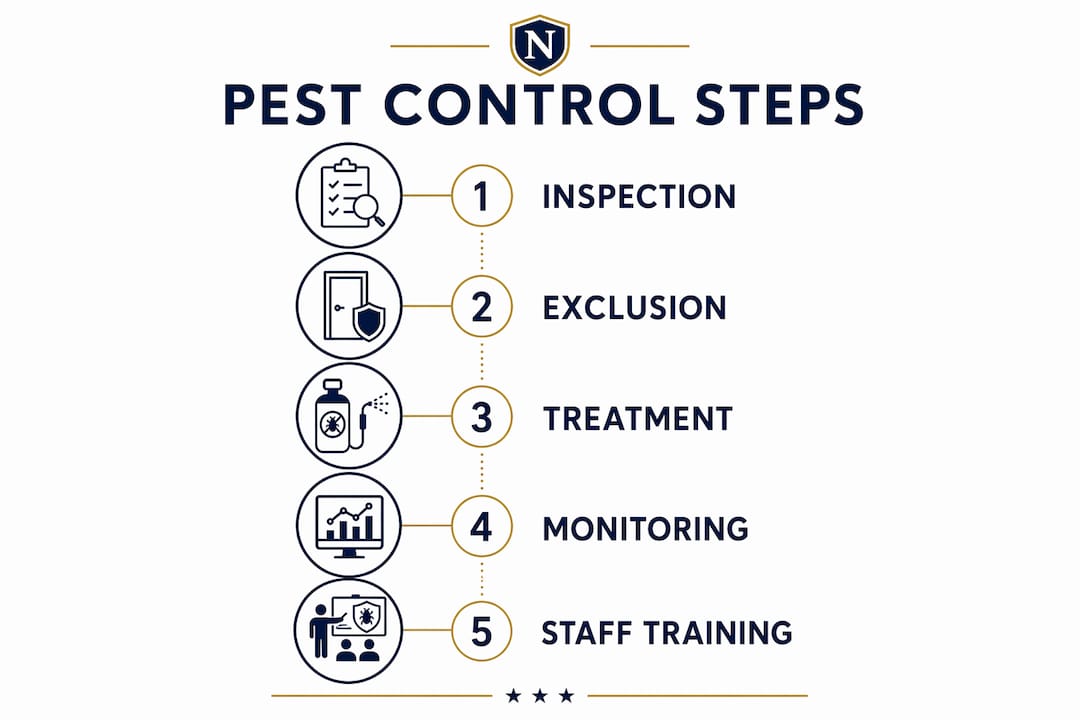
The IPM sequence runs: initial inspection → exclusion → targeted treatment → monitoring → documentation. Each step builds on the last, and skipping any one of them is where programs fall apart.
- Initial inspection: A licensed technician surveys the full facility, including back-of-house, receiving areas, drains, and exterior perimeter. The goal is evidence collection: droppings, gnaw marks, egg casings, grease trails, and structural vulnerabilities.
- Exclusion work: Rodents can enter through a dime-sized hole; a rat needs only a quarter-sized gap. Sealing utility penetrations with steel wool and caulk, installing door sweeps, and using hardware cloth or cement for larger gaps eliminates the entry points that chemical treatments can never fully compensate for.
- Targeted treatment: Low-risk applications go in non-food areas only. Tamper-resistant bait stations are placed along walls and in concealed locations. Gel baits for German cockroaches go in cracks and crevices, not on open surfaces.
- Fly and drain control: Drain flies signal organic sludge buildup; enzyme cleaning removes the breeding habitat that surface cleaning misses. UV fly traps and air curtains handle flying insects in prep and service areas.
- Monitoring: Glue boards, bait station activity logs, and scheduled technician visits track pressure between treatments. Professional service is generally recommended once or twice per month depending on the site’s risk level.
- Documentation: Every visit generates a written service report. Those reports, plus pest-sighting logs and photos of completed repairs, form the on-site record your health inspector expects to review.
Checklist of what managers should maintain between visits:
- Drain covers cleaned and enzyme-treated weekly
- Dumpster lids locked; area swept daily
- Structural gaps logged and repair dates recorded
- Delivery inspections documented (check boxes for cockroaches on receipt)
- Staff pest-sighting reports filed with date, location, and photo
Pro Tip: Prioritize exclusion before any chemical treatment. Sealing entry points reduces long-term costs and inspection risk more than any spray program. Keep your evidence log on-site in a physical binder or shared digital folder so any manager can pull it during an unannounced inspection.
What pests are most common in restaurants and how to spot them
Rodents, cockroaches, flies, stored-product pests, ants, and birds are the top compliance risks for foodservice operations. Each one has a different hiding pattern and a different corrective priority.
Pest-by-pest breakdown:
- Rodents (mice and rats): contaminate food and surfaces with droppings and urine; gnaw through packaging and wiring. Signs: droppings along walls, gnaw marks on baseboards or food containers, grease rub marks near entry points. Fix: structural exclusion first, then bait stations.
- German cockroaches: reproduce rapidly and are linked to a high share of health-code violations. A single reproducing female can generate a large population quickly. Signs: egg casings in drawer tracks, musty odor, dark fecal spotting near heat sources. Fix: targeted gel baits in cracks and crevices, not broadcast sprays.
- House flies and drain flies: flies on food-contact surfaces are an immediate inspection trigger. Drain flies indicate organic sludge in floor drains. Signs: fly counts above 2–3 in prep zones, small moth-like flies near drains. Fix: drain sanitation with enzymatic treatments, UV traps, air curtains.
- Stored-product pests (beetles, moths, weevils): infest dry goods like flour, rice, and spices. Signs: webbing or larvae inside packaging, small beetles in dry-storage shelves. Fix: discard infested product, deep-clean shelving, rotate stock.
- Ants: trail into kitchens following grease and sugar sources. Signs: foraging trails near prep surfaces, grease traps, or beverage dispensers. Fix: remove food sources, apply targeted gel baits at entry points.
- Birds (pigeons, sparrows): nest in HVAC units and rooftop equipment; droppings contaminate exterior dining areas and delivery zones. Signs: nesting material near rooftop units, droppings on loading docks. Fix: exclusion netting, spikes, and HVAC gap sealing.
What programs and equipment do restaurant pest control services use?
Restaurant pest management programs typically run in three tiers: an initial inspection plus corrective work, a recurring monitoring contract, or a bundled facility-maintenance agreement that folds pest control into cleaning and repair services. The right tier depends on your facility’s current pest pressure and inspection history.
Standard service-package components:
- Exclusion work: door sweeps, gap sealing, hardware cloth installation, utility penetration caulking
- Baiting and trapping: tamper-resistant bait stations, glue boards, mechanical snap traps in non-food areas
- Fly control: UV insect light traps, air curtains at entry points, pheromone traps for stored-product moths
- Drain treatment: enzymatic drain cleaning to eliminate organic sludge and drain fly breeding habitat
- Documentation and reporting: written service reports, pest activity logs, photos of repairs
For equipment near food areas, ask your provider specifically which products are labeled for use in food-handling environments and how technicians handle service discretion during operating hours. A reputable provider schedules treatments in non-food zones, uses tamper-resistant hardware, and never applies broadcast pesticides near open food or prep surfaces.
Pro Tip: Ask your pest control provider for the product SDS (Safety Data Sheet) for any chemical applied in your facility. Health inspectors can request this documentation, and having it on file shows due diligence.
What to expect: inspection timeline, pricing, and documentation
Most restaurant pest control programs follow a predictable cadence after the initial visit. Corrective exclusion work typically happens within the first one to two weeks, followed by a monitoring schedule calibrated to your risk level.
| Milestone | Typical Timeframe |
|---|---|
| Initial inspection and report | Day 1 |
| Corrective exclusion work | Week 1–2 |
| First follow-up treatment | Week 2–4 |
| Ongoing monitoring visits | Monthly (standard) or biweekly (high-risk) |
| Documentation review | At each visit; 12-month retention required in many jurisdictions |
Service frequency ranges from monthly for most sites to biweekly or weekly for high-pressure kitchens or during peak pest seasons. High-risk sites, such as those near construction or adjacent to vacant properties, may need to increase frequency temporarily.
Common pricing models:
- Flat fee per visit: straightforward for low-risk, single-location operators
- Recurring contract: monthly or biweekly visits at a fixed rate; typically lower per-visit cost
- Emergency response rates: higher per-call pricing outside contract terms
- Bundled facility-maintenance contracts: pest control, cleaning, and repairs under one agreement
Cost factors include facility size, pest type and severity, the extent of exclusion work required, and whether enzyme drain cleaning or rodent-exclusion construction is part of the scope.
Documentation your health inspector expects on-site:
- Service reports from every technician visit, retained for at least 12 months
- Pest-sighting log with dates, locations, and staff names
- Photos of completed structural repairs
- Staff training records showing annual pest-prevention training
- Vendor contract and technician license copies
Missing 90 days of records can trigger compliance citations in some jurisdictions. Keep everything in one binder or a shared digital folder accessible to any manager on shift.
How staff practices and sanitation support pest prevention
Technician visits alone do not hold a pest program together. Staff sanitation habits are what determine whether pest pressure builds back up between service visits.
Training checklist for your team:
- Store all food at least 6 inches off the floor in sealed containers
- Clean floor drains daily; apply enzymatic treatment weekly
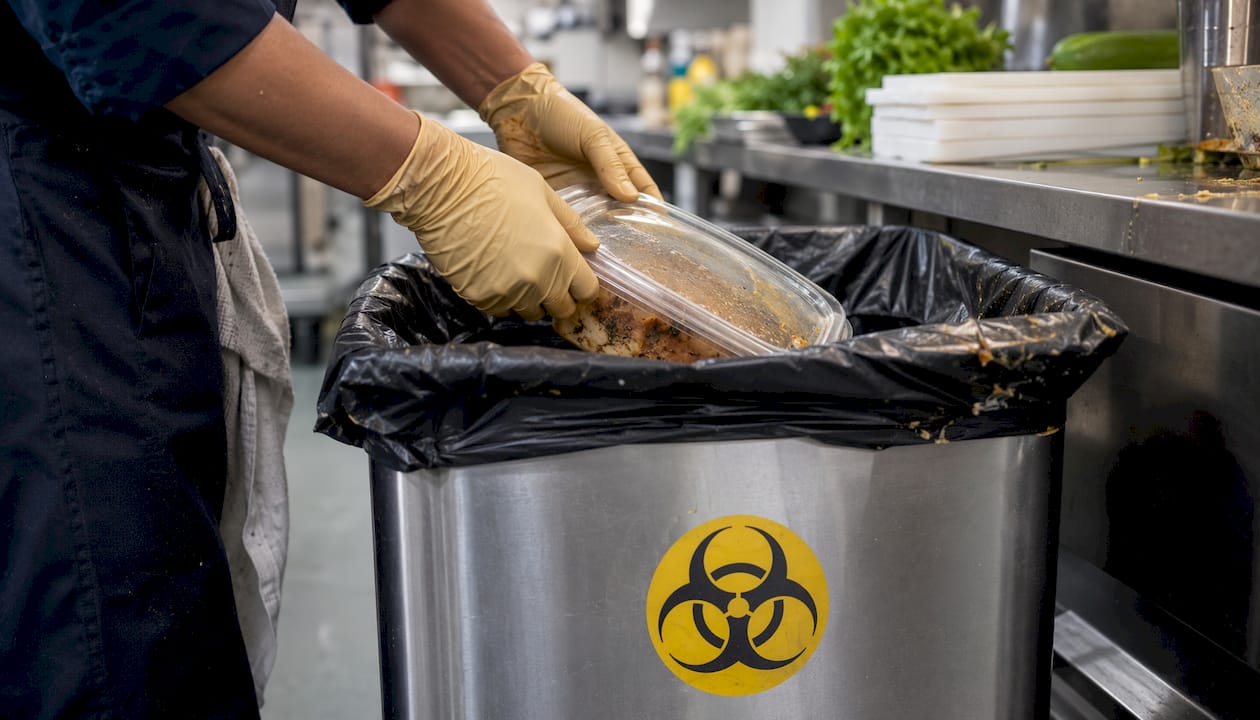
- Take out trash and organic waste before closing; never leave open bins overnight
- Inspect incoming deliveries and boxes for cockroaches before they enter the kitchen
- Report any pest sighting immediately with a photo, location, and time
- Wipe down prep surfaces after every shift; address grease buildup on equipment daily
- Keep dumpster lids closed and locked; check the area three times daily
Pro Tip: Add a “pest check” line to your closing shift checklist: drains cleared, trash out, door sweeps intact, no open food. Link each completed check to your pest log so you have a daily record. That log entry takes 30 seconds and can save you from a citation.
Staff education on food storage and sanitation is essential to starving out pests and reducing reliance on chemical treatments. LA County Public Health requires annual pest-prevention training for all employees, and that standard reflects best practice nationally. Train new hires on day one, document it, and repeat annually.

When should you call a professional immediately?
Some situations require same-day emergency response, not a scheduled visit.
Call immediately if you see any of these:
- Live rodent in a prep, storage, or dining area
- Fresh droppings in food prep or open utensil storage zones
- Gnaw marks on food packaging or structural materials
- More than 2–3 flies landing on food-contact surfaces or open food
- Cockroach activity during daylight hours (a sign of heavy infestation)
- Evidence of nesting material near food or equipment
While you wait for a technician: isolate and discard any potentially contaminated food, photograph all evidence with timestamps, and close the affected area if local health rules require it. Under LA County’s IPM plan requirements, operators must self-close upon observation of vermin activity in food preparation areas and remain closed until the issue is resolved.
Nationwidemaintenance offers 24/7 emergency response for exactly these situations. A provider without emergency coverage leaves you exposed on a Friday night before a Saturday brunch rush.
Why choose Nationwidemaintenance for restaurant pest control
Nationwidemaintenance is a recommended partner for restaurant operators because it bundles pest control with facility maintenance, delivers inspection-ready documentation at every visit, and provides 24/7 emergency response. That combination matters because documentation gaps are treated as seriously as active pest evidence by health inspectors.
Trust signals:
- Licensed and insured technicians
- IPM-certified approach aligned with FDA food-safety standards and local health department requirements
- 30+ years of commercial facility maintenance experience
- Service guarantees and 24/7 emergency response
- Written inspection reports and service logs provided at every visit
- Proven track record with high-profile commercial clients including Costco and CVS
Bundling pest control with facility maintenance under one contract improves documentation continuity and reduces the chance of missing records during inspections. Contract types include one-time inspection and corrective work, recurring monthly or biweekly monitoring, and full bundled maintenance agreements that cover cleaning, repairs, and pest control together. Restaurant-specific enzyme drain cleaning and rodent exclusion services are available as standalone or bundled options.
Key Takeaways
A tailored IPM program with documented exclusion work, scheduled monitoring, and trained staff is the most reliable way to keep a restaurant inspection-ready and pest-free.
| Point | Details |
|---|---|
| IPM is the standard | Inspection, exclusion, targeted treatment, and monitoring must all run together — no single step works alone. |
| Exclusion comes first | Sealing gaps as small as a dime stops rodents before any chemical treatment is needed. |
| Documentation protects you | Missing 90 days of service records can trigger citations; keep reports, logs, and repair photos on-site. |
| Staff training closes the gap | Daily sanitation habits and shift-level pest checks reduce pressure between technician visits. |
| Nationwidemaintenance bundles it all | Licensed, IPM-certified technicians, 24/7 emergency response, and bundled facility-maintenance contracts keep your records complete and your kitchen compliant. |
The real cost of treating pest control as a line item to cut
Most restaurant managers understand pest control matters. What they underestimate is how fast a documentation gap turns into a citation, and how a citation turns into a closure. The pest itself is almost secondary. Inspectors are looking at your records as much as your drains.
The operators who pass inspections consistently are not the ones with zero pest pressure. They are the ones who can hand an inspector a binder with 12 months of service reports, dated photos of every sealed gap, and a staff training log. That binder is the real product a pest control program delivers. The treatments keep the pests down; the documentation keeps the inspector satisfied.
Bundling pest control with facility maintenance is not just a convenience play. When the same provider handles cleaning, repairs, and pest work, the corrective actions from a pest visit get done faster, and the paper trail stays intact. Fragmented vendors mean fragmented records, and fragmented records are where citations come from.
Get a restaurant pest control inspection from Nationwidemaintenance
Nationwidemaintenance gives restaurant operators in the Tri-State area a single contract that covers pest control, enzyme drain cleaning, rodent exclusion, and facility maintenance together. No chasing separate vendors for a repair after a pest visit. No documentation gaps because your cleaning crew and pest provider never talked.
Restaurant pest control services from Nationwidemaintenance include an initial inspection and written report, corrective exclusion work, recurring monitoring on a schedule matched to your risk level, and 24/7 emergency response when something can’t wait. Service is available across New York, New Jersey, and Connecticut.
Service options for restaurants:
- Initial inspection and exclusion work
- Recurring monthly or biweekly monitoring contracts
- Enzyme drain cleaning for fly prevention
- Rodent exclusion and structural repairs
- Bundled facility-maintenance contracts covering pest control, cleaning, and repairs
Request an inspection at nationwidemaintenance.com/pest-control-prevention or call to speak with a technician directly. Emergency response is available around the clock.
Useful sources and further reading
- LA County Public Health: Integrated Pest Management and Food Safety Risk Mitigation Plan — operator requirements, self-closure rules, and staff training obligations
- National Pest Management Association: Pest Management Guidelines for Retail Food Handling Facilities and Restaurants — industry standards for IPM in foodservice
- NPMA PestWorld: How to Properly Manage Pest Concerns in Food Service — overview of pest risks and operator responsibilities
- NYC Department of Health: Keep Pests Out of Food Establishments — practical exclusion standards and materials guidance
- Florida Department of Agriculture and Consumer Services: Pest Control FAQ — licensing and regulatory reference for pest control providers
Recommended
- Commercial Restaurant Pest Control Services NY NJ CT | Nationwide Maintenance
- Commercial Pest Control & Prevention Services NY NJ CT | Nationwide Maintenance
- Commercial Enzyme Cleaning for Pest Control NY NJ CT | Nationwide Maintenance
- Commercial Pest Inspection Services NY NJ CT | Nationwide Maintenance
Need this handled at your facility?
Our crews cover commercial properties across New York, New Jersey, and Connecticut.