Facility Managers: Turn Size Based Cleaning Rules into a Service Spec
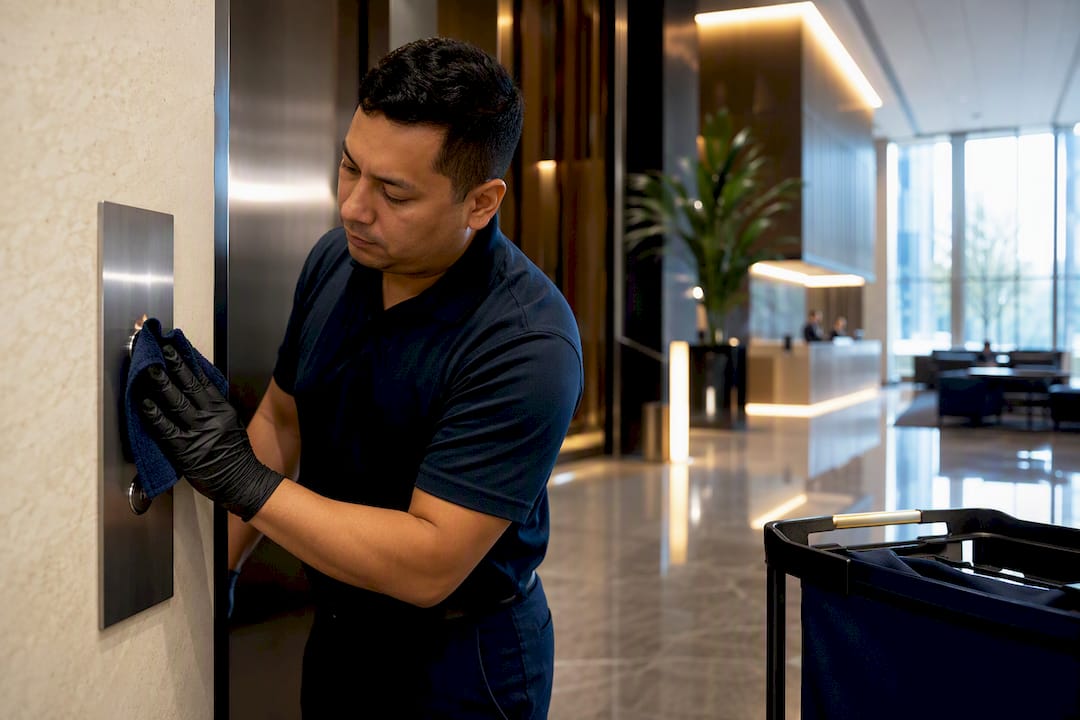
Very small offices under 10 people can usually get by on a weekly professional clean. Medium offices with 10 to 50 staff need service 2 to 3 times a week. Anything above 50 people, or any space with heavy foot traffic, needs daily after-hours cleaning. Regardless of size, restrooms, kitchens, and high-touch surfaces like door handles and elevator buttons should be cleaned every day. Deep cleaning occurs separately on a periodic schedule.
TL;DR:
- Office cleaning frequency should increase beyond basic guidelines in high-traffic, shared, or regulated environments, especially during illness spikes or regulatory inspections.
- Medium offices with 10 to 50 people generally need two to three weekly visits, with daily restrooms and kitchen cleaning, while large offices require daily after-hours service.
- Specific zones like restrooms, kitchens, and high-touch surfaces need daily cleaning, whereas carpets and windows require less frequent deep cleaning, roughly quarterly or biannual.
- Building size alone does not determine cleaning needs; factors like layout, foot traffic, industry regulations, and shared equipment significantly impact the optimal schedule.
- Regular reassessment every quarter, based on actual space use and emerging needs, helps maintain effective and efficient cleaning protocols tailored to the office.
Table of Contents
- What Factors Change Your Office Cleaning Frequency?
- How Often Should You Professionally Clean an Office by Size?
- What’s the Right Cleaning Cadence for Each Office Area?
- Daily, Weekly, and Monthly Office Cleaning Checklists
- When Should You Schedule Deep Cleaning and Disinfection?
- How Do You Build a Working Office Cleaning Schedule?
- Why This Guidance Comes From Nationwide Maintenance
- What Do Facility Managers Get Wrong About Cleaning Frequency?
- Get a Cleaning Schedule Built for Your Office
- Sources
What Factors Change Your Office Cleaning Frequency?
Square footage is the number everyone fixates on, and it’s usually the wrong one. A 3,000-square-foot open floor plan packed with 40 people and a steady stream of visitors needs more attention than a 6,000-square-foot office with 15 people who mostly work from home two days a week. Headcount and foot traffic drive grime, germs, and clutter far more than raw floor area does.
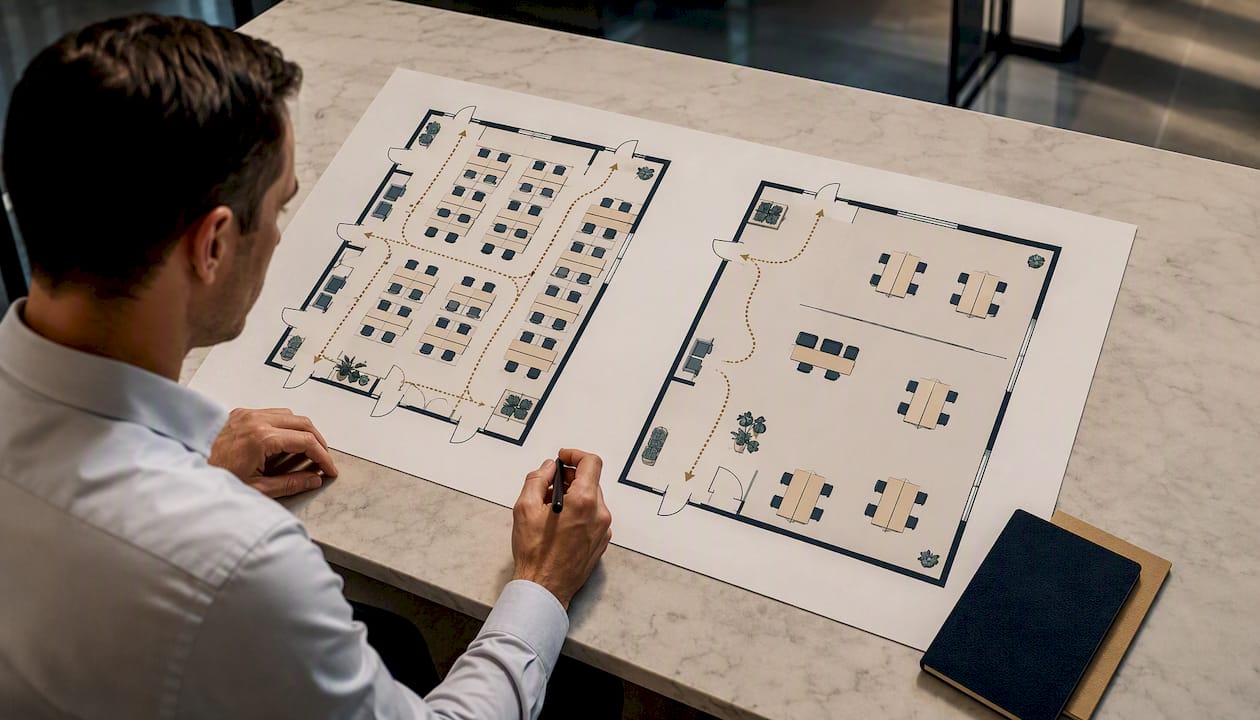
Industry and regulation can override every other factor on this list. A medical office or a food service kitchen doesn’t get to choose a weekly cleaning schedule based on comfort. Health codes and inspection standards set minimums that often mean daily or multiple-times-daily service regardless of headcount.
Layout matters more than people expect, too. Open-plan offices with shared desks accumulate touchpoint grime faster than a floor of private offices with doors that close. Carpet versus hard flooring changes the math as well. Carpet traps dust and allergens that hard surfaces shed easily, which pushes some offices toward more frequent vacuuming even at low headcounts.
A few factors that should push you above the baseline:
- Visitor and client volume. Lobbies, reception areas, and conference rooms used for client meetings need more frequent attention than back-office space, since cleaning frequency should track risk level and actual use rather than a flat calendar.
- Seasonal illness spikes. Cold and flu season is a legitimate reason to temporarily increase disinfection of high-touch surfaces, even if you don’t change your contract.
- Shared equipment. Break rooms with shared coffee machines, microwaves, and refrigerators need more frequent touchpoint cleaning than single-occupant offices.
- Regulatory exposure. Healthcare, food service, and childcare facilities typically face inspection standards that set a daily or multiple-times-daily floor, not a suggestion.
How Often Should You Professionally Clean an Office by Size?
Size sets your starting point, but it’s a floor, not a ceiling. Industry guides commonly put professional cleaning frequency at 2 to 5 times per week for most offices, with restrooms and breakrooms needing daily attention no matter what the rest of the schedule looks like.
Small offices (under 10 people). A weekly professional visit, sometimes bumped to twice a week if the space includes a kitchen or client-facing area, generally covers it. Staff handle micro-tasks between visits: wiping down their own desks, taking out personal trash, tidying shared surfaces. Small offices under roughly 5,000 square feet often run fine on one to two professional cleanings weekly, provided restroom service stays daily.
Medium offices (10 to 50 people). This tier needs 2 to 3 professional visits per week as a baseline, with daily attention to restrooms and kitchens even on the days a full clean isn’t scheduled. This is where a lot of offices under-invest, treating a 30-person office like a small office because it “feels” manageable.
Large offices (50-plus people). Daily after-hours cleaning is the standard here, full stop. High-traffic shared spaces like main lobbies, elevator banks, and central kitchens often justify a day porter, someone present during business hours to handle spills, restock supplies, and manage restroom upkeep between the main overnight service.
Higher-risk facility types. Medical offices, food service environments, call centers with heavy phone-and-desk turnover, and retail floors with public traffic default to daily cleaning at minimum, and often multiple cleanings per day for restrooms and high-touch zones. Company size becomes almost irrelevant once you’re in one of these categories. A 12-person medical practice cleans more like a large office than a small one.
The financial case for not skimping here is bigger than most owners assume. Worker illness and injury costs run U.S. employers an estimated $225 billion annually, and a meaningful share of that traces back to office hygiene that didn’t keep pace with actual use.
What’s the Right Cleaning Cadence for Each Office Area?
A blanket “clean the office” schedule wastes money on low-use zones while starving the areas that actually spread germs and wear down fastest. Break it down by zone instead.
- Restrooms. Daily service is non-negotiable, and heavily used restrooms in larger buildings need multiple check-ins throughout the day, not just an overnight pass.
- Kitchens and breakrooms. One thorough daily clean plus midday top-ups for spills and shared equipment. Coffee stations and refrigerator handles are touchpoint hotspots that get missed easily.
- Reception and lobby areas. Daily minimum, moving to several times a day in offices with steady client or visitor foot traffic.
- Workstations and desks. Staff handle a daily micro-clean, personal trash, wiping their own surface. Professionals rotate through for a deeper alternating clean 2 to 3 times a week.
- Meeting and conference rooms. Clean after any heavy-use meeting, or build in a daily wipe-down on the days these rooms see back-to-back bookings.
- Floors and carpets. Daily vacuuming or sweeping keeps surface debris under control. Full carpet extraction belongs on a longer cycle, roughly every 6 to 12 months, with quarterly extraction for high-traffic entryways.
- Windows, blinds, and vents. Quarterly to biannual, depending on dust load and how close the building sits to construction or traffic.
- Elevators and building lobbies. In busy buildings, these need multiple spot cleans throughout the day, since they see more hand contact per square foot than almost anywhere else in the building.
Daily, Weekly, and Monthly Office Cleaning Checklists
Splitting tasks by frequency, then by who owns them, keeps a schedule from turning into a vague promise nobody’s accountable for.
Daily tasks:
- Empty trash and replace liners in every zone
- Full restroom clean and restock (soap, paper, tissue)
- Wipe down high-touch surfaces: door handles, light switches, elevator buttons
- Spot vacuum high-traffic walkways
- Tidy kitchen counters and load or run the dishwasher
Weekly tasks:
- Full vacuum of all carpeted areas, not just walkways
- Mop all hard-surface floors
- Dust surfaces, shelving, and equipment
- Replenish paper towels, soap, and sanitizer stock
- Sanitize high-touch points beyond the daily quick-wipe: keyboards, shared phones, conference room tables
Monthly tasks:
- Deep dusting of vents, blinds, and high shelving
- Spot-treat carpet stains that daily vacuuming won’t lift
- Spot-clean interior glass and windows
- Inspect grout, hard-floor fixtures, and restroom hardware for wear
Staff typically own the daily micro-tasks: personal desk tidying, trash into central bins, wiping their own equipment. Professional janitorial visits should cover everything else, restrooms, floors, disinfection, and the weekly and monthly items that require equipment or training most staff don’t have.
Pro Tip: Put the daily and weekly task lists directly into your service contract as line items, not a vague “general cleaning” clause. It’s the easiest way to catch a vendor who’s quietly skipping restroom top-ups on your slowest days.
When Should You Schedule Deep Cleaning and Disinfection?
Routine cleaning keeps a space looking presentable day to day. Deep cleaning is a different job entirely, protecting the building’s actual assets and the air people breathe. Separating those two rhythms, light daily maintenance versus scheduled deep intervention, is one of the most overlooked distinctions in office facility planning.
- Carpet extraction: every 6 to 12 months for general office carpet, quarterly for high-traffic entryways that take the brunt of outdoor dirt and moisture.
- Hard-floor stripping and waxing: once or twice a year, depending on foot traffic and how quickly the finish shows wear.
- HVAC and air duct systems: inspect annually at minimum, and clean sooner if indoor air quality complaints start showing up or dust buildup is visible at vents.
- Upholstery and drapery: annual to biannual, scaled to how much the furniture actually gets used.
At minimum, most offices should schedule one deep clean per year if budget is genuinely tight, though twice a year is the more common recommendation for maintaining both appearance and air quality.
Outbreak response is its own track entirely. If flu, norovirus, or another illness starts moving through your staff, that’s the moment to escalate to a documented disinfection protocol, one that specifies chemical compatibility with your surfaces and covers every high-touch zone, not just the areas someone happened to notice were dirty.
How Do You Build a Working Office Cleaning Schedule?
Turning all of this into something you can actually hand to a vendor comes down to five steps.
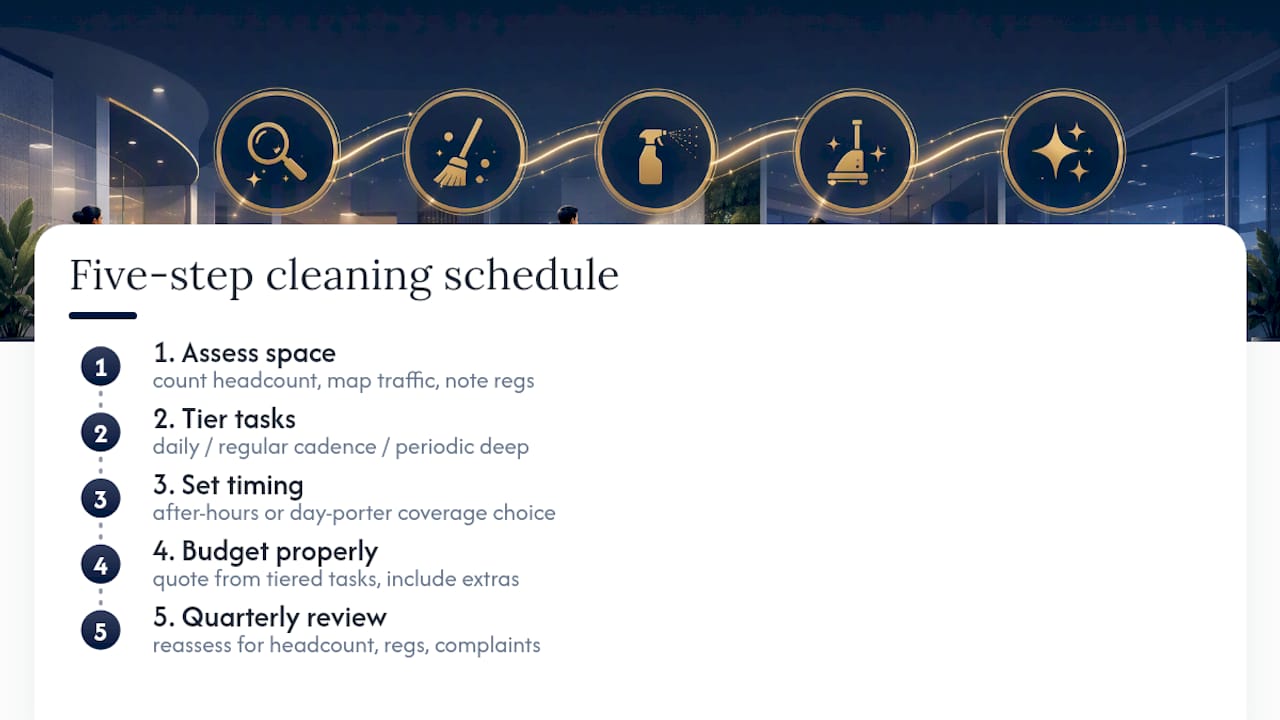
Start with an honest assessment. Count actual headcount, not desk count. Walk the space and map foot traffic patterns, note which zones see visitors, and flag anything with regulatory cleaning requirements attached.
Tier your tasks into three buckets: non-negotiables that happen daily no matter what (restrooms, high-touch surfaces, trash), regular cadence tasks that follow your size-based baseline, and periodic deep services that run on their own separate calendar.
Decide on timing. After-hours cleaning works for most standard office cleaning. Client-facing or high-traffic buildings often benefit from day porter coverage, someone on-site during business hours for restroom top-ups and spill response.
Budget with the full picture in mind. Specialized floor care chemicals, after-hours labor differentials, and any emergency response capability all push costs above a bare-bones weekly wipe-down. Get quotes based on your tiered task list, not a vague square-footage number, and keep a simple invoice template on hand if you’re managing multiple smaller vendors before consolidating.
Monitor and review quarterly. Facility cleaning schedules should get reassessed roughly every quarter to account for headcount changes, new regulatory requirements, or occupant complaints that signal your current cadence isn’t cutting it anymore.
A zone-based approach, assigning different cadences to different defined areas of the building rather than treating the whole office as one uniform space, is what makes this framework actually work at scale. It’s the same logic behind structuring a commercial carpet cleaning program by zone instead of cleaning every square foot on an identical schedule.
Why This Guidance Comes From Nationwide Maintenance
A well-established facility maintenance company has spent decades building and running facility maintenance programs for commercial, retail, and industrial clients, including high-profile names. That work spans cleaning, pest control, construction, and landscaping under single unified contracts, which means these frequency recommendations come from managing the full lifecycle of a building, not just one service line in isolation.
What Do Facility Managers Get Wrong About Cleaning Frequency?
The most common mistake isn’t under-cleaning. It’s over-cleaning conference rooms nobody uses while restrooms near the loading dock get skipped on busy days. Fix it with zone-based scheduling, pair staff micro-tasks with professional visits instead of relying on one or the other, and reassess every quarter. One facility we’ve seen cut complaints in half simply by moving restroom service from twice-daily to a fixed schedule tied to actual peak usage hours, not a generic morning-and-evening split.
— Nationwide Maintenance.
Get a Cleaning Schedule Built for Your Office
Reading through frequency guidelines is one thing. Matching them to your actual building, with its specific traffic patterns, restroom count, and kitchen usage, is a different problem, and it’s a common challenge for property managers and facility coordinators in many areas. Managing janitorial work, floor care, pest control, and landscaping under separate vendors can be challenging; some companies offer integrated contracts to keep cleaning cadence, deep-clean calendar, and pest prevention schedule coordinated.
Before requesting a quote, have three numbers ready: your square footage, your actual daily headcount, and any problem areas you already know about, whether that’s a restroom near a high-traffic entrance or a break room that never seems to stay clean past lunch. From there, a site assessment can turn your tiered baseline into a real service spec. Start by reviewing Nationwidemaintenance’s commercial cleaning services or requesting an assessment through the janitorial services page to see how day porter coverage or after-hours service would fit your building.
Sources
- CDC Foundation — Worker illness and injury costs U.S. employers $225 billion annually
- How Often Should an Office Be Cleaned? A 2026 Guide - Allied Facility Care
- How Often Should an Office Be Professionally Cleaned? A Practical Guide by Facility Type
- How often should office be cleaned? — CleaningSearch (2026)
Recommended
Need this handled at your facility?
Our crews cover commercial properties across New York, New Jersey, and Connecticut.