Choosing the Right Graffiti Removal Method for Any Surface
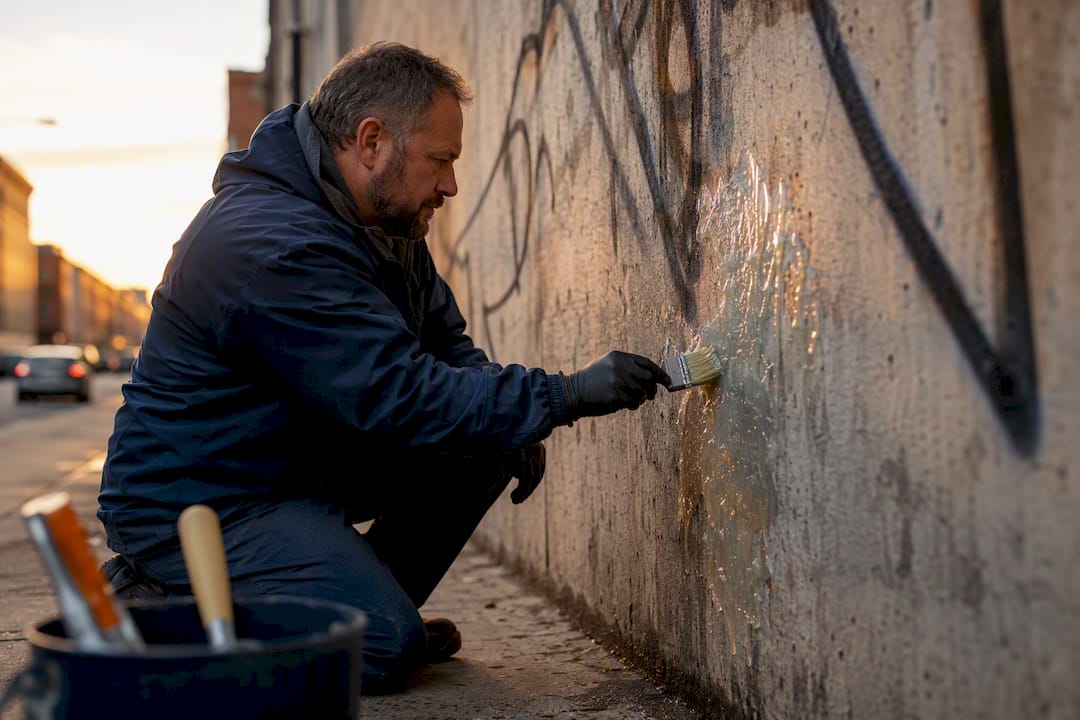
The gentlest effective method wins, every time. Match the technique to the substrate and how long the paint has cured, always run a small test patch first, and escalate only when a milder approach fails. Porous masonry usually calls for a gel or poultice; painted metal and glass respond better to solvent wipes; large historic or high-access jobs belong with a professional crew.
TL;DR:
- Chemical poultices and gels are most effective for porous masonry substrates, pulling embedded pigment rather than just surface film.
- Low-pressure hot water rinsing after chemical application is the professional standard for masonry graffiti removal, avoiding damage from high-pressure washing.
- Eco-friendly options like dry-ice and baking-soda blasting suit glass, metal, and tile, but often require specialized equipment and longer dwell times.
- Pressure washing at consumer-rated pressures risks damaging soft brick and mortar, making chemical pretreatment essential before rinsing.
- Immediate response within the same day significantly improves removal success and reduces ghosting, especially on fresh graffiti.
Table of Contents
- What Are the Main Graffiti Removal Methods?
- Which Chemical Products Actually Remove Graffiti?
- How Do Pressure Washing and Blasting Compare for Graffiti?
- What’s the Best Method for Each Surface Type?
- What’s the Safest Step-by-Step Removal Process?
- Are There Eco-Friendly Graffiti Removal Options?
- When Should You Hire a Professional for Graffiti Removal?
- Why Same-Day Response Beats Any Single Removal Product
- Get Professional Graffiti Removal Without the Guesswork
- Sources
What Are the Main Graffiti Removal Methods?
Five method families cover almost every job: chemical strippers, water and steam systems, mechanical or abrasive blasting, thermal and laser tools, and simple paint-out (priming and repainting over the tag). Picking the right one comes down to a handful of variables that matter more than brand loyalty to any single product.
Surface porosity drives the decision first. Brick and unsealed concrete absorb pigment deep into the pore structure, while glass, steel, and glazed tile hold paint only on the surface. The paint or ink medium matters too: aerosol enamel, permanent marker, and adhesive stickers each need a different chemistry. Then there’s dwell time. A tag sprayed yesterday comes off with far less effort than one that’s cured into a brick face for six months.
- Chemical methods: gels, poultices, solvents, and alkaline strippers that dissolve or lift pigment
- Water and steam: low-pressure hot-water rinsing, often paired with a chemical pretreatment
- Mechanical/abrasive: particle blasting, dry-ice blasting, and hand scraping
- Thermal/laser: specialist tools mostly reserved for conservation work
- Paint-out: priming and recoating when the substrate can’t be fully restored
Most professional jobs aren’t one-and-done. A preservation-focused protocol from the National Park Service treats chemistry and rinsing as a paired step, not a choice between the two.
Which Chemical Products Actually Remove Graffiti?
Gels and poultices are the preferred starting point on porous masonry because they hold the active chemical against the surface long enough to do real work instead of running off in seconds. A poultice, typically kaolin clay or a cellulose fiber mixed with a solvent or alkaline cleaner, gets packed onto the stain and often covered in plastic to slow evaporation. As it dries, it pulls embedded pigment out of the pore structure instead of just wiping the surface film away.
For nonporous or lightly stained surfaces, straight solvents do the job faster. Acetone, mineral spirits, and lacquer thinner remain the most common professional choices, but each carries a substrate risk. Acetone will cloud or melt certain plastics and some vinyl signage, so a spot test on an inconspicuous corner isn’t optional. Mineral spirits are gentler but slower.
- Alkaline or mild bleach-based strippers work well on some coated masonry but need a thorough water neutralization pass afterward
- Longer dwell times generally out-perform scrubbing harder, since aggressive agitation can drive pigment deeper into porous stone
- Always check the product’s technical datasheet before combining chemistries, since some solvents react badly with each other
Preservation guidance recommends starting with the mildest option and escalating only as needed, which is the same logic behind the test-patch requirement covered later. NPS guidance for solvent work also specifies goggles, chemical-resistant gloves, and an organic-vapor respirator with a particulate filter, plus contained collection of runoff for lawful disposal.
Pro Tip: Keep a small binder or shared folder of which product worked on which surface at your property. Six months from now, nobody remembers which gel worked on the loading-dock brick without notes.
How Do Pressure Washing and Blasting Compare for Graffiti?
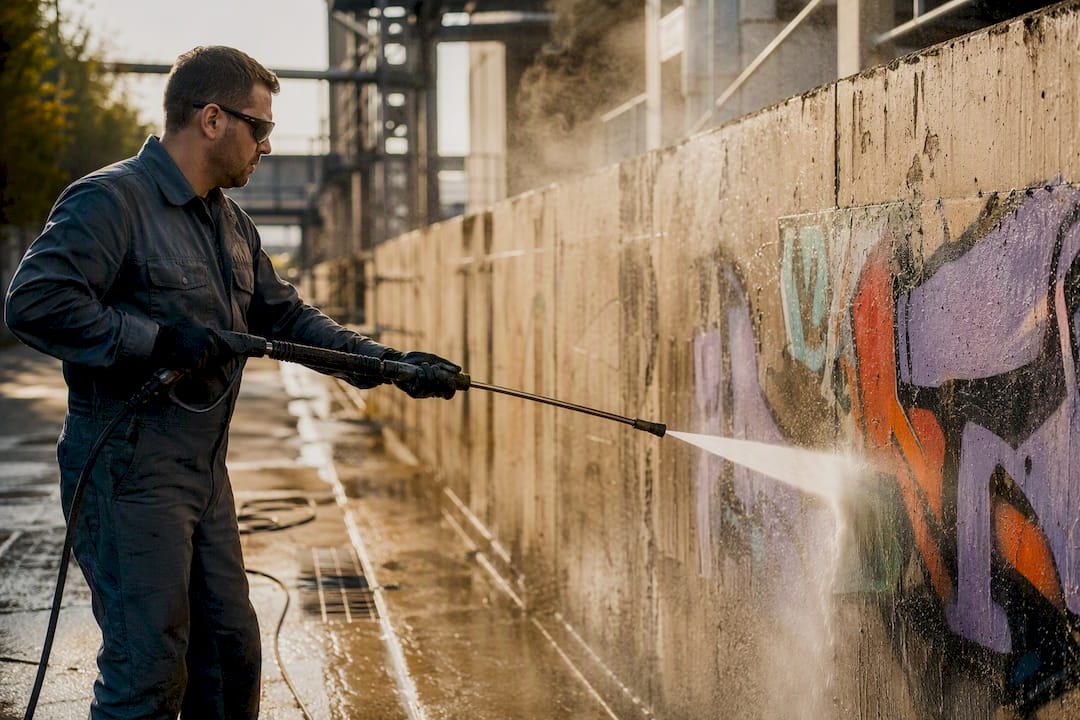
Heat does more of the work than pressure. Low-pressure hot water, run after a chemical softener has had time to dwell, lifts loosened paint without the mechanical force that damages mortar joints or soft brick faces. Controlled rinsing in the 100 to 400 psi range, applied after chemistry has already broken the paint’s bond to the surface, is the professional standard on masonry.
Consumer pressure washers rated at 1,600 to 3,200 psi are a different story. That kind of force can etch mortar joints and erode soft brick permanently, and it’s one of the most common ways well-meaning DIY attempts turn a graffiti problem into a structural repair bill. Sandblasting carries the same risk on a larger scale, which is why most conservation guidance treats it as a last resort rather than a default.
- Particle blasting uses abrasive media chosen by hardness for the substrate, effective but capable of etching softer stone
- Dry-ice blasting leaves no residual media behind and works well on glass, metal, and tile without introducing water
- Laser cleaning stays largely in the conservation world, used on delicate historic surfaces where even gentle chemistry risks discoloration
Pro Tip: If a contractor’s first move on brick is a gas pressure washer with no mention of pretreatment, ask what they’re softening the paint with first. Pressure without chemistry is how mortar gets eaten away.
What’s the Best Method for Each Surface Type?
- Masonry (brick, stone, concrete): Start with a gel or poultice, follow with a low-pressure hot rinse. Expect some ghosting on porous stone even after a clean removal, and test extensively before committing to a full wall.
- Painted surfaces: Skip the harshest solvents, since they can strip the base coat along with the tag. If the paint underneath is already compromised, budget for a repaint rather than chasing a perfect chemical match.
- Metal and vinyl: Solvent wipes and soft abrasive pads generally work well, but keep acetone away from vinyl graphics and plastic trim, where it can cloud or melt the surface.
- Glass: A razor blade angled flat against the pane, combined with a light solvent wipe, removes most spray paint cleanly. Skip abrasive pads entirely; they leave permanent scratch patterns that outlast the graffiti.
- Wood: Mild detergents or light steam handle most cases. Keep pressure low and solvent use conservative, since wood grain absorbs chemicals unevenly and can discolor.
Anything historic, load-bearing, or part of a protected facade deserves a specialist’s eye before any product touches it.
What’s the Safest Step-by-Step Removal Process?
- Document and isolate. Photograph the tag, note the surface material, and rope off or protect drains, planters, and adjacent finishes.
- Test patch. Run a roughly six-by-six-inch trial per product or method and rank the results on both removal performance and visual damage before committing to the full area.
- Apply and dwell. Follow the product’s SDS instructions exactly, including recommended dwell time and any agitation limits.
- Rinse bottom-up. Work from the base upward to avoid streaking dissolved pigment onto clean areas below, and contain wastewater rather than letting it run to a storm drain.
- Reassess. If ghosting remains, a second poultice pass, a repeat of the gentle chemistry, or accepting a light repaint are all reasonable outcomes.
- Aftercare. Consider an anti-graffiti coating on repeat-target walls and build a rapid-response plan so new tags come off within a day or two.
Pro Tip: Property programs with a same-day removal policy see far less recurring vandalism than those that let a tag sit for a week. Taggers move on when their work disappears fast.
Are There Eco-Friendly Graffiti Removal Options?
Lower-toxicity choices exist and they work, with some trade-offs in speed or equipment cost. Biodegradable, low-VOC gels and masonry-specific alkaline formulas reduce solvent runoff without giving up much removal power on brick and block. Dry-ice blasting and baking-soda blasting are chemical-free options that suit glass, coated metal, and tile particularly well, since neither leaves a media residue behind.
- Contain and collect all wastewater, even from “clean” methods, to keep pigment and cleaning agents out of storm drains
- Dry-ice and baking-soda systems often require rented or specialist equipment, so they’re more common on contracted jobs than weekend DIY
- Expect eco-formulated gels to need a longer dwell time than their solvent-heavy counterparts, which is a fair trade for less chemical exposure
When Should You Hire a Professional for Graffiti Removal?
Bring in a contractor for historic stone, large or high-access facades, anything involving hazardous coatings, or a DIY attempt that’s already gone sideways. Cost mostly comes down to surface type, how long the tag has cured, square footage, access equipment, and whether wastewater containment or specialist blasting gear is required.
- Ask for records from the contractor’s own test patches on similar substrates
- Request the SDS for every product they plan to use on your property
- Confirm insurance coverage and a written wastewater containment plan before work starts
Nationwide Maintenance’s commercial graffiti removal and power-washing services handle exactly this kind of substrate-specific decision-making for property teams that don’t want to manage it in-house.
Why Same-Day Response Beats Any Single Removal Product
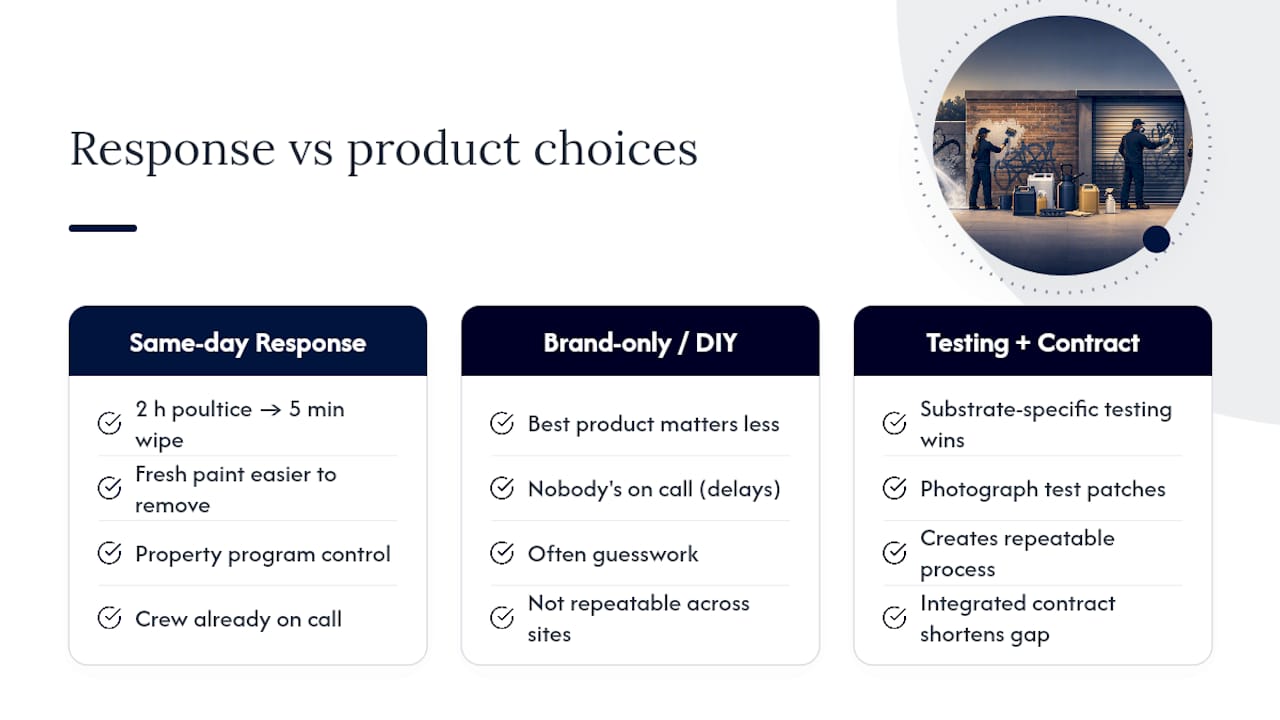
The best product in the world matters less than how fast it gets used. Fresh paint hasn’t had time to cure into pore structures, so a same-day response often turns a two-hour poultice job into a five-minute solvent wipe. That’s the single biggest lever a property program controls, and it’s the one most DIY approaches lose because nobody’s on call.
Substrate-specific product testing beats brand loyalty. A gel that performed beautifully on one building’s sandstone facade can ghost badly on a different building’s limestone. Photographing test patches and keeping a running record by substrate, the same way conservation teams do, turns removal from guesswork into a repeatable process. For multi-site property managers, an integrated maintenance contract shortens the gap between a tag going up and a crew showing up, because the same team already handles the property’s power washing and doesn’t need a separate vendor call. The sidewalk maintenance guide covers how that same rapid-response logic applies to gum and other surface contaminants.
— Nationwide Maintenance.
Get Professional Graffiti Removal Without the Guesswork
Nationwidemaintenance handles graffiti removal the same way this article recommends doing it: gentlest method first, tested on your specific substrate, with the equipment and SDS documentation ready before anyone touches the wall. That’s a meaningful difference from a one-off pressure-washing crew that shows up with a single tool and hopes it works on brick, metal, and glass alike.

For property managers juggling multiple locations, the real advantage is the single contract. Graffiti removal, routine power washing, and general facility upkeep run under one relationship instead of three separate vendors, which is where response time actually gets faster. Building owners looking for a broader safe-cleaning reference can also check this property manager’s guide to safe building washing for related exterior maintenance practices. If your property needs a rapid-response plan for graffiti and other facility issues, get a quote through Nationwidemaintenance’s property management services page and find out what a same-day response looks like for your buildings.
Sources
- Preservation in Practice: Graffiti Removal from Historic Features — National Park Service (NPS)
- Graffiti Removal Techniques - City of Milwaukee
- Effectively remove graffiti: methods for graffiti removal and prevention — Kärcher
- Removing Graffiti from Historic Masonry — Preservation Brief No. 38 (US NPS, Weaver)
- Graffiti removal — Wikipedia
Recommended
Need this handled at your facility?
Our crews cover commercial properties across New York, New Jersey, and Connecticut.