Homeowners: Save 50–75% With Drought Tolerant Landscaping + Pro Tuning
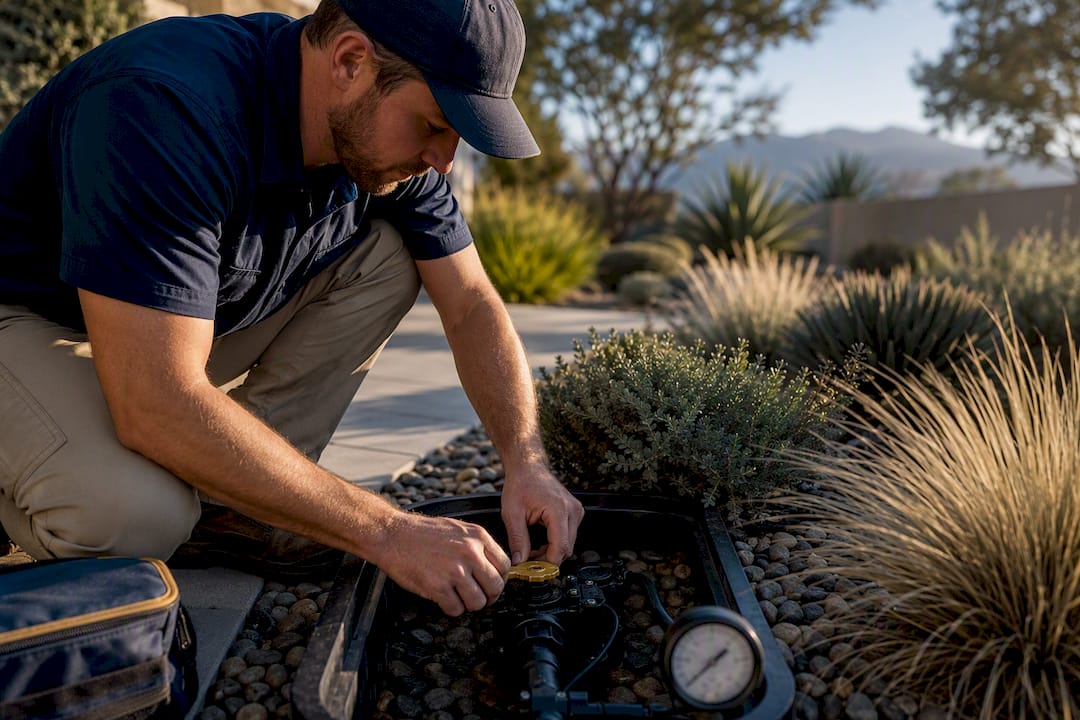
Drought tolerant landscaping, also called xeriscaping, pairs climate-adapted plants with hydrozoning, mulch, and efficient irrigation so a yard stays attractive on far less water. The single most important first move is mapping your property’s hydrozones and checking your soil, because even the toughest native plants need regular water for the first year or two while roots establish.
TL;DR:
- Properly mapping hydrozones and ignoring heavy soil amendments can improve water efficiency and adaptiveness of drought-tolerant landscapes.
- Installing drip irrigation tailored to each zone can cut outdoor water use by up to 50 percent compared to standard sprinklers.
- Establishing plants with consistent deep watering for the first two years is crucial for their long-term drought resilience.
- Costs for a full-yard xeriscape with hardscape and irrigation upgrades can reach tens of thousands, but water savings typically offset expenses within a few seasons.
- Regular maintenance of irrigation systems and mulch replenishment helps prevent regression into inefficient watering habits over time.
Table of Contents
- What Is Drought Tolerant Landscaping and How Does It Work?
- How Do You Design a Drought-Tolerant Landscape Step by Step?
- Which Plants Actually Thrive in a Drought Tolerant Landscape?
- What Irrigation Setup Actually Saves Water?
- How Do You Care for a Drought-Tolerant Landscape After Planting?
- What Does Drought Tolerant Landscaping Cost?
- What 30 Years of Commercial Landscaping Teaches About Home Yards
- Should You DIY Your Drought Tolerant Yard or Call a Pro?
- Ready to Redesign Your Yard? Here’s Where to Start
- Where to Find More Drought Tolerant Landscaping Guidance
- Sources
- FAQ
What Is Drought Tolerant Landscaping and How Does It Work?
Drought tolerant landscaping is often used interchangeably with xeriscaping or water-wise landscaping, and all three describe the same idea: design the yard around your actual climate instead of forcing thirsty plants to survive somewhere they were never meant to grow, as WSU Extension explains in its waterwise landscaping guidance. That single shift, matching plant choice and irrigation to local rainfall and soil, is what separates a yard that thrives on minimal water from one that limps along under a sprinkler running every night.
Five principles do most of the work.
- Hydrozoning groups plants with similar water needs into distinct zones so you’re never overwatering a drought-adapted shrub just to keep a thirsty perennial alive nearby, a technique Colorado State Extension identifies as a core step in water-wise design.
- Soil health determines how well water infiltrates and how deep roots can travel; some plants adapted to lean, rocky soils actually perform worse in heavily amended beds, so leave native soil alone unless a test says otherwise.
- Mulch at the right depth, generally 2 to 3 inches in planting beds and 3 to 4 inches around trees, cuts evaporation, smothers weeds, and buffers soil temperature swings, according to Washington State Extension’s drought-tolerant landscaping guide.
- Hardscape and permeability matter more than people assume. Every square foot of lawn or pavement you convert to permeable paths or planted beds is a square foot you stop irrigating, and runoff from hard surfaces can be redirected into planting beds instead of the storm drain.
- Density and layering create the lushness people associate with water-hungry gardens. Tight plantings shade the soil surface and reduce evaporation, which is why a well-layered xeriscape rarely looks sparse.
Pro Tip: Skip the heavy soil amendment on native or naturalized beds. A 2 inch layer of good mulch usually does more for water retention than tilling in bags of compost, especially for plants that evolved in leaner soils.
How Do You Design a Drought-Tolerant Landscape Step by Step?
Most homeowners jump straight to buying plants. That’s backwards. The sequence that actually works starts with paper and a shovel, not a nursery cart.
- Assess your site. Walk the yard at different times of day and note sun and shade patterns, slope, drainage, and any microclimates, like a hot reflected wall or a low spot that stays damp. Dig a test hole and check how fast water drains; that tells you more about your soil than any bag label will.
- Set goals and define functional zones. Decide where you want an “oasis” area near the patio for entertaining, a transition zone with moderate water use, and a low-water zone for the far corners of the yard that rarely get attention.
- Map hydrozones and match irrigation to each one. Draw the zones on a simple sketch, then plan irrigation hardware, drip lines for beds, maybe a small sprinkler zone for functional turf, so each zone gets watered on its own schedule, following the zone separation principle Utah State University recommends.
- Install in phases. Convert one section first as a pilot bed before committing the whole yard. This limits your financial exposure if a plant choice or irrigation layout needs adjusting.
- Plant and mulch on the same day. Water each plant in immediately after installation, then apply mulch around (not against) the stems and trunks to lock in that initial moisture.
- Water heavily for the first week, then taper based on weather and how the plants respond, not on a fixed calendar.
That pilot bed approach matters more than most guides admit: it’s the cheapest insurance against a $3,000 mistake.
Which Plants Actually Thrive in a Drought Tolerant Landscape?
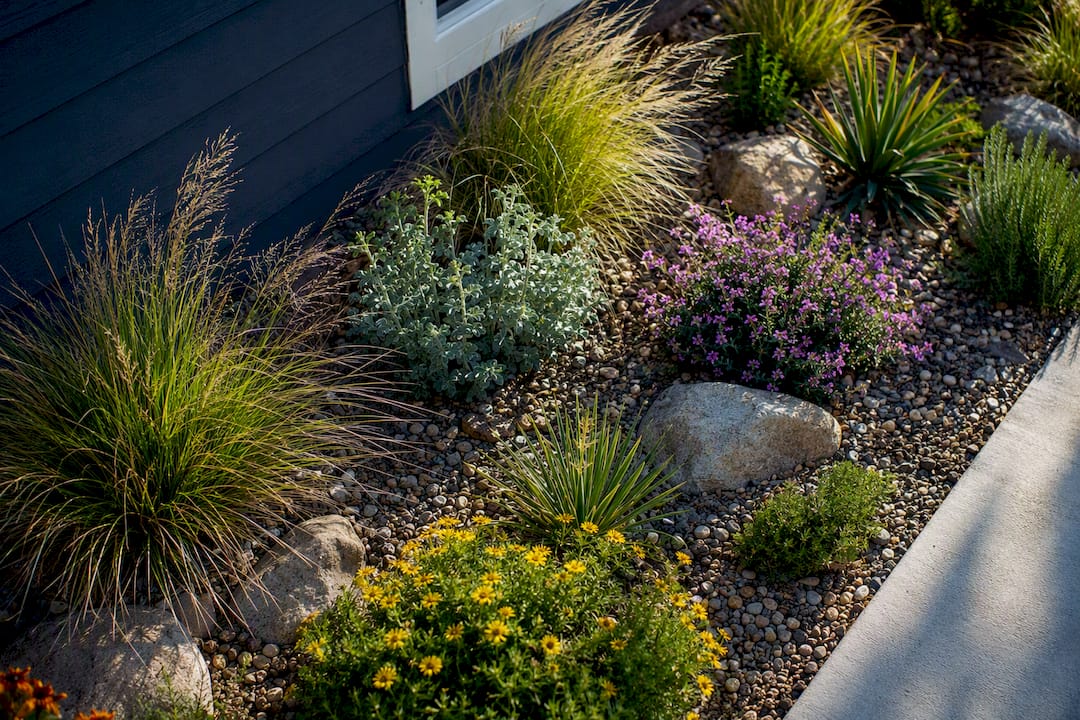
“Drought tolerant” and “drought adapted” aren’t quite the same thing. A drought-tolerant plant can survive dry spells once established; a drought-adapted plant is one native or naturalized to your specific climate and hardiness zone, which usually means less fuss over the long run. Matching plant choice to your actual zone, not a generic “low-water plant” list from a different climate, is what determines whether your landscape looks intentional or struggling.
Build your palette around a few functional roles:
- Groundcovers and turf alternatives like creeping thyme, dwarf sedges, or native clover reduce the irrigated footprint without leaving bare dirt.
- Structural shrubs such as manzanita, rosemary, or sage varieties give the yard year-round bones once established.
- Ornamental grasses add movement and soften hardscape edges while needing minimal supplemental water.
- Perennials and succulents supply seasonal color and textural contrast, especially agave, yarrow, and salvia in warmer zones.
- Trees chosen for structural soundness, not showroom perfection, since University of Arizona Extension warns that heavily staked or over-pruned nursery trees often fail under later drought stress.
Repeat the same three or four plants throughout the yard rather than collecting one of everything. That repetition, combined with contrasting leaf textures, is what makes a xeriscape read as lush instead of patchy. For final plant selection, cross-check candidates against a regional tool like WUCOLS or a state Plant Finder database, and confirm with your local extension office before you buy in bulk.
What Irrigation Setup Actually Saves Water?
Drip and subsurface drip irrigation outperform overhead sprinklers in nearly every bed application, delivering water straight to the root zone with minimal evaporation loss. A properly matched drip system can cut outdoor water use by roughly 30 to 50 percent compared with conventional sprinklers, and that gap only grows once plants mature and their water needs drop.
Set your irrigation zones to mirror your hydrozones exactly, not approximately. A zone with mixed high and low water plants will always overwater something.
- Space emitters based on plant size and root spread, checking manufacturer specs rather than eyeballing it.
- Separate turf areas onto their own zone entirely, since grass and shrub beds almost never share an efficient watering schedule.
- Consider a weather-based or soil-moisture controller if your budget allows; static clock timers are the single most common source of residential overwatering because homeowners forget to adjust them seasonally.
- Check system pressure and filtration once a year. Clogged emitters and pressure swings quietly waste water for months before anyone notices.
- Walk the system every spring looking for leaks, blown emitters, or lines chewed up by winter frost.
Pro Tip: Set a phone reminder for the first week of each season to walk your irrigation zones. Five minutes with a working sprinkler head map saves you from discovering a broken emitter after your water bill arrives.
How Do You Care for a Drought-Tolerant Landscape After Planting?
Establishment is where most drought-tolerant landscapes succeed or fail, and it has nothing to do with plant selection. It’s about watering discipline in the first year or two. Deep watering, enough to moisten the root zone to roughly 12 to 18 inches, then letting the soil dry before watering again, trains roots to grow downward and search for moisture, according to deep-watering guidance from the Woodlands Township’s environmental resources. Shallow, frequent watering does the opposite: it keeps roots near the surface and makes plants permanently dependent on irrigation.
Most drought-adapted plants need consistent water for their first one to two years, tapering gradually as University of Arizona Extension’s establishment research confirms, before they can handle real dry stretches on their own.
- Prune lightly to shape, not to force growth, since aggressive pruning pushes tender new shoots that need more water.
- Top off mulch once a year as it breaks down; a thinning mulch layer is one of the most overlooked causes of moisture loss.
- Check soil moisture with a finger test or moisture meter before watering on impulse.
- Learn to tell drought stress (wilting, curling leaves that don’t recover overnight) from normal seasonal dormancy (browning that follows a predictable yearly pattern).
- Avoid heavy fertilizer use. Fast, forced growth is thirstier growth, and it undercuts the whole point of the design.
What Does Drought Tolerant Landscaping Cost?
Costs vary widely depending on scope, but a rough conversion of a small bed or parkway strip typically runs in the low hundreds to low thousands of dollars, a mid-size yard retrofit lands in the mid-thousands, and a full-yard remodel with irrigation replacement and hardscape work can run into the tens of thousands. Irrigation retrofits and hardscape installation drive most of that range, not the plants themselves.
- Plant size and quantity: smaller, younger plants cost far less and often establish just as well as expensive mature specimens.
- Irrigation conversion: swapping overhead spray to drip is usually the single biggest line item.
- Hardscape and soil work: grading, permeable paving, and amendments add up fast if you’re not reusing existing materials.
- Phasing the project across two or three seasons spreads cost and lets you learn from your pilot bed before scaling up.
Outdoor irrigation accounts for 50 percent or more of summer household water use in dry regions, and a fully implemented xeriscape can cut total landscape water use by 50 to 75 percent. For most households, that reduction pays back the retrofit cost within a handful of seasons through lower water bills alone, before factoring in reduced mowing, fertilizing, and replacement plant costs.
What 30 Years of Commercial Landscaping Teaches About Home Yards
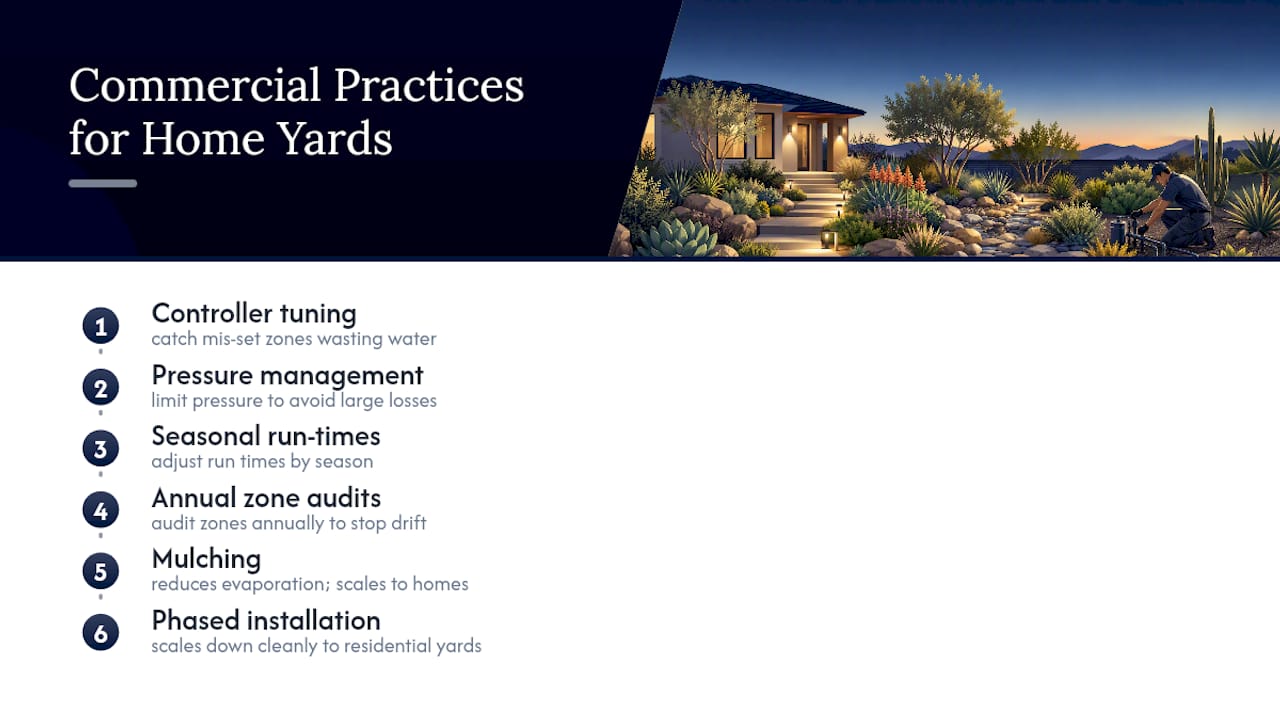
Over 30 years of commercial landscaping experience teaches lessons that transfer directly to home yards. Commercial sites live and die by controller tuning and pressure management, because a single mis-set zone across a large property wastes thousands of gallons before anyone catches it. That same discipline, checking pressure, adjusting run times by season, auditing zones annually, is exactly what keeps a home xeriscape from quietly reverting to a water hog. The mulching and phased-installation approaches used on large properties scale down cleanly to a residential yard.
Should You DIY Your Drought Tolerant Yard or Call a Pro?
Site assessment, plant selection, and mulching are well within reach for most homeowners with a weekend and some research. Irrigation design, drip system installation, and any grading or drainage work typically call for a licensed professional, especially once you’re tying into an existing sprinkler system or reworking slope.
A sensible rollout looks like three phases: assess your site and install a small pilot bed first, then retrofit irrigation and expand plantings once you’ve confirmed what works, and finally settle into a yearly maintenance rhythm of mulch top-ups and irrigation checks. An annual maintenance check, whether you do it yourself or bring in a landscape design professional, is what protects the investment you’ve already made instead of watching it slide backward.
— Nationwide Maintenance.
Ready to Redesign Your Yard? Here’s Where to Start
A DIY pilot bed teaches you a lot, but a full irrigation retrofit or hardscape conversion is where professional design pays for itself, catching drainage problems and zone conflicts before they cost you a second time. Nationwidemaintenance brings the same commercial landscape design and irrigation maintenance discipline used on properties for major retail and property management clients down to a scale that fits your yard.

Beyond design, mulching services and ongoing grounds care keep a newly converted yard from sliding back into old water habits once the novelty wears off. If you manage a commercial or multi-location property rather than a single home, the same team handles that scope through Nationwide Maintenance’s property management services. Request a site assessment first. It’s the step that turns a rough budget guess into an accurate one, and it’s the same starting point professional crews use before touching a shovel.
Where to Find More Drought Tolerant Landscaping Guidance
- WSU Extension’s waterwise landscaping chapter for regional plant and design principles.
- Colorado State Extension’s water-wise design steps for hydrozoning methodology.
- EPA WaterSense outdoor water use data for household water savings context.
- Utah State University’s water-wise landscaping principles for irrigation zone planning.
Check your local extension office and a regional Plant Finder tool before finalizing your palette. Climate zones vary enough within a single state that a plant thriving three counties over can struggle in your yard.
Sources
- Waterwise landscaping (PNW Gardeners’ Handbook) — WSU Extension
- Water-wise landscape design steps — Colorado State Extension
- Outdoor Water Use and Efficiency — EPA WaterSense
- Principles of water-wise landscaping — Utah State University
FAQ
How Do You Design a Drought-Tolerant Landscape?
Start with a site assessment covering sun, slope, and drainage, then map hydrozones, choose plants suited to your hardiness zone, and install drip irrigation matched to each zone before mulching.
What Is a Good Drought-Tolerant Ground Cover?
Creeping thyme, dwarf sedges, and native clover varieties all perform well as low-water turf alternatives, though the best choice depends on your specific hardiness zone and sun exposure.
What Is Drought-Resistant Landscaping Called?
It’s most commonly called xeriscaping or water-wise landscaping, terms used interchangeably with drought tolerant landscaping across extension offices and design guides.
How Much Does Drought-Tolerant Landscaping Cost?
Small bed conversions can run in the low hundreds to low thousands of dollars, while full-yard remodels with irrigation replacement often reach into the tens of thousands, with irrigation and hardscape work driving most of the cost.
How Much Water Does Xeriscaping Actually Save?
A properly implemented xeriscape can reduce total landscape water use by 50 to 75 percent, with drip irrigation alone accounting for a large share of that reduction compared to overhead sprinklers.
Need this handled at your facility?
Our crews cover commercial properties across New York, New Jersey, and Connecticut.