How to Get Rid of Drain Flies for Good
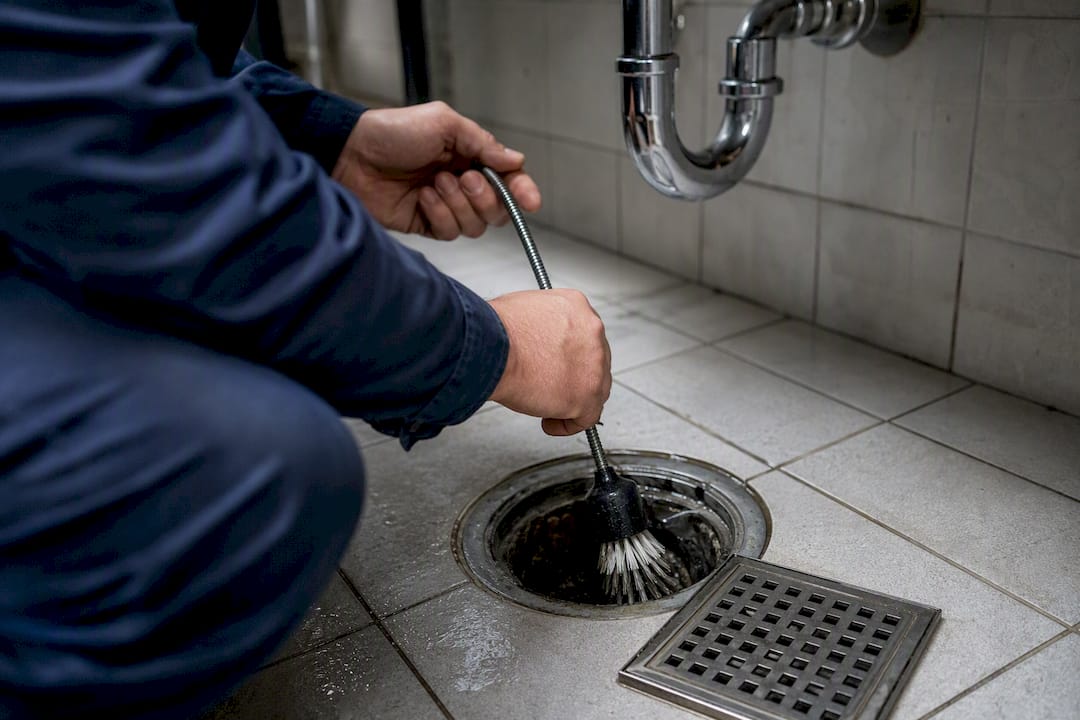
Drain fly control comes down to one job: scrub out the organic sludge coating your pipes, because that gelatinous layer is where every larva lives and feeds. Killing the adults you see buzzing around a bathroom sink does nothing for the hundreds still developing below. In the short term, set a trap to confirm which drain is breeding them, vacuum up visible adults, and skip the pesticide. If the buildup sits past a bend or behind a wall, or the flies keep returning across multiple drains, that’s the point to call a professional.
TL;DR:
- Proper drain fly control requires thorough removal of organic biofilm in pipes, as larvae feed on this layer for up to 15 days, making single cleaning ineffective.
- Detecting and targeting the actual breeding drain involves setting traps overnight, checking multiple drains systematically, and inspecting hidden or difficult-to-access areas.
- Effective elimination combines mechanical cleaning, enzymatic treatments, and professional tools like hydro-jetting for deep-seated buildup, requiring sustained effort over at least three weeks.
- Routine prevention includes weekly flushing and cleaning, and monthly brushing or enzymatic treatment, especially in commercial settings with grease traps and extensive piping systems.
- Persistent or heavy infestations typically indicate inaccessible leaks or buildup that require professional inspection, cleaning, and plumbing repairs to fully eradicate the source.
Table of Contents
- What Are Drain Flies, and Why Does Their Lifecycle Matter?
- How Do You Find Which Drain Is Breeding the Flies?
- How Do You Actually Eliminate Drain Flies?
- How Do You Prevent Drain Flies From Coming Back?
- What Mistakes Make Drain Flies Worse, Not Better?
- When Should You Bring in a Professional Maintenance Team?
- Why Drain Fly Control Is a Maintenance Problem, Not a Pest Emergency
- Keep Drain Flies From Becoming an Operational Headache
- Sources
What Are Drain Flies, and Why Does Their Lifecycle Matter?
You’ll recognize a drain fly by its fuzzy, moth-like wings and its habit of resting motionless on tile near a sink instead of flying at you. They’re weak fliers, which is exactly why you tend to spot them clustered around one specific drain rather than scattered across the room. That clustering is useful information, and it’s the first clue in tracking down the source.
The biology behind the infestation explains why so many households can’t get rid of them despite scrubbing the visible parts of a drain. Females lay eggs directly onto the organic film lining a pipe, and the full cycle runs through four stages:
- Eggs: laid in batches directly on the biofilm surface
- Larvae: burrow into the slime and feed on bacteria and organic matter for about a week
- Pupae: a brief resting stage before the adult emerges
- Adults: live one to two weeks, just long enough to mate and lay the next batch
At around 70°F, larval development runs 10 to 15 days, and colder pipes slow that clock down further. That’s why a single cleaning rarely finishes the job. You need a maintenance window that spans at least three weeks to catch overlapping generations, since eggs laid the day you clean won’t hatch and mature for nearly two weeks afterward.
How Do You Find Which Drain Is Breeding the Flies?
Before you scrub anything, figure out which drain is actually the source. Homes and commercial buildings often have a dozen drains, and cleaning the wrong one wastes time while the real breeding site keeps producing flies.
- Set an overnight trap. Coat the inside of a clear cup or jar with vegetable oil or petroleum jelly and place it upside down over a suspect drain. Adults that emerge overnight get stuck trying to climb out, and by morning you’ll know exactly which fixture is active. This is a monitoring method drawn directly from extension entomology programs.
- Try the tape test as a backup. Lay a strip of clear tape sticky-side down across the drain opening overnight and check it for trapped flies in the morning.
- Walk the property systematically. Check kitchen and bathroom sinks, floor drains, mop sinks, shower and tub drains, toilets, condensate pans, and any grease traps.
- Look under loose tiles or slab cracks. Slow leaks under flooring create hidden pools of standing organic matter that never show up in a normal drain inspection.
Watch for slow drainage, a persistent musty or sewage-like odor, visible slime coating the pipe opening, or adults resting near one fixture more than others. Extension publications recommend checking this full range of sites, including condensate lines and grease traps that homeowners often overlook entirely.
Pro Tip: Run traps on every drain in the affected room at once, even ones you don’t suspect. Drain flies frequently breed in a secondary drain, like a floor drain under a washing machine, while everyone assumes the kitchen sink is the culprit.
How Do You Actually Eliminate Drain Flies?
Reducing what you see today and removing the source that keeps producing more are two separate jobs, and you need to do both.
Start with immediate triage. Vacuum up adults resting on walls or ceilings near the drain, use a fly swatter for anything airborne, and set sticky traps to catch strays while you work on the source. None of this solves the infestation, but it buys you breathing room.
Then move to mechanical cleaning, which is where the real work happens:
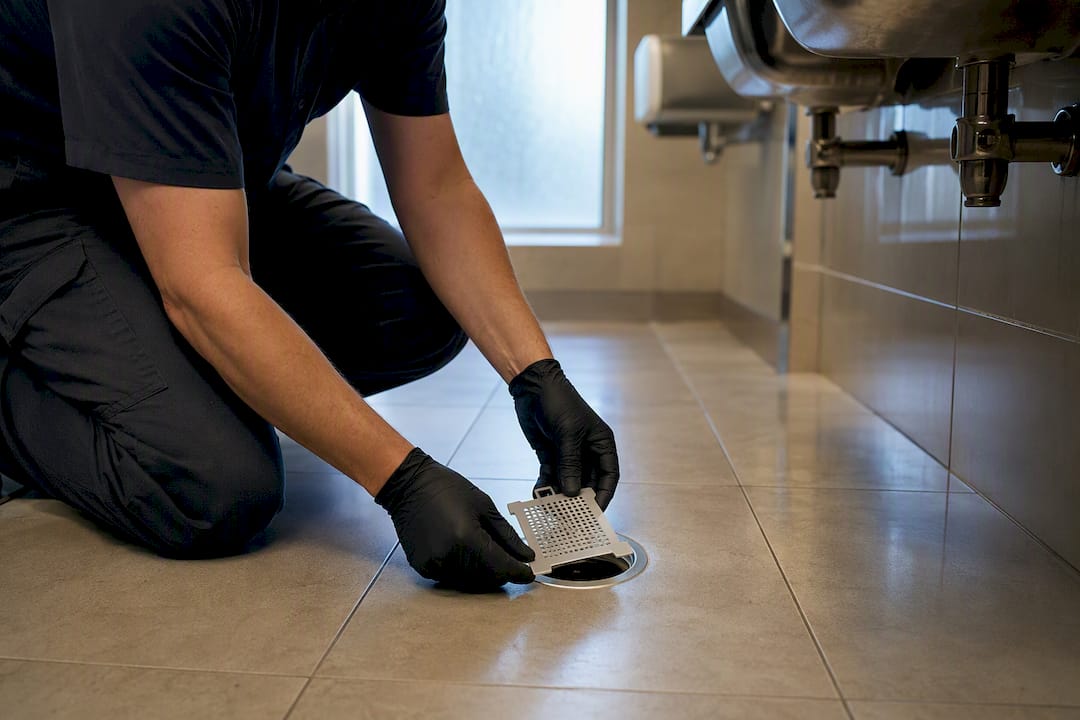
- Remove the strainer, stopper, or drain cover.
- Scrub the inside of the pipe opening and the visible trap area with a stiff brush, working the bristles against the pipe wall to break up the slime rather than just wiping the surface.
- Where accessible, remove the P-trap under the sink and clean it separately, since biofilm accumulates heavily in that curved section.
- Flush the drain thoroughly with hot water once the visible film is gone.
After mechanical cleaning, an enzymatic or foaming drain treatment helps digest residue the brush couldn’t reach. Apply according to the label, and reapply on the schedule the product specifies, typically weekly during active treatment. Check the label for septic compatibility before using any enzyme product in a home on a septic system, since not every formula is septic-safe.
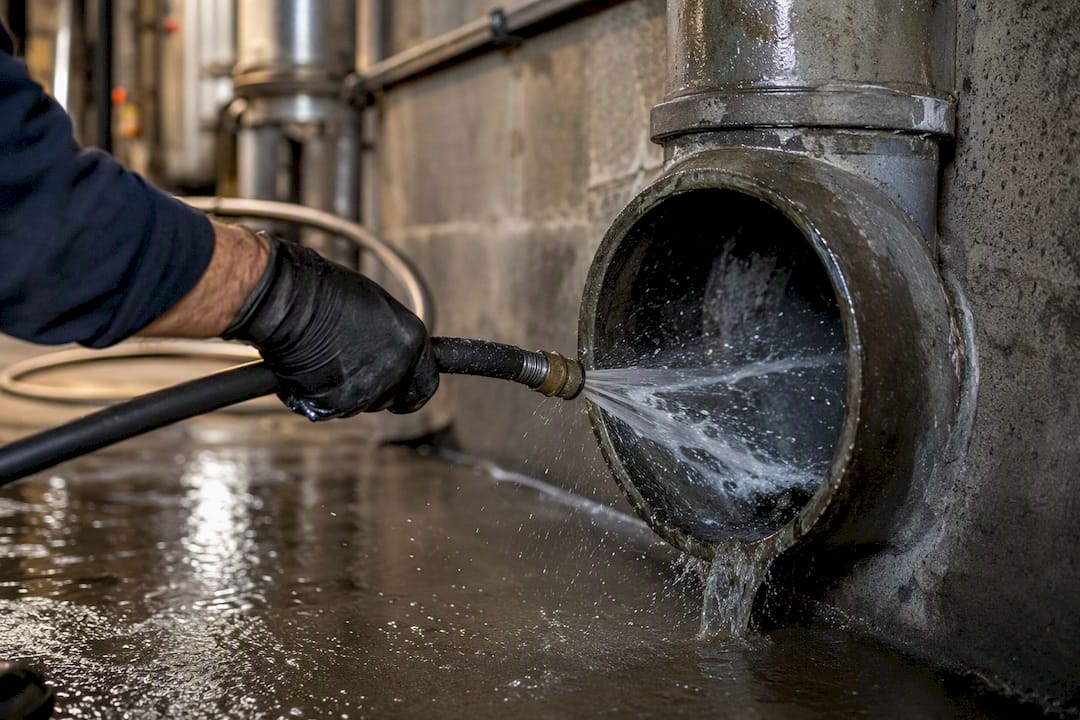
If buildup sits deeper than a brush can reach, or the biofilm has accumulated in a floor drain, wall void, or long horizontal run, that’s when to escalate to professional tools. A drain auger clears clogs and disturbs the deeper biofilm layer. Hydro-jetting uses pressurized water to strip entrenched buildup from pipe walls, and it’s the standard approach in restaurants and multi-tenant buildings where grease accumulation is severe. A professional can also inspect wall voids and slab leaks that homeowners can’t access on their own.
Whatever method you use, complete removal of the biofilm is what actually breaks the cycle, and that takes sustained effort over at least three weeks, not a single afternoon.
How Do You Prevent Drain Flies From Coming Back?
Once a drain is clear, keeping it that way is a matter of a few minutes a week rather than another deep clean.
Weekly tasks:
- Run water through any drain you don’t use daily, since standing water and dry traps both invite breeding.
- Clear hair and debris out of strainers before it turns into a biofilm base.
- Wipe down accessible trap covers.
Monthly tasks:
- Brush any trap you can reach, even if you haven’t seen flies.
- Apply an enzymatic cleaner per the label as routine maintenance rather than a reactive treatment.
- Check condensate pans and refrigeration drain lines, since these sit outside normal cleaning routines and accumulate slime quietly.
Commercial properties carry a heavier prevention load. Grease traps need regular maintenance on their own schedule, ventilation and drainage systems need to actually move water instead of letting it pool, and leaks need fixing the moment they’re found rather than after the second fly complaint. Exterior lighting and exclusion measures matter too, since drain flies breeding in outdoor drainage or shaded standing water will migrate indoors through any open door. Facilities with heavy exterior grime, including buildup on facades near ground-level drainage, sometimes benefit from professional exterior cleaning as part of that broader prevention effort.
What Mistakes Make Drain Flies Worse, Not Better?
Most failed DIY attempts share the same root problem: they treat the water in the pipe instead of the slime coating it.
- Bleach, vinegar, and boiling water all run through the pipe without penetrating the biofilm layer, so they typically deliver only temporary relief before the population rebounds.
- Never mix bleach with ammonia or an existing caustic drain cleaner. The combination produces toxic gas, and this hazard applies whether you’re treating a kitchen sink or a commercial floor drain.
- Pouring insecticide into a drain is discouraged. The only drain-labeled product commonly referenced is an insect growth regulator, and even that targets larvae without removing the biofilm feeding them.
- Always check septic compatibility on any cleaner or treatment label before it goes down a residential septic system.
If you’ve brushed, flushed, and treated a drain repeatedly and the flies keep coming back, the likely cause is a leak feeding an inaccessible pocket of standing water, which is a plumbing problem, not a cleaning one.
When Should You Bring in a Professional Maintenance Team?
Persistent or commercial infestations usually mean the breeding site sits somewhere a homeowner’s brush can’t reach. Nationwidemaintenance approaches drain fly control the same way extension entomologists do: locate the biofilm, remove it completely, then verify the fix holds.
Our approach includes:
- Targeted inspection of every drain, condensate pan, and grease trap on the property
- Mechanical biofilm removal using professional-grade brushes and access to sections a standard snake can’t clear
- Scheduled enzyme cleaning programs sized to drain usage, monthly for heavy-traffic fixtures and quarterly for low-use ones
- Hydro-jetting for entrenched buildup deep in commercial pipe runs
- Plumbing repair when a hidden leak turns out to be the actual source
Pro Tip: A bundled maintenance program catches drain fly sources during routine visits, before they become a visible infestation that disrupts a retail floor or a commercial kitchen.
Why Drain Fly Control Is a Maintenance Problem, Not a Pest Emergency
Property managers tend to treat drain flies like a one-time pest call, but that framing misses the point. The flies are a symptom of something structural, usually a drain that isn’t being maintained on a schedule. We build inspections into routine facility visits and back every treatment with eco-friendly products and 24/7 emergency response, because a slow drain today is a shut-down bathroom next week if nobody’s watching for it.
— Nationwide Maintenance.
Keep Drain Flies From Becoming an Operational Headache
If you’ve read this far, you already know that mechanical removal beats another bottle of drain cleaner every time. Nationwidemaintenance builds that removal work into ongoing pest control and prevention programs, pairing enzyme cleaning schedules with hydro-jetting and plumbing repair so drains stay clear instead of cycling back into infestation every few months.

For property managers juggling multiple locations, the value is in not having to chase down separate vendors for inspection, cleaning, and repair. We’ve handled drain and pest issues across retail, healthcare, and hospitality facilities in the Tri-State area, and we hold to the same eco-friendly standards on every job. If a drain fly problem keeps returning at one of your properties, request a facility inspection and get a straight answer on whether the fix is a cleaning schedule or a plumbing repair.
Sources
- Drain Flies in the Home: Identification & Management - Alabama Cooperative Extension System
- Drain Flies - What are they? How do I get rid of them? - University of Arkansas Division of Agriculture
- Drain Flies (Moth Flies or Filter Flies) - Texas A&M Extension publication
- Moth or drain flies - UC Statewide IPM Program
Recommended
Need this handled at your facility?
Our crews cover commercial properties across New York, New Jersey, and Connecticut.