Commercial Bathroom Budgets for Facility Managers: $18,000–$60,000
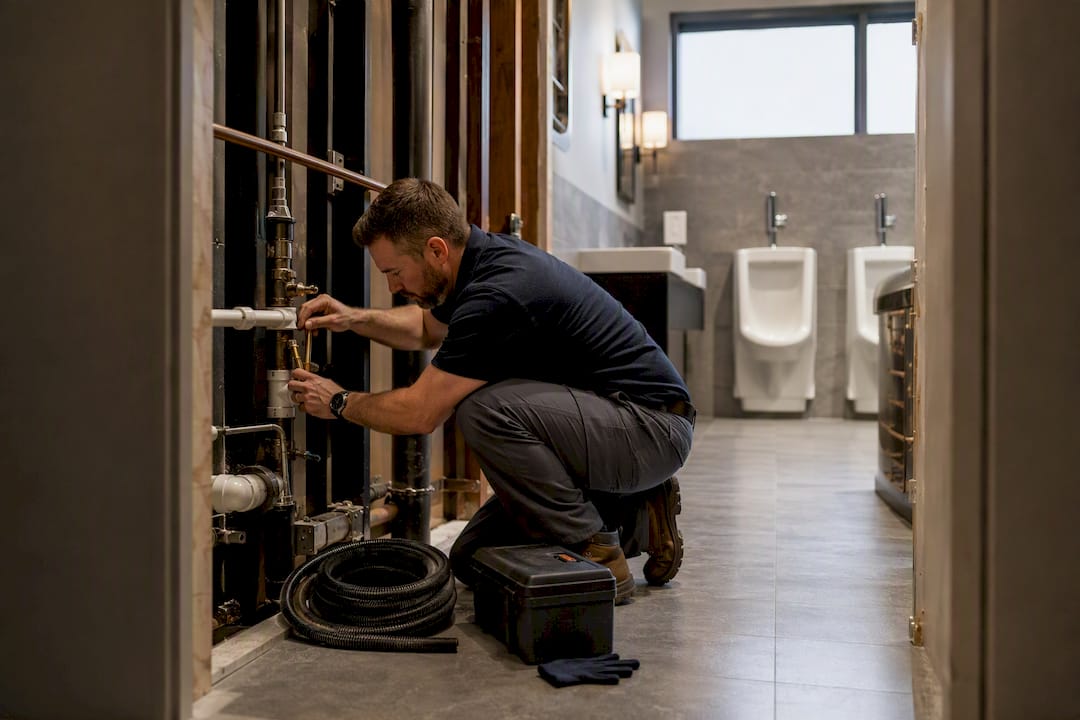
Most commercial bathroom renovations run between $18,000 and $60,000 per room, with small refreshes landing near $8,000 and full ADA reconfigurations pushing past $120,000. Per-square-foot costs typically fall between $100 and $300, or $3,000 to $15,000 per stall. The three biggest swing factors are plumbing relocation, ADA compliance work, and finish grade.
TL;DR:
- Plumbing relocation and ADA compliance are the primary factors driving costs, especially when waste lines need rerouting or layout changes occur.
- Per-stall prices, typically ranging from $3,000 to $15,000, are more reliable than square footage estimates for multi-stall restrooms.
- Labor costs constitute up to 65 percent of total expenses, with specialist rates for plumbers, electricians, and tile setters significantly impacting bids.
- Budget planning should focus on detailed line-item bids and contingencies of 5 to 15 percent to account for hidden issues like asbestos or water damage.
- Larger, high-traffic, or complex projects in older buildings can push costs above $150,000, and regional permit, material, and labor rates may increase overall expenses by up to 30 percent.
Table of Contents
- What Does a Commercial Bathroom Renovation Cost?
- What Actually Drives the Price Up?
- How Much Should You Budget by Bathroom Size?
- How Do You Build an Accurate Renovation Budget?
- How Long Does a Renovation Take, and What Does Downtime Cost?
- Where Can You Cut Costs Without Cutting Corners?
- How Does Nationwide Maintenance Estimate These Projects?
- How Much Does Location Actually Change the Price?
- What Compliance Costs Go Beyond ADA?
- What Should You Expect to Spend on Maintenance After Renovation?
- How Does Budgeting Differ by Property Type?
- Editorial Take: What Most Budgeting Advice Gets Wrong
- Ready to Get a Line-Item Estimate for Your Renovation?
- Sources
What Does a Commercial Bathroom Renovation Cost?
The right budget number depends entirely on what “renovation” means for your space. A cosmetic refresh, a full gut, and a multi-stall reconfiguration are three different financial conversations, and lumping them together is how facility budgets go sideways before the first bid even comes in.
Here’s how the ranges typically break down:
- Low-cost refresh: New paint, fixtures, lighting, and partitions without touching plumbing or electrical rough-in. Good fit for offices that just need a visual update.
- High-end / full reconfiguration projects include layout changes, moved waste lines, touchless fixture packages, and full accessibility compliance. Large multi-stall restrooms in hospitality or healthcare settings often sit at this end.
- Per-square-foot guidance: Expect $100–$300 per square foot for commercial work, well above the $70–$250 range typical of residential remodels, because commercial fixtures, code requirements, and durability specs cost more.
- Per-stall guidance: Multi-stall restrooms often price out at $3,000 to $15,000 per stall, depending on fixture grade and whether plumbing needs to move.
Per-stall math tends to be the more reliable planning tool for multi-fixture restrooms, since fixture count and plumbing complexity drive cost more directly than raw square footage.
What Actually Drives the Price Up?
Line items matter more than the total. If you only look at the bottom-line number on a bid, you’ll miss where the money is actually going, and where a competing bid might be cutting corners.
Labor is the single largest cost category, typically consuming 40% to 65% of the total budget. Plumbers, electricians, and tile setters bill at specialist rates, and 2026 has seen those trade rates climb faster than material costs, which is part of why commercial per-room pricing has crept upward even as material supply has stabilized.
Plumbing scope is the biggest wildcard. A straightforward fixture swap is cheap. Rerouting waste lines, adding a booster pump, or changing drainage gradients is not; confined access and specialist crews can add a meaningful line item on their own, according to commercial project cost breakdowns.
Electrical and ventilation costs rise with GFCI requirements, exhaust fan upgrades, and any HVAC tie-in needed for new layouts.
Finish and fixture grade create the widest swings. Toilets alone range $150 to $500 each, sinks $100 to $600 each, and that’s before partitions, specialty coatings, or touchless dispensers enter the picture.
Permits and ADA compliance add jurisdiction-specific fees, commonly $100 to $6,000 depending on scope and locality.
Statistic Callout: Labor eats up to 65% of a typical renovation budget. Before you evaluate any bid on total price, check what percentage is labor versus material. A bid that’s suspiciously cheap on labor is usually cheap on qualified trades, too.
Hidden exposures worth flagging early: asbestos in older flooring or wall assemblies, undiscovered water damage behind fixtures, and tight service corridors that slow demolition and staging.
How Much Should You Budget by Bathroom Size?
Real numbers help more than ranges. Here’s how sample budgets typically shake out by scope:
- Single-toilet ADA room (roughly 60–100 sq ft): $15,000–$35,000. Most of that goes to plumbing relocation for clearance requirements and grab bar/fixture compliance, not finishes.
- Small multi-stall restroom (2–4 stalls, 150–250 sq ft): $40,000–$80,000, or roughly $10,000–$20,000 per stall once you add shared partitions, sinks, and ventilation.
- Large multi-stall restroom (6+ stalls, 400+ sq ft): $90,000–$150,000+, especially with premium finishes, touchless fixtures, or full accessibility retrofits.
For a quick sanity check, convert between methods: a 200-square-foot, 3-stall restroom at $250 per square foot lands near $50,000, which should roughly match a per-stall estimate of $15,000–$18,000 per stall. If the two methods land far apart, ask your contractor why.
How Do You Build an Accurate Renovation Budget?
A line-item budget beats a lump-sum guess every time, because it forces every trade and material category into the open before you sign anything.
Structure your estimate around these categories:
- Demolition and disposal (5%–10% of budget)
- Plumbing (20%–35%, higher if lines move)
- Electrical and ventilation (10%–15%)
- Fixtures and finishes (20%–30%)
- Permits and inspections (2%–8%, jurisdiction-dependent)
- Labor overhead and project management (varies by contractor)
When requesting bids, ask contractors to itemize each category separately rather than submit one number. This is the single best defense against apples-to-oranges comparisons, since line-item bids expose fixture-grade differences and quietly omitted costs that a lump-sum quote can hide entirely.
Build in a contingency of 5% to 15% on top of the line-item total, and lean toward the higher end for any building over 20 years old or any project touching existing waste lines. Larger upgrades are sometimes better treated as capital expenditures rather than operating costs, which can open financing options worth discussing with your finance team before the bid deadline.
Pro Tip: Ask every bidder the same question: “What’s included in your contingency, and what’s billed as a change order?” The answer tells you more about a contractor’s honesty than their price does.
How Long Does a Renovation Take, and What Does Downtime Cost?
Timeline and budget are linked more tightly than most facility managers expect. A cosmetic refresh typically takes 5 to 7 days. A full overhaul involving plumbing and ADA work runs 2 to 3 weeks or longer, and every week added means more equipment rental, labor, and coordination cost.
To limit disruption:
- Schedule plumbing-heavy work during off-hours or weekends when foot traffic is lowest.
- Bring in temporary restroom trailers for larger multi-stall projects.
- Phase multi-restroom buildings one facility at a time instead of closing all restrooms at once.
- Budget for extra cleaning and signage during the transition period, since half-finished construction zones create their own liability exposure.
Compressing a 3-week project into 10 days is possible, but expect overtime premiums and multiple crews working in parallel, which typically adds 10% to 20% to labor costs.
Where Can You Cut Costs Without Cutting Corners?
Value engineering means spending money where it actually reduces future cost, not just wherever it looks cheapest today.
Durable, commercial-grade fixtures cost more upfront but stretch replacement cycles significantly. Running the math over a 5 to 10 year total cost of ownership usually favors the sturdier spec, even when the sticker price is higher.
Practical ways to trim cost without creating a maintenance headache later:
- Consolidate fixture specs across multiple locations to negotiate bulk pricing with suppliers.
- Save on cosmetic items (paint, signage, mirror frames) rather than structural or plumbing components.
- Keep the existing footprint where possible; layout changes are consistently the most expensive line item.
- Set aside a maintenance reserve of 2% to 5% of the project cost per year for lifecycle upkeep.
Pro Tip: Negotiate extended warranties on fixtures and plumbing work as part of the original contract, not as an add-on. Contractors are far more willing to include coverage during initial negotiations than after the invoice is paid.
How Does Nationwide Maintenance Estimate These Projects?
Thirty years of commercial delivery teaches you where budgets typically break down. It’s almost never the fixtures. It’s the plumbing surprise behind the wall, the permit that took six weeks longer than expected, or the change order nobody priced into the contingency.
Nationwidemaintenance estimates commercial bathroom renovations with a full line-item bid built from an on-site walkthrough, not a phone quote. Because construction, plumbing fixture installation, and ongoing facility maintenance run under one roof, contingency planning accounts for what happens after the ribbon-cutting, not just the closeout punch list. That matters for Fortune 500 retail chains and single-site property owners alike; both need a contractor who won’t disappear once the invoice is paid.
Multi-site clients benefit most from this model, since one vendor managing renovation, plumbing fixture installation, and daily maintenance across locations eliminates the coordination overhead of juggling separate vendors for each phase.
How Much Does Location Actually Change the Price?
Two identical renovation specs can price 30% apart depending entirely on where the building sits. Labor rates are the biggest driver: a plumber or electrician in a major metro market commands a different rate than the same trade in a smaller regional market, and that gap alone can shift a mid-range project from the low end to the high end of its bracket.
Permit costs vary just as much. Some jurisdictions charge flat inspection fees; others price permits based on project valuation, square footage, or number of fixtures, which is part of why the $100 to $6,000 permit range is so wide. Local plan review timelines also affect cost indirectly, since a slow permitting office extends the project timeline and adds carrying cost.
Building age and local code adoption matter, too. Older commercial stock in cities with strict historic-preservation rules or aggressive accessibility retrofitting mandates often needs more structural work to bring a bathroom up to current standards, which raises both material and labor costs before a single tile gets set.
Material delivery costs also shift by region, particularly for specialty fixtures or partitions that need to ship from a limited number of manufacturers. Rural or island locations, and buildings with limited freight access, should budget extra for logistics and staging, which rarely shows up as its own line item until a contractor flags it during the walkthrough.
What Compliance Costs Go Beyond ADA?
ADA accessibility gets most of the attention, but it’s not the only code layer that adds cost to a commercial restroom project. Local health department requirements, particularly for restaurants, healthcare facilities, and schools, often dictate specific surface materials, drainage slopes, and handwashing station placement that go beyond baseline plumbing code.
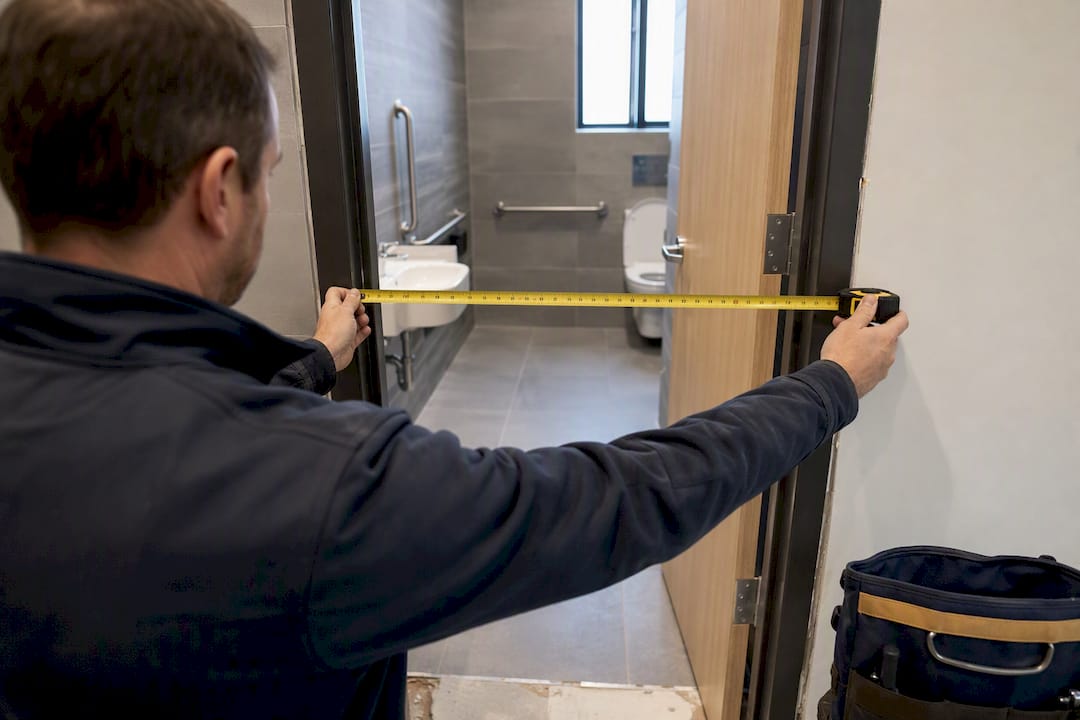
Fire and life-safety codes can also affect bathroom renovations more than owners expect, especially when a project changes a door swing, adds a partition wall, or alters an egress path. Any wall modification near a corridor may trigger a fire-rating review, which can mean additional materials and inspection fees that weren’t part of the original scope.
Ventilation standards tied to indoor air quality codes matter too, particularly in healthcare and hospitality settings where exhaust rates are regulated more strictly than in a standard office building. Meeting those requirements sometimes means upsizing ductwork or adding makeup air, which is a mechanical cost most initial estimates underplay.
Before finalizing scope, it’s worth having a contractor or inspector review the space for hidden code triggers, since catching a fire-rating or ventilation issue during design costs far less than discovering it mid-demolition.
What Should You Expect to Spend on Maintenance After Renovation?
A renovated bathroom doesn’t eliminate maintenance spend, it changes its shape. Commercial-grade fixtures and finishes generally reduce the frequency of repair calls, but they still need a maintenance reserve to cover normal wear.
Planning for 2% to 5% of the original project cost annually is a reasonable baseline for ongoing upkeep, covering things like fixture seal replacement, partition hardware, and periodic re-grouting. High-traffic restrooms, such as those in retail or hospitality settings, should budget toward the higher end of that range.
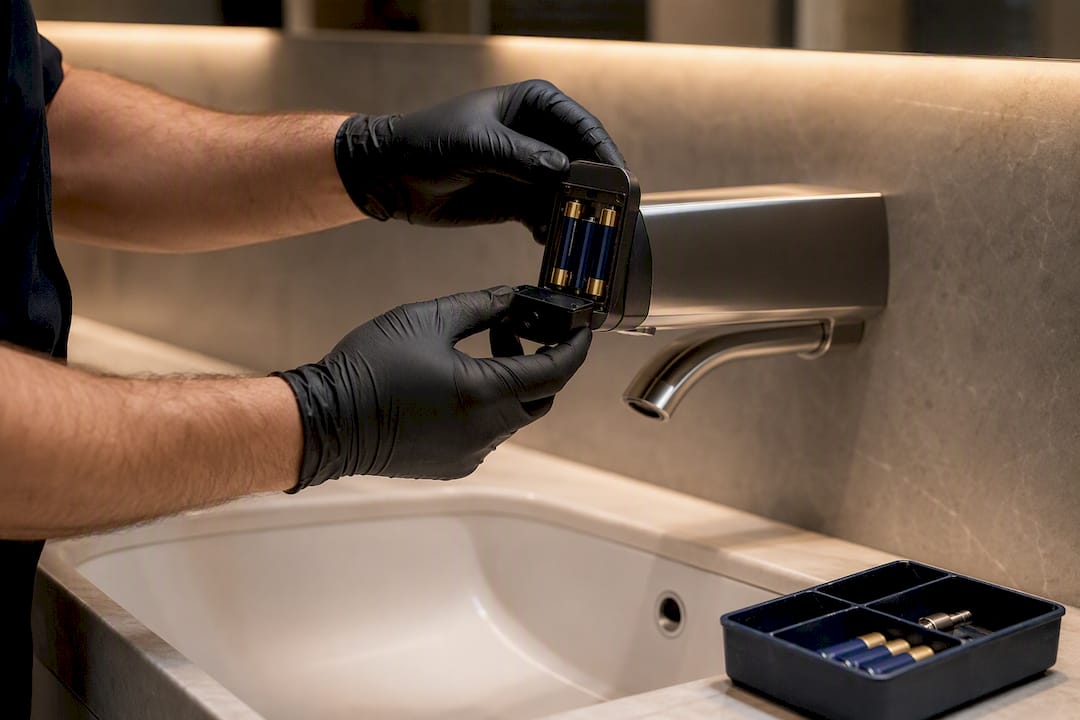
Touchless fixtures and sensor-based dispensers, increasingly common in 2026 renovations, add a new maintenance category: battery and sensor replacement. It’s a small recurring cost, but one that’s easy to forget when building an annual facilities budget since it wasn’t a line item before the renovation.
Routine janitorial service also plays into the equation. A restroom with better ventilation, easier-to-clean surfaces, and durable finishes typically reduces labor hours per cleaning cycle, which can offset some of the maintenance reserve over time if the janitorial contract is adjusted to reflect the improved space.
How Does Budgeting Differ by Property Type?
An office bathroom, a retail restroom, and a hotel guest bathroom all serve different traffic patterns and image expectations, and that changes where the money should go.
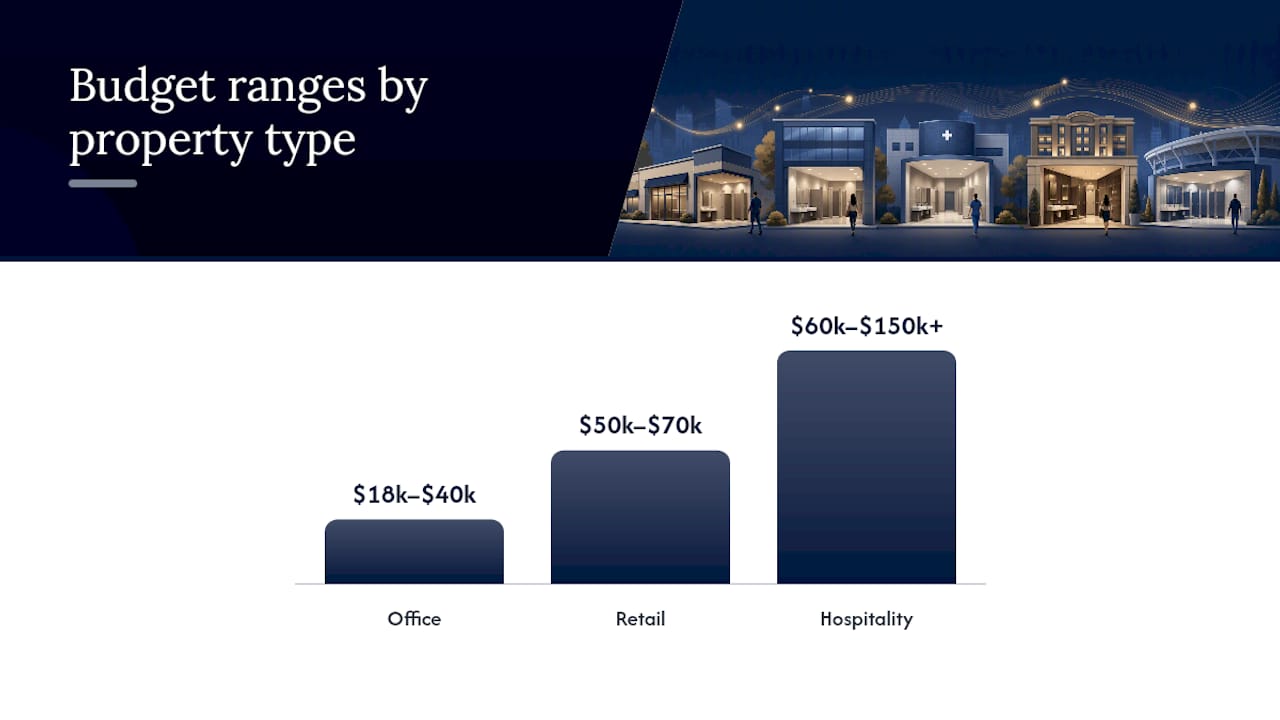
Office properties typically prioritize functional upgrades over aesthetics: better ventilation, updated fixtures, and ADA compliance for tenant retention. A mid-range budget of $18,000–$40,000 per room covers most office needs without pushing into premium finish territory.
Retail properties, especially customer-facing restrooms in shopping centers or big-box stores, need to balance durability with brand image. Heavy foot traffic argues for commercial-grade partitions and finishes even if it pushes the budget toward $50,000–$70,000, since replacement costs from wear-and-tear are higher than the upfront premium.
Hospitality properties face the highest expectations and the highest budgets, often $60,000–$150,000+ per bathroom, because guest-facing restrooms function as a brand touchpoint. Touchless fixtures, higher-end tile, and layout upgrades are common here in a way they rarely are in office settings.
Editorial Take: What Most Budgeting Advice Gets Wrong
The conventional wisdom treats commercial bathroom renovation cost like a single number you can look up and trust. It isn’t. The research consistently points to one pattern: the projects that blow past budget aren’t the ones with expensive finishes, they’re the ones where plumbing scope, permit timelines, or ADA requirements weren’t priced correctly at the start.
Most guides fixate on per-square-foot pricing because it’s easy to quote. But per-stall math, paired with a genuine line-item bid, gives facility managers a far more honest picture, especially for multi-fixture restrooms where plumbing complexity outweighs raw square footage every time.
If there’s one thing to prioritize before anything else, it’s forcing contractors to itemize their bids. A single lump-sum number tells you nothing about where corners might get cut. Once you have line items in hand, contingency planning and phasing decisions become straightforward. Skip that step, and no contingency percentage will save the budget from a surprise it never saw coming.
— Nationwide Maintenance.
Ready to Get a Line-Item Estimate for Your Renovation?
You’ve seen the ranges and the line items that make up a real bid. The next step is getting numbers specific to your building, not a generic estimate. Nationwidemaintenance combines commercial bathroom renovation work with ongoing facility maintenance under a single contract, so the same team that handles your plumbing rough-in also handles the janitorial and repair calls after the ribbon-cutting, with 24/7 emergency support if something goes wrong down the line.
That integration matters most for multi-site operators juggling several properties across the Tri-State area, since one point of contact replaces the usual scramble between a construction crew, a maintenance vendor, and a cleaning company. Request a free site visit and line-item estimate through Nationwidemaintenance’s bathroom renovation services page, and you’ll get a walkthrough-based quote broken into the same categories covered above, not a phone-quoted lump sum.
Sources
- Bathroom remodel cost (NerdWallet) — Published: 2025-01-07
- Commercial Bathroom Construction: Project Cost Guide – Well Built Florida
- Cost estimators (Bureau of Labor Statistics)
Recommended
Need this handled at your facility?
Our crews cover commercial properties across New York, New Jersey, and Connecticut.