Cut Replacement Cost: Carpet Cleaning Frequency By Zone for Facilities
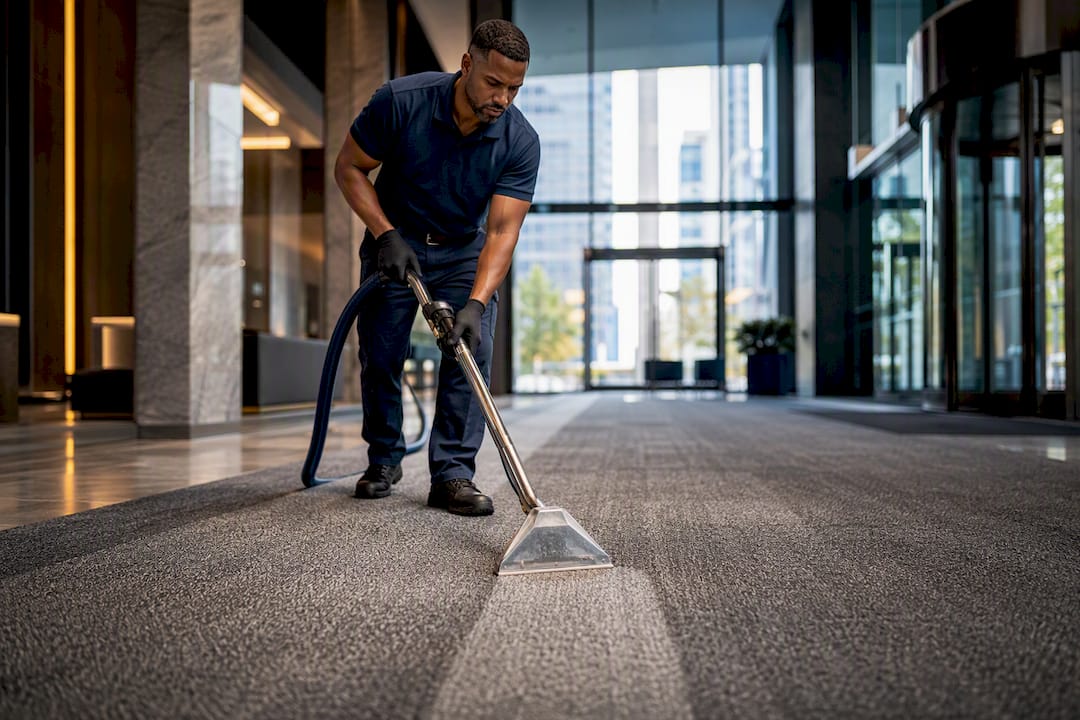
Use a zone-based cleaning cadence, not a flat annual contract: low-traffic zones every 6 to 12 months, moderate zones every 3 to 6 months, high-traffic zones every 3 to 12 weeks, and severe zones monthly to bi-weekly. That range sits inside CRI and IICRC guidance, and it maps to a three-level maintenance model of routine vacuuming, interim maintenance, and deep extraction. Set your carpet cleaning frequency by zone, inspect regularly, and adjust against manufacturer warranty terms.
TL;DR:
- Carpet maintenance schedules should be tailored to traffic zones, with severe areas cleaned every 2 to 4 weeks and low-traffic areas several times annually.
- Regular vacuuming, using CRI-certified equipment, is essential in protecting the interval between deep cleaning sessions and should be tracked consistently.
- Deep extraction or hot-water cleaning is recommended every 6 to 12 months, especially in high-traffic zones, to remove soil bonded deep within the carpet fibers.
- Signs like visible soil, matted pile, or persistent odor indicate overdue cleaning, requiring escalation of cleaning frequency to prevent permanent damage.
- Implementing a zone-based cleaning program reduces total costs, enhances appearance, and prevents over- or under-cleaning compared to flat scheduling approaches.
Table of Contents
- Carpet Cleaning Frequency by Traffic Zone
- What Are the Three Levels of Carpet Maintenance?
- How to Build a Zone-Based Cleaning Schedule
- Which Cleaning Method Fits Each Situation?
- Signs Your Carpet Cleaning Schedule Is Overdue
- Turning Cleaning Frequency Into a Budget Line
- Why Zone-Based Programs Outperform Flat Schedules
- Build Your Zone-Based Carpet Program With Nationwide Maintenance
- Sources
Carpet Cleaning Frequency by Traffic Zone
Not every square foot of a building wears the same. A lobby absorbs foot traffic, rain, and grit all day; a private office might see six visits a week. Splitting the property into traffic tiers, rather than committing to one calendar-wide interval, is how zone-based programs actually control cost and appearance at the same time.
Four tiers cover almost every commercial layout:
- Severe traffic (main entrances, revolving doors, elevator lobbies): cleaned on a frequent, about monthly to bi-weekly basis, with daily vacuuming and matting review.
- High traffic (primary corridors, reception desks, cafeteria aisles): cleaned regularly, roughly every one to several months.
- Moderate traffic (open-plan offices, conference rooms, retail sales floors): cleaned several times per year.
- Low traffic (private offices, storage rooms, rarely used meeting rooms): cleaned periodically, multiple times a year.
A property manager’s guide from Triple Star puts retail sales floors and hospital corridors at the tighter end, often every 8 to 12 weeks, while general office space can stretch toward the 3 to 6 month mark if traffic stays moderate. Entry matting changes the math directly: a well-placed 10 to 15 foot matting zone captures a large share of tracked-in soil before it ever reaches carpet fiber, which lets you push high-traffic intervals toward the longer end of the band — learn more about indoor plants for high-traffic areas as part of a holistic approach to entrance cleanliness. Construction dust, wet-weather stretches, or a spike in food-service spills work the opposite direction, and any of those should trigger an early cycle regardless of what the calendar says.
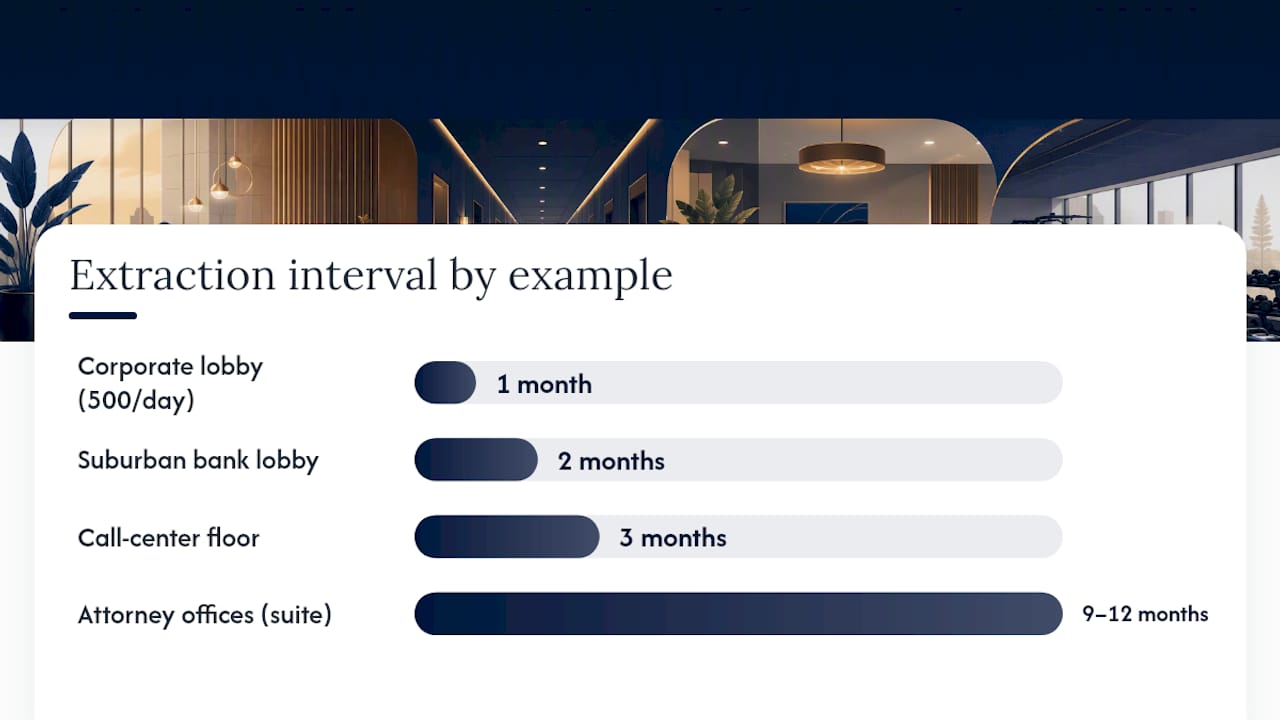
Four quick examples: a corporate lobby with 500 daily visitors runs monthly extraction; a suburban bank branch lobby runs bi-monthly; an open-plan call center floor runs quarterly; a suite of private attorney offices runs every 9 to 12 months.
What Are the Three Levels of Carpet Maintenance?
CRI’s commercial maintenance guidance structures commercial carpet care around three distinct levels, and understanding what each one does (and doesn’t) accomplish is what keeps a facility team from over-relying on one method.
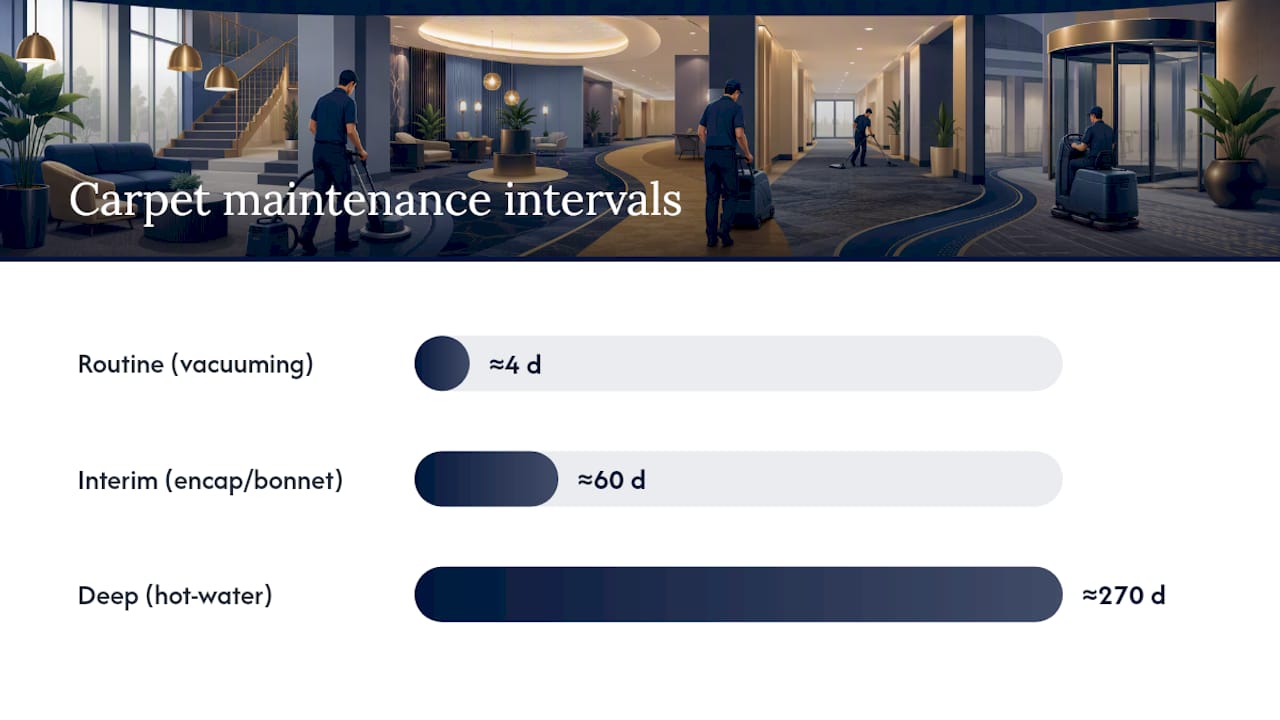
- Routine maintenance. Vacuuming performed daily to weekly with CRI-certified equipment, using a brush-roll head and sufficient passes to lift embedded soil; daily vacuuming with multiple passes is recommended in severe traffic zones, weekly vacuuming may be adequate in low-traffic zones.
- Interim maintenance. Encapsulation or bonnet cleaning performed periodically every 1 to 3 months in heavy traffic zones; these low-moisture methods refresh appearance quickly with short dry times but only address surface and near-surface soil.
- Deep cleaning (hot-water extraction). A restorative cleaning method done approximately every 6 to 12 months, targeting soil bonded deeper in the carpet pile; drying times range from several to many hours depending on conditions.
Strong routine maintenance is what protects the interval between extractions. Vacuuming alone removes the large majority of dry soil before it ever compacts into fiber, and skipping that step lets soil become structurally embedded within about 18 months, damage that hot-water extraction can’t fully reverse.
Pro Tip: Track vacuuming compliance the same way you track HWE completion. A missed vacuum week in a severe zone does more long-term damage than a delayed extraction cycle.
How to Build a Zone-Based Cleaning Schedule
A workable schedule isn’t a spreadsheet you build once and forget. It’s a live process with checkpoints.
Step 1: Map the zones. Walk the property and tag every area by expected traffic, not by department name. A reception desk and the hallway behind it can carry different tiers.
Step 2: Observe actual wear. Match your map against real matting, tracked-in soil, and known weather exposure, then adjust tiers up or down.
Step 3: Assign frequency bands. Set routine, interim, and deep-cleaning cycles per zone using the ranges above.
Step 4: Add a spot-response SLA. Same-day response for spills prevents a single incident from becoming a permanent stain.
Inspection checkpoints keep the schedule honest:
- Daily visual checks at entrances and high-visibility zones.
- Weekly logs noting matted areas, odor, or visible lanes.
- Monthly condition reviews compared against the last HWE date.
| SOW Checklist Item | What to Specify |
|---|---|
| Vacuum equipment | CRI-certified, brush-roll, documented pass counts by zone |
| Spot-response SLA | Same-day response window |
| Interim method | Encapsulation or bonnet, frequency by zone |
| Deep-clean method | Hot-water extraction, frequency by zone |
| Pile grooming | Post-extraction grooming requirement |
| Reporting | Pile-condition report after each HWE cycle |
Escalate frequency when you see matted pile, persistent odor, or a warranty clause referencing minimum HWE cycles. De-escalate cautiously, and only after a full season shows reduced soil load.
Which Cleaning Method Fits Each Situation?
Method choice depends on how deep the soil sits and how much downtime the space can absorb. Vacuuming, encapsulation, bonnet, and hot-water extraction each solve a different part of the problem.
- Vacuuming removes surface and upper-pile dry soil instantly with no dry time, recommended daily in high-traffic zones.
- Encapsulation physically crystallizes soil for vacuum removal, with dry times of roughly 30 to 60 minutes; effective for appearance maintenance between deep cleans.
- Bonnet cleaning uses a rotating pad for fast surface cleaning with short dry times but only affects the top of the carpet pile.
- Hot-water extraction applies heated water and cleaning solution under pressure to remove deep soil from fibers; it requires longer drying times and is typically specified by carpet manufacturers for warranty compliance.
Interim methods are appropriate when the space can’t tolerate long dry times or frequent equipment access, think 24/7 healthcare corridors or retail floors during business hours. They are not a substitute for periodic extraction. When soil sits deep, or when a manufacturer warranty names a minimum HWE interval, extraction becomes mandatory regardless of how the interim schedule is running.
Signs Your Carpet Cleaning Schedule Is Overdue
Certain signals mean the current interval isn’t working, and waiting for the next scheduled cycle risks permanent damage. Visible traffic lanes, matted pile, and lingering odor are the clearest ones, along with soil that resists a normal vacuum pass and any zone that’s exceeded its last documented HWE date.
Build a simple KPI dashboard around these indicators:
- Days since last HWE, tracked by zone, not building-wide.
- Vacuuming compliance rate against the assigned schedule.
- Percentage of zones flagged during monthly condition review.
- Spot-response SLA adherence over the trailing 90 days.
Document each flagged zone with photos and dates. That record matters twice: it supports warranty claims when a manufacturer disputes premature wear, and it gives capital-planning teams real evidence when deciding whether to extend a carpet’s life or budget for replacement.
Turning Cleaning Frequency Into a Budget Line
The math is straightforward once you frame it correctly: strong routine vacuuming plus scheduled interim maintenance costs less over a carpet’s life than reactive, frequent extraction after soil damage sets in. Add up annual vacuuming labor, interim cycles by zone, and extraction cycles by zone, and you get a realistic yearly figure instead of a guess.
Anchoring that budget against the carpet’s replacement cost gives procurement a clean decision metric. If annual maintenance spend is a fraction of replacement cost, the case for the recommended cadence writes itself.
Your SOW should lock in, not leave to interpretation:
- CRI-certified vacuum equipment specs and documented pass counts.
- Protector reapplication schedule tied to each extraction cycle.
- Pile-condition reporting after every deep clean.
- Spot-response SLA terms, in writing.
Match every cadence decision against manufacturer warranty language before finalizing the SOW; a warranty that names a minimum HWE frequency overrides any budget-driven interval you might prefer.
Pro Tip: Pilot the proposed schedule in one severe-traffic zone for 90 days before rolling it out property-wide. It’s the cheapest way to confirm your frequency assumptions before locking in a multi-year contract.
Why Zone-Based Programs Outperform Flat Schedules
Experience managing carpet programs for multi-site retail and commercial clients shows a common pattern across nearly every property type: buildings that treat every zone identically either overspend on low-traffic space or under-clean the entrances that shape a visitor’s first impression. Zone-based scheduling, paired with integrated pest control and construction capability under one contract, keeps appearance consistent without the coordination overhead of separate vendors. Facility teams that adopt the service-spec checklist above tend to catch problems months before they become replacement decisions.
— Nationwide Maintenance.
Build Your Zone-Based Carpet Program With Nationwide Maintenance
Zone-based carpet programs can be designed for commercial, retail, and healthcare properties, utilizing CRI-certified equipment, documented spot-response SLAs, and hot-water extraction as the restorative baseline. Where a piecemeal vendor setup leaves gaps between vacuuming contracts and periodic deep cleans, a single interior cleaning and floor care contract covers the full three-level model, plus eco-friendly product options and emergency response for spill events that can’t wait for the next scheduled visit.
The next step is simple: request a site assessment, pick one severe-traffic zone as a 90-day pilot, and get a written service spec with pricing before committing property-wide. If you manage multiple locations, the property management landing page outlines how a unified contract handles carpet care alongside the rest of your facility needs. Reach out to start the assessment.
Sources
- CRI-204 Commercial Carpet Maintenance (Carpet and Rug Institute)
- Carpet tile and broadloom maintenance playbook (Opora Supply)
- How to design a commercial carpet maintenance program (PWR Carpet)
Recommended
Need this handled at your facility?
Our crews cover commercial properties across New York, New Jersey, and Connecticut.